

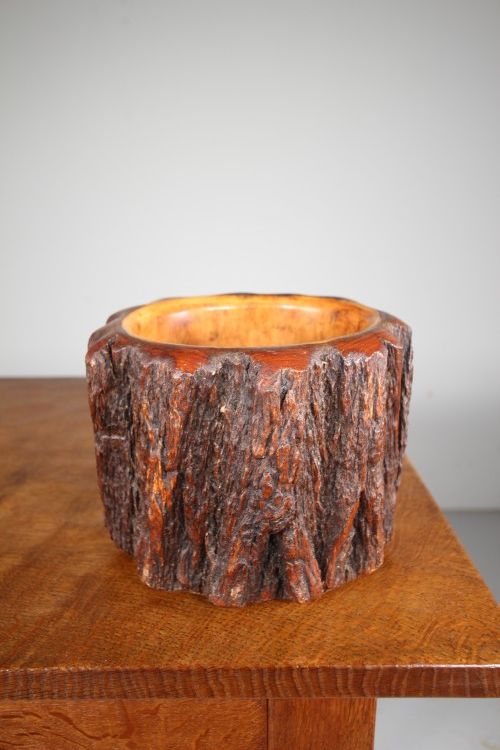


Natural Timber Vessel
Natural timber vessels are honest, hand-carved containers shaped from solid wood that bring organic warmth and tactile history into a modern interior.
Natural Timber Vessel
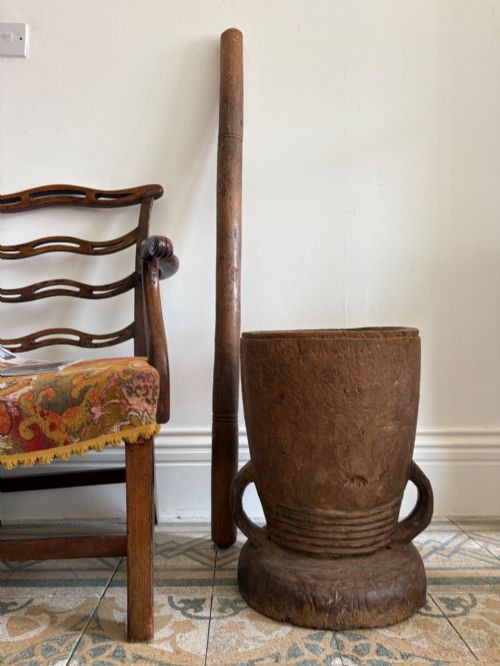
A natural timber vessel is an unpretentious wooden form designed for utility or display, ranging from deep storage barrels to rustic dairy bowls and carved tree trunks. When exploring natural timber vessel listings, collectors frequently encounter utilitarian pieces shaped by hand during the nineteenth and early twentieth centuries. These objects reflect various regional traditions, spanning Scandinavian country wares, African primitive grain mortars, and rustic folk art forms.
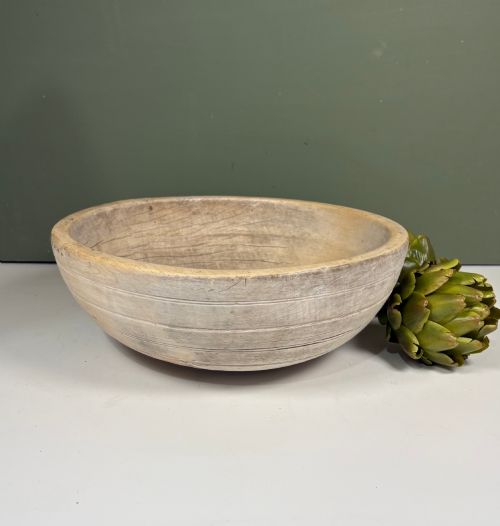
The selection on this page centres heavily on utilitarian forms carved directly from pine, sycamore, and assorted hardwoods. Domestic dairy bowls and dug-out tree trunk bowls dominate the available selection, alongside robust storage barrels and heavy carved bowls. Every piece carries the undeniable mark of manual labour and long domestic or agricultural service.
How they were made
Makers shaped these vessels using hand tools such as adzes, gouges, and drawknives on green or seasoned timber. Craftsmen hollowed out solid logs to create dug-out bowls and tree trunk containers, leaving visible tool marks across the interior and exterior surfaces.
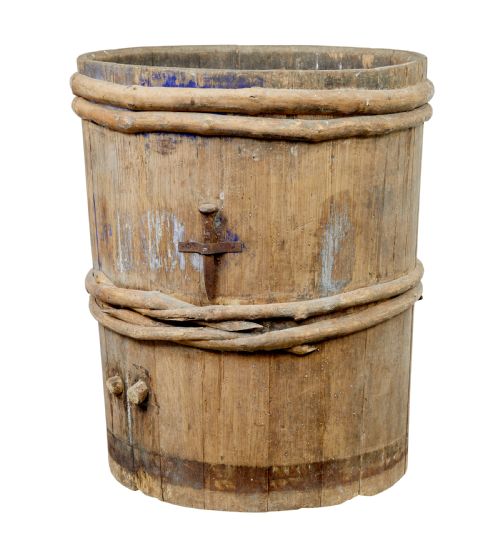
Joinery methods in the larger barrels rely on traditional stave construction secured with iron bands. Carpenters selected durable native woods like pine and sycamore, working closely with the natural grain to ensure structural integrity without complex machinery.
Natural Timber Vessel Retail Price Guide 2026
Typical asking prices for natural timber vessel among the pieces listed under this phrase on Sellingantiques today, from the lower quarter to the upper quarter. They describe what is for sale here now, not the wider market.
Several dairy bowls retain faint traces of historic milk fats that settled deep into the porous pine grain over a century ago.
What varies in quality
Quality in a natural timber vessel rests upon the balance between the original utility of the object and the sculptural integrity of the surviving form. Pieces that retain deep adze marks, rich patination from decades of use, and uncompromised timber surfaces stand clearly apart from lesser or overly restored examples.
The thickness of the carved walls and the proportional harmony of the vessel dictate visual weight and presence. Superior pieces display a confident, direct relationship between the artisan and the raw material, whereas lower grades lack the expressive depth born from genuine domestic service.
The Natural Timber Vessel Glossary
- Dug-out
- A vessel formed by hollowing out a single solid section of a tree trunk rather than assembling staves or panels. This technique produces robust, heavy items with distinct interior tool signatures.
- Treen
- Small, functional wooden household wares traditionally turned or carved by hand. The term covers domestic items such as treen tree stem bowls and small wooden containers.
- Dairy bowl
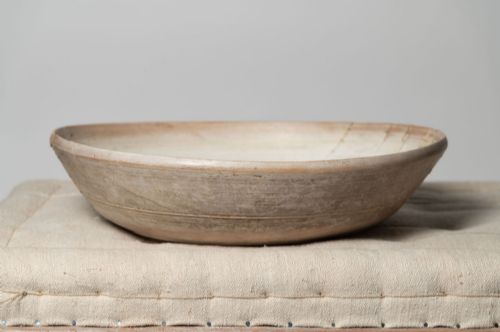
- A wide, shallow wooden basin historically utilised in cheese-making and milk setting. Sycamore was frequently chosen for these vessels because it imparts no taste or colour to dairy products.
- Stave
- One of the narrow vertical blocks of wood fitted together edge-to-edge to make the sides of a barrel or large storage vessel. Iron bands typically bind these wooden components tightly in place.
- Patina
- The deep surface sheen and colour developed on wood over decades of handling, exposure, and waxing. A desirable patina signals genuine age and continuous use.
Natural Timber Vessel: Frequently Asked Questions
What is a natural timber vessel?
A natural timber vessel is a utilitarian wooden object shaped by hand from solid wood, such as a dug-out bowl, dairy basin, or storage barrel.
These pieces were made for practical agricultural and domestic tasks before modern mass production replaced handmade wooden containers.
How were these wooden vessels used?
They served essential daily functions in rural homes and farms, including processing milk, storing grain, and holding provisions.
Larger versions acted as heavy storage barrels, while smaller dug-out bowls held food or dry goods in domestic kitchens.
How do I live with old wood?
Old wood adapts well to modern interiors when kept away from direct heat sources and sudden temperature fluctuations that cause timber to split.
Display these vessels on tables or open shelves where their tactile surfaces and aged patinas can be appreciated up close.
How can I tell the period?
Dating relies upon observing tool marks, timber selection, construction methods, and the natural wear accumulated over centuries of use.
Nineteenth-century pieces often display hand-dug tool signatures and native timbers like sycamore and pine that differ from later mass-produced items.