
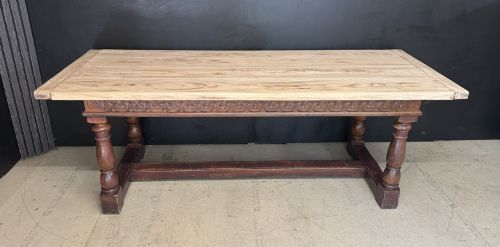
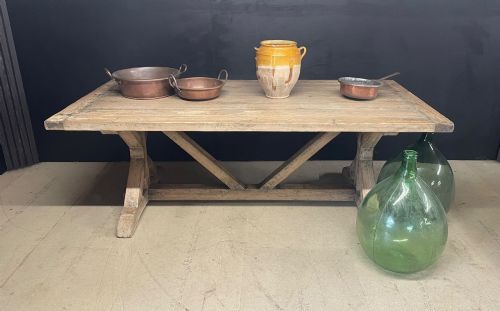
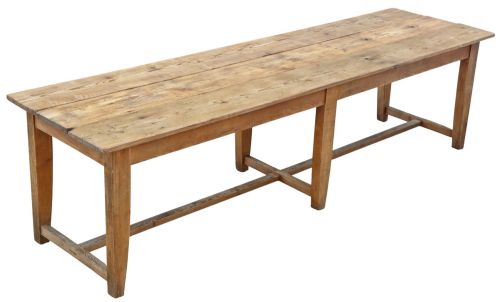
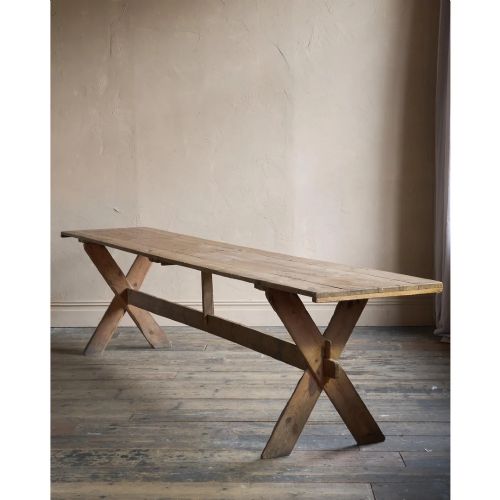
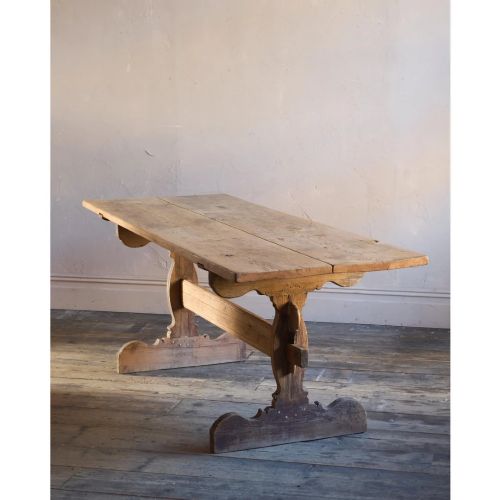
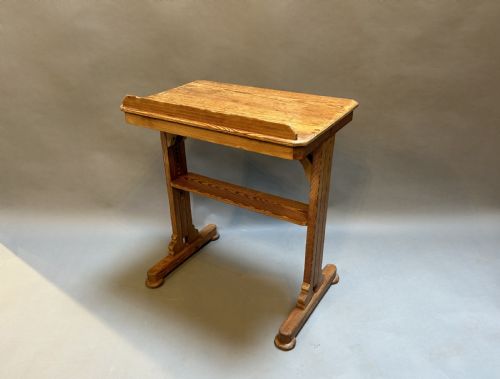


Natural Pine Trestle Table
A natural pine trestle table gives a room an honest, workaday surface built for gathering and daily use.
Natural Pine Trestle Table
A natural pine trestle table combines a sturdy timber top with supportive trestle ends, creating an enduring surface for the kitchen or dining room. The examples listed here span from the eighteenth century through to the mid-twentieth century, showing influences from French, Swedish and British country traditions.
Most pieces you encounter are vernacular refectory or farmhouse designs, often stripped back to reveal the grain. The selection includes long community harvest tables alongside more compact X-frame kitchen formats.
Makers shaped these boards from softwood and pine, sometimes pairing timber tops with painted or stained bases. They serve primarily as dining tables, refectory tables and workspace desks.
How they were made
Joiners built these tables using solid pine and softwood timbers, selecting boards wide enough to form a substantial top. Carpenters joined the legs and stretchers with traditional pegging and mortise joints to withstand heavy daily use.
Surfaces were frequently left unpainted or scrubbed clean over generations of use, though some examples retain traces of stained wood or painted finishes. Over decades, the soft timber absorbed oils and wear, creating the characteristic weathered texture seen today.
One listed piece is recorded as a pig scratch, showing how everyday agricultural tasks inspired the names given to utilitarian country timber.
What varies in quality
The distinction between ordinary and exceptional pieces lies in the thickness of the top boards and the integrity of the trestle construction. Tables built with wide, single-piece planks and tight, original joints command greater appreciation than those assembled from mismatched timber.
Proportion and scale dictate the visual weight of the piece, with longer refectory and harvest formats requiring balanced framing to remain rigid. The depth of the natural patina and the honesty of the scrubbed surface determine how well the timber ages.
The Natural Pine Trestle Table Glossary
- Trestle table
- A table structure consisting of two or more supports connected by a horizontal beam. This design allows for uninterrupted seating space along the length of the boards.
- Refectory table
- A long dining table traditionally used in communal dining halls. These examples offer generous proportions suited to large gatherings.
- Scrubbed
- A surface finish achieved by vigorous washing and cleaning of the wood over many years. This process removes old paint or varnish to leave clean, pale timber.
- X-frame
- A structural base formed by intersecting diagonal timbers that cross to support the top. This configuration provides lateral stability without bulky corner legs.
- Softwood
- Timber derived from conifers such as pine, used extensively in vernacular furniture making. It provides a lighter, workable alternative to hardwoods like oak.
Natural Pine Trestle Table: Frequently Asked Questions
How do I clean a natural pine table?
Wash the surface gently with warm water and mild soap, using a soft cloth to avoid damaging the grain. Dry the timber thoroughly immediately afterwards.
Avoid harsh chemical cleaners or excessive moisture, which can raise the grain of the soft pine and stain the aged wood.
Can I use a trestle table outdoors?
These tables are built primarily for indoor use in kitchens, dining rooms and workspaces. Pine and softwood react poorly to prolonged dampness and direct weather exposure.
Outdoor use can cause the timber to warp, swell and rot the joints over a short period.
How do I identify the period of pine furniture?
Look closely at the tool marks, nail types and board widths used in the construction. Hand-sawn boards and pegged joints often point towards earlier eighteenth and nineteenth-century examples.
Later pieces from the twentieth century frequently show more uniform machine milling and simpler fastening methods.
Will a pine table mark easily?
Pine is a softer wood that naturally records the bumps, drops and spills of daily life. These marks accumulate into a rich patina that tells the history of the piece.
If you prefer an unblemished surface, you may need to use placemats and coasters during meals.