
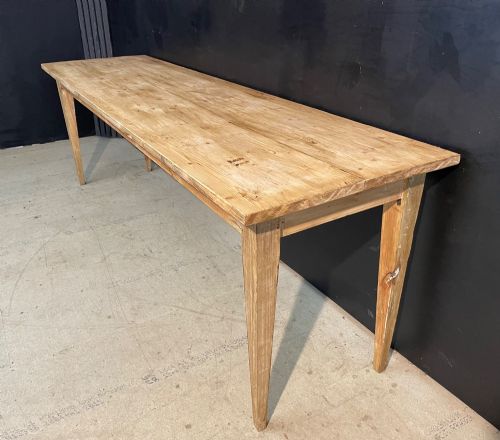
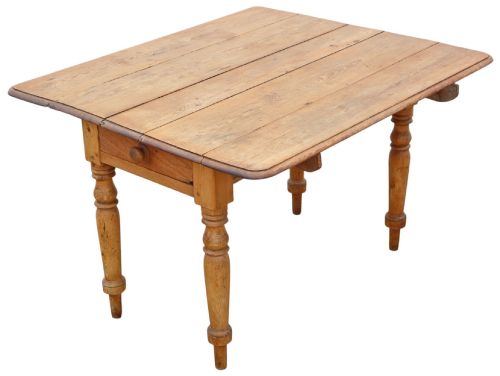
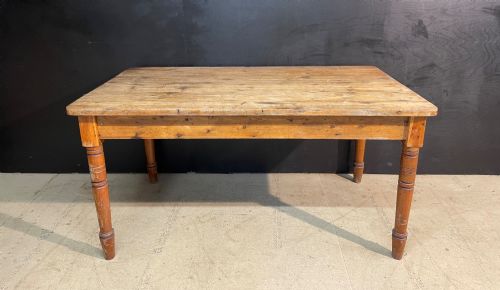
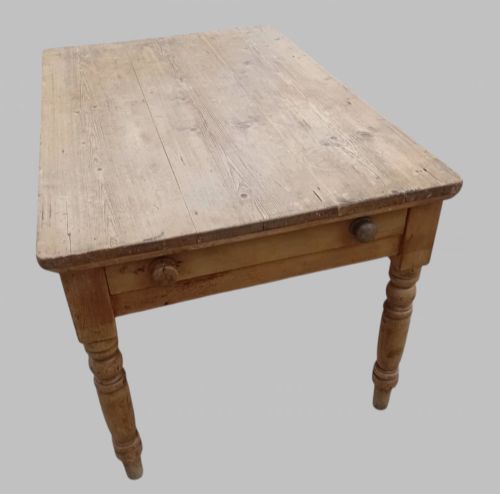
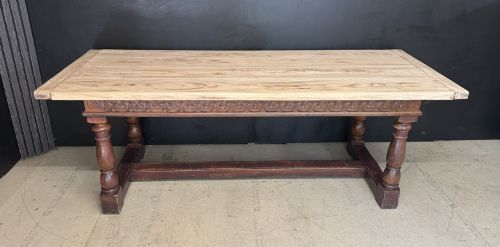
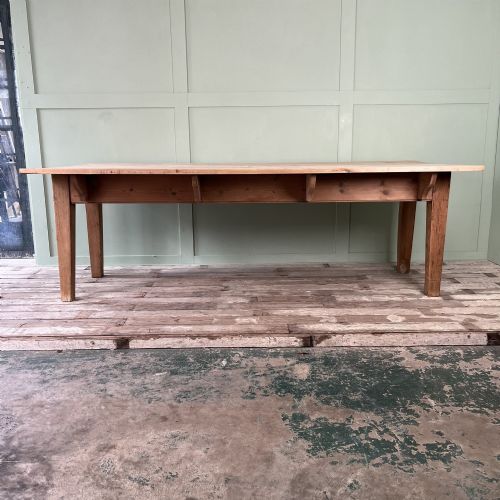
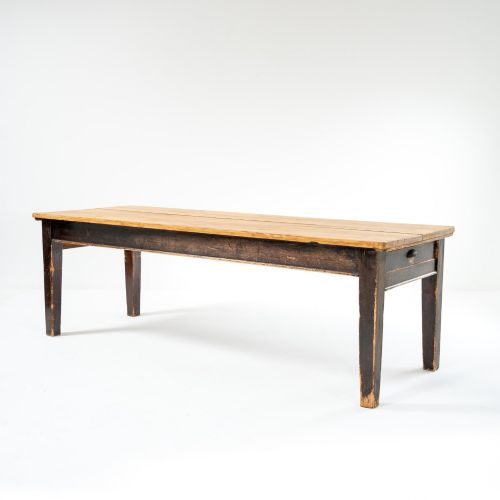
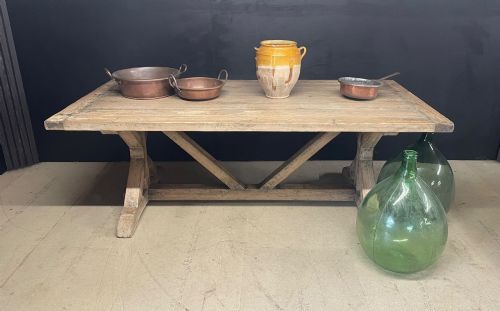
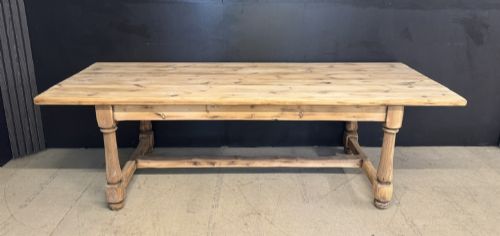
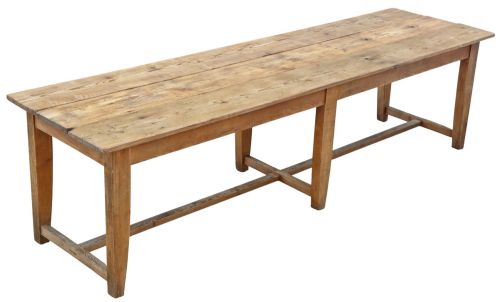
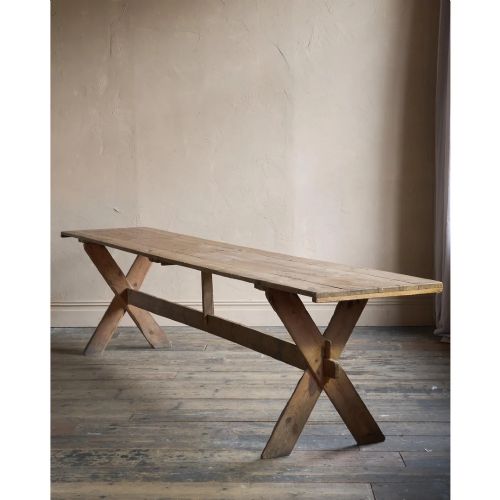
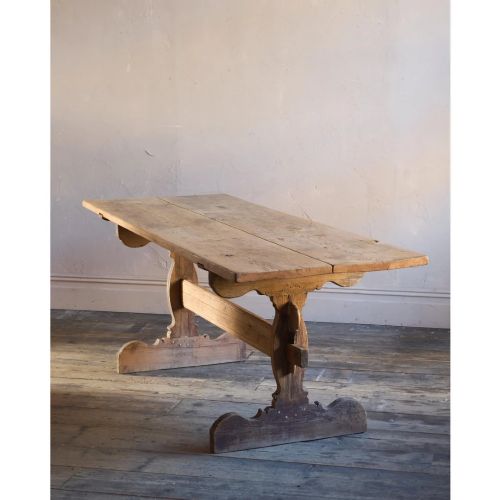
Natural Pine Dining Table
These natural pine dining table pieces are honest, hard-wearing boards and frames built for daily use.
What they are
A natural pine dining table brings robust utility and straightforward character to an interior. These pieces span the nineteenth century, the Victorian era, nineteen-ten, nineteen hundred, and nineteen-thirty.
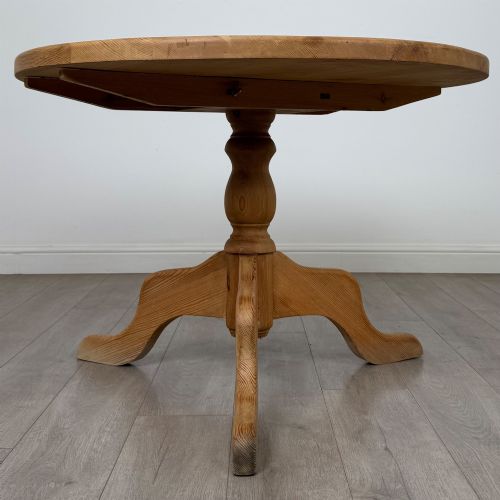
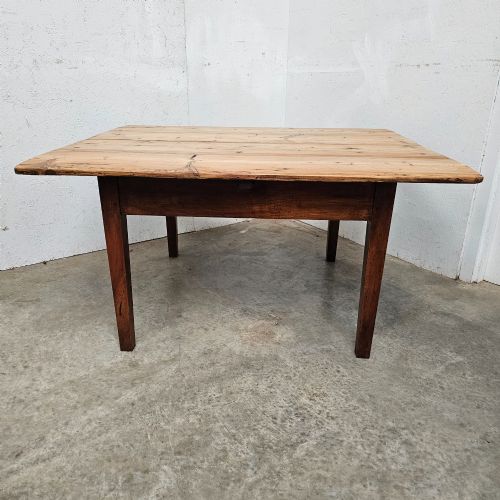
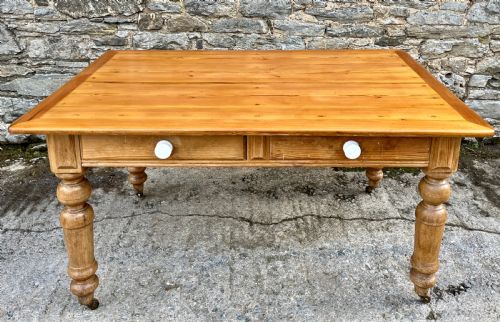
The inventory covers dining tables, kitchen tables, console tables, drop leaf formats, and farmhouse forms. Tables appear in scrubbed top variations, large proportions, seating up to eighteen, and with built-in drawers.
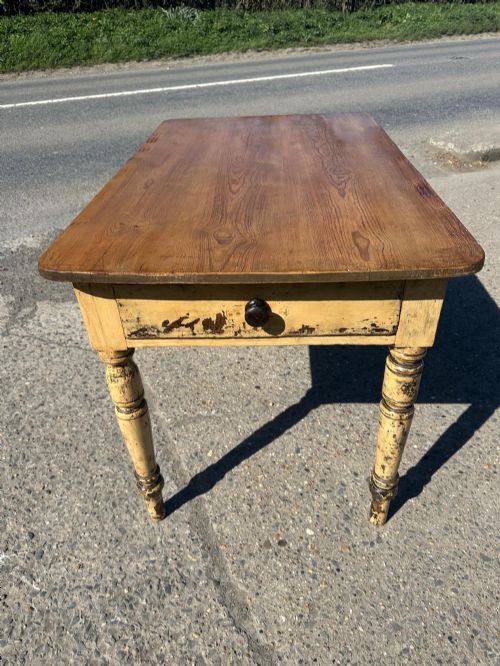
Victorian Country and Rustic Farmhouse styles dominate the selection. Pieces include painted wood surfaces and layers of old paint alongside clean stripped pine.
How they were made
Construction relies upon solid pine timber, worked into substantial frames and expansive tops designed to handle heavy domestic work. Joinery is straightforward and practical, built to endure generations of use.
Surfaces receive different finishes according to their history and subsequent restoration. Some examples retain original layers of old paint, while others feature hand-stripped and scrubbed tops that expose the grain of the wood.
Retail Price Guide 2026
Typical UK retail prices for natural pine dining table, calculated from the Sellingantiques database of over a million retail prices indexed since 2003. This retail price guide relies exclusively on Sellingantiques data; no external sources or auction records are used, so the figures do not describe the wider market.
One extraordinary Victorian table accommodates up to eighteen guests for proper feasts.
What varies in quality
Proportion and scale dictate the visual weight of the table in a room. Grand farmhouse examples with large seating capacities or drop leaf mechanisms stand apart from compact console variations.
The treatment of the timber surface defines the character of each piece. Tables retaining untouched layers of old paint present a different aesthetic to those with carefully scrubbed and restored tops.
The Natural Pine Dining Table Glossary
- Scrubbed top
- A wooden surface washed repeatedly with water and a stiff brush until smooth and pale. This process removes grease and dark stains from kitchen work.
- Drop leaf
- A table featuring fixed centre leaves and hinged side flaps that fold down when not in use. This mechanism allows the footprint to adjust according to space.
- Farmhouse table
- A heavy, utilitarian dining table built with sturdy legs and thick timber boards. These pieces originate from rural domestic kitchens.
- Console table
- A narrow table designed to stand against a wall. Some examples function as compact dining surfaces.
- Pine
- A softwood derived from coniferous trees, widely utilised for utilitarian domestic furniture due to its availability and workability.
Frequently Asked Questions
How do I care for a scrubbed top pine table?
Clean the surface with a damp cloth and mild soap, avoiding harsh chemicals that strip the natural grain.
Treat the wood periodically with suitable wax or oil to protect against moisture and daily wear.
Are these tables suitable for everyday family use?
Pine is a resilient softwood that has served as a practical kitchen and dining surface for centuries. Its sturdy construction easily accommodates daily meals and gatherings.
Existing marks and patination mean that new knocks blend naturally into the historic character of the timber.
How can I tell a Victorian table from later pieces?
Victorian examples display construction methods and timber maturity typical of the nineteenth century. Details like hand-stripped finishes and heavy farmhouse proportions are common markers.
Later pieces from nineteen-ten or nineteen-thirty maintain similar utilitarian forms while reflecting twentieth-century domestic requirements.
What is the difference between painted and stripped pine?
Painted tables retain historical layers of old paint that record decades of interior decoration. This finish offers a textured, colourful surface.
Stripped pine removes those layers to expose the pale grain and warm tone of the natural timber beneath.