

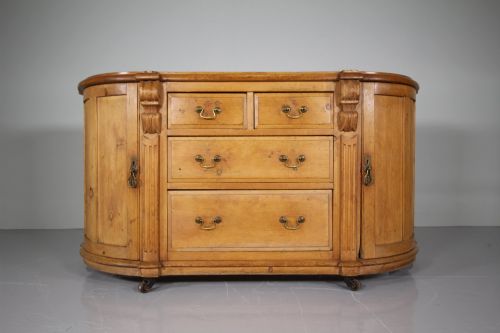
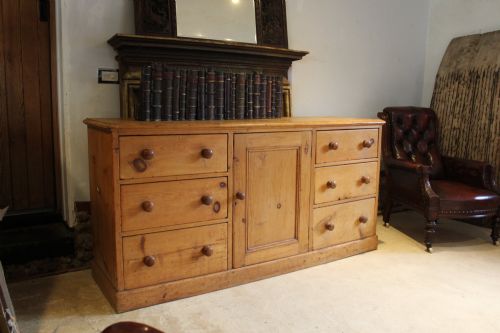
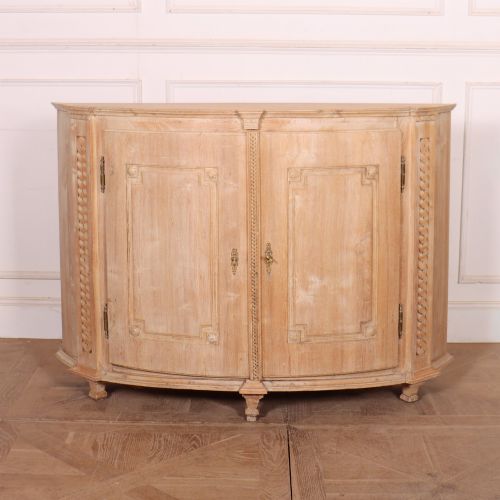
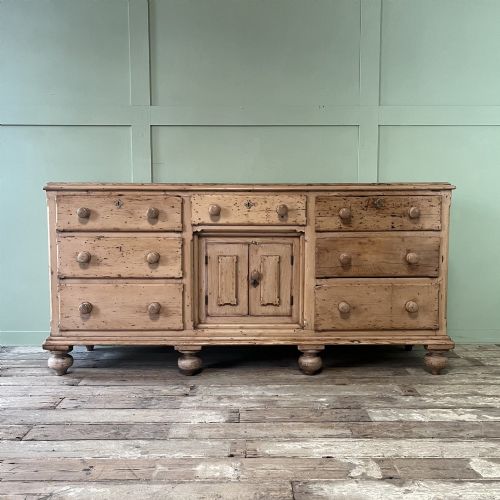
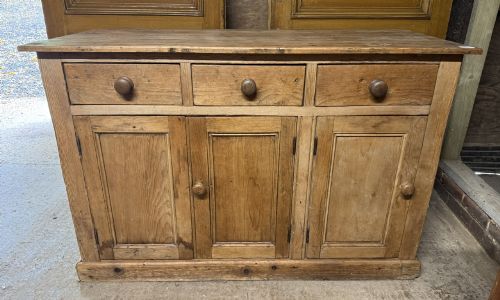
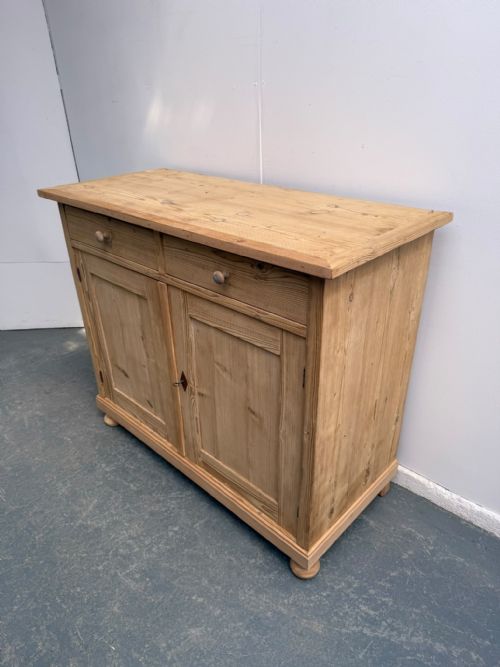

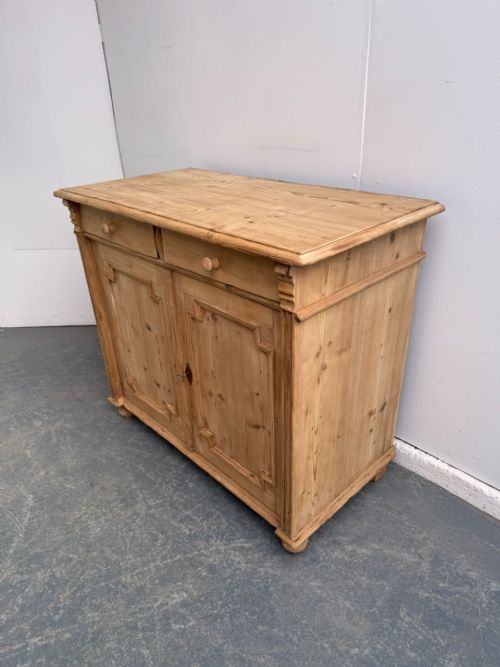
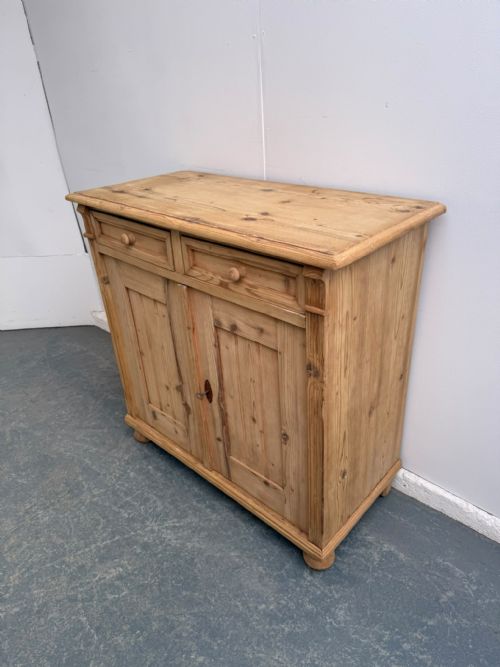
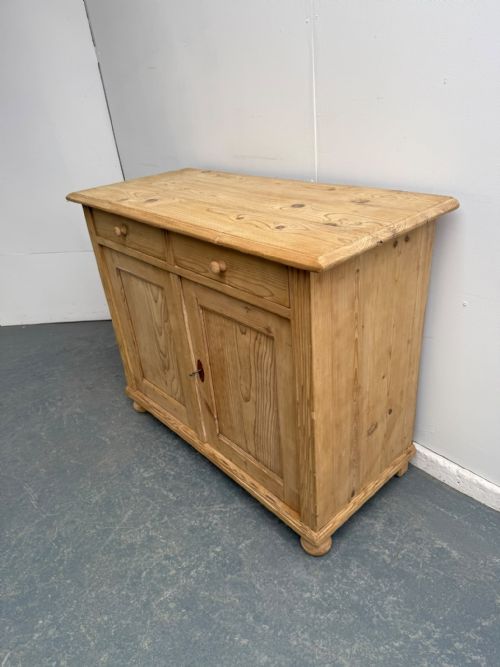


Natural Pine Credenza
A natural pine credenza delivers honest country storage, uniting sturdy pine timber and practical proportions for everyday utility.
Natural Pine Credenza
Buyers seeking a natural pine credenza encounter sturdy storage pieces shaped by utilitarian country traditions. The listings span Georgian, Victorian, and 1900 periods, encompassing sideboards, dresser bases, cupboards, and cabinets.
Most examples lean towards English country house, rustic farmhouse, and Victorian country styles. These utilitarian forms function as kitchen dresser bases and low wide storage cupboards.
Pieces emerge from regions including Scotland and Hungary, occasionally featuring carved floral motifs or bread slides. The dominant aesthetic remains unpainted wood prepared for waxing or painting.
Materials and construction methods
Makers built these pieces primarily from solid pine timber, selected for availability and utility. Iron and brass hardware such as hinges and pulls secured doors and drawers.
Construction prioritized domestic function, resulting in two-door and two-drawer configurations built to withstand daily use. Surfaces often arrive ready to wax or paint according to preference.
Natural Pine Credenza Retail Price Guide 2026
Typical asking prices for natural pine credenza among the pieces listed under this phrase on Sellingantiques today, from the lower quarter to the upper quarter. They describe what is for sale here now, not the wider market.
Listings span Georgian, Victorian, and 1900 periods, constructed primarily from pine with iron and brass hardware.
Distinguishing quality across examples
Quality diverges between straightforward utilitarian storage and more ambitious regional work. The presence of carved floral details or specialised elements like bread slides elevates particular examples above standard production.
Proportions also dictate distinction, moving from low wide storage cupboards to monumental country house dresser bases. Timber selection and the preservation of original hardware contribute to the standing of each piece.
The Natural Pine Credenza Glossary
- Pine
- A softwood utilised extensively in country furniture for its accessibility and workability. It takes wax finishes readily and develops character with age.
- Dresser Base
- A low rectangular cabinet fitted with drawers and cupboards, historically used for food preparation and storage in kitchens. It forms the foundation of many country dining arrangements.
- Bread Slide
- A pull-out shelf integrated into furniture to cool loaves or aid kitchen preparation. This functional inclusion appears in select large dresser bases.
- Georgian
- The architectural and design period spanning the reigns of the first four Georges. Pieces from this era display classical proportions adapted for country workshops.
Natural Pine Credenza: Frequently Asked Questions
Where were these pieces used?
These pieces originated in domestic country settings, primarily serving kitchens and dining areas for storage and food preparation.
Their robust construction suited busy households, from English country houses to rural Scottish and Hungarian homes.
How do I care for pine furniture?
Pine furniture benefits from regular application of traditional wax to nourish the wood and maintain a protective sheen.
Keep pieces away from direct heat sources to prevent the timber from drying out or splitting over time.
How do I tell periods apart?
Periods reveal themselves through construction methods, joinery details, and overarching proportions that reflect the design conventions of their time.
Georgian examples display earlier country traits, while Victorian and 1900 pieces incorporate heavier storage configurations and occasional decorative carving.