
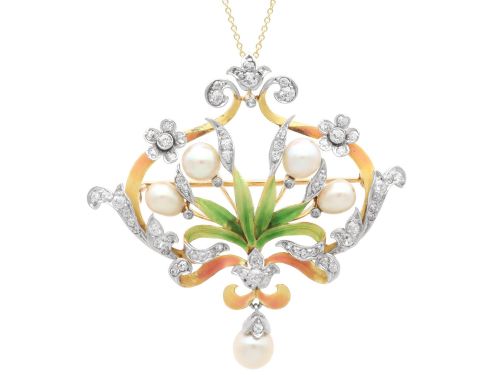
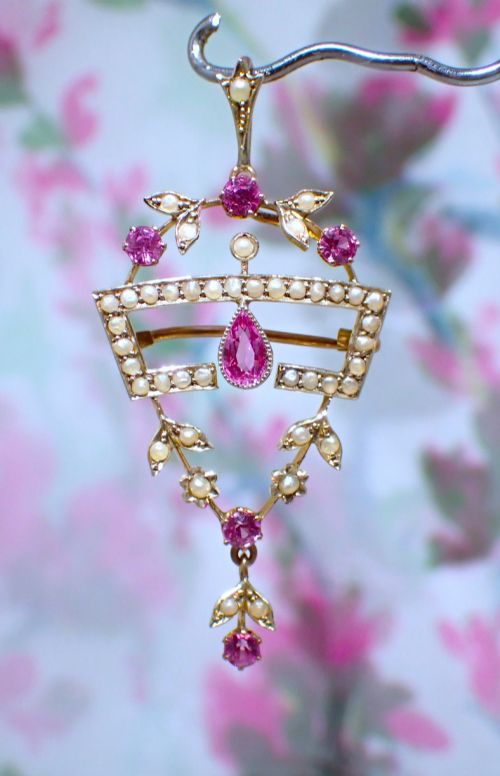


Natural Pearl Gold Brooch
A natural pearl gold brooch brings together genuine saltwater or freshwater gems and rich metalwork in wearable antique forms that collectors prize.
Natural Pearl Gold Brooch
A natural pearl gold brooch represents a significant category of antique jewellery spanning the Victorian, Edwardian, and Art Deco periods, alongside nineteenth century French pieces. Buyers seeking a natural pearl gold brooch frequently encounter versatile pendant brooches that transition easily from lapel pins to neckwear.
The selection encompasses varied configurations including bar brooches, double cluster designs, and figurative subjects like horseshoe and owl motifs. Materials paired with the pearls range from diamonds and amethysts to sapphires, tourmalines, and opals set in nine carat, twelve carat, fifteen carat, and eighteen carat yellow gold, alongside white gold and platinum.
How they were made
Goldsmiths utilised yellow gold in various carat weights, alongside white gold and platinum, to form the structural foundations of these pins and pendants. Metalworking techniques included detailed cannetille wirework and secure prong or collet settings to hold the central gemstones and pearls.
Gems such as diamonds, amethysts, sapphires, and tourmalines were integrated alongside natural seed pearls, wild pearls, and split pearls. Artisans balanced the luminous, organic quality of these pearls with faceted stones and occasionally enamel work or tortoiseshell.
Several pieces take the form of wise owls and lucky horseshoes, proving that historical jewellers loved a charming talisman as much as we do.
What varies in quality
Quality rests upon the calibre of the natural pearls and the accompanying gemstones, such as substantial diamonds or well-matched amethysts. Superior examples display harmonious proportions between the central gems and the surrounding gold or platinum mount.
Design complexity also defines the upper tier, distinguishing simple bar brooches from intricate pendant brooches featuring multi-stone clusters and detailed metalwork. The integration of maker skill in securing delicate seed pearls and intricate motifs elevates the piece.
The Natural Pearl Gold Brooch Glossary
- Natural pearl
- A pearl formed organically in a mollusc without human intervention. These gems possess a unique lustre and inner glow distinct from cultured alternatives.
- Cannetille
- An ornate filigree metalwork technique resembling lace or embroidery. Goldsmiths created this style using fine gold wires and tiny metal balls popular in earlier periods.
- Bar brooch
- A slender horizontal pin frequently set with gems or central motifs. This form was especially fashionable during the Victorian and Edwardian eras.
- Pendant brooch
- A dual-purpose piece equipped with both a pin fitting and a hidden loop. This allows the wearer to pin it to fabric or suspend it from a chain.
- Seed pearl
- A very small natural pearl, often round or slightly irregular. These tiny gems frequently form dense pavé designs or intricate floral and horseshoe clusters.
Natural Pearl Gold Brooch: Frequently Asked Questions
How do I wear a pendant brooch?
A pendant brooch functions as a standard lapel pin by utilising the secure pin fastening on the reverse. Alternatively, you can thread a chain through the integrated suspension loop to wear the piece as a pendant.
This dual functionality makes these antique items remarkably versatile for modern wardrobes. Pairing them with contemporary chains or traditional velvet ribbons alters the visual impact entirely.
What is the difference between seed pearls and natural pearls?
Seed pearls are simply natural pearls of a very small size, typically under two grains. Both types form naturally within molluscs without human intervention.
Jewellery descriptions often specify seed pearls when artisans used dozens of tiny gems to pave a surface or shape a motif like a horseshoe.
How do I care for antique gold and pearl jewellery?
Natural pearls require gentle handling because organic gems are sensitive to acids, cosmetics, and harsh cleaning chemicals. Wipe them softly with a dry or slightly damp cloth after wearing and store them separately.
Gold settings tolerate mild professional cleaning, but moisture can damage older organic components and backing materials used in historic pieces.
Can I date these brooches by their materials?
Materials offer strong clues when combined with the overall style and gold carat marks present on the piece. For instance, fifteen carat gold points predominantly toward Victorian and Edwardian manufacture.
White gold and platinum pairings often indicate Edwardian or later Art Deco periods. Examining the construction alongside the gem selection helps narrow down the decade of creation.