



Natural History Taxidermy Specimen
A natural history taxidermy specimen brings the preserved form of an animal, bird or fish into an interior, offering a direct study of wildlife from the nineteenth and early twentieth centuries.
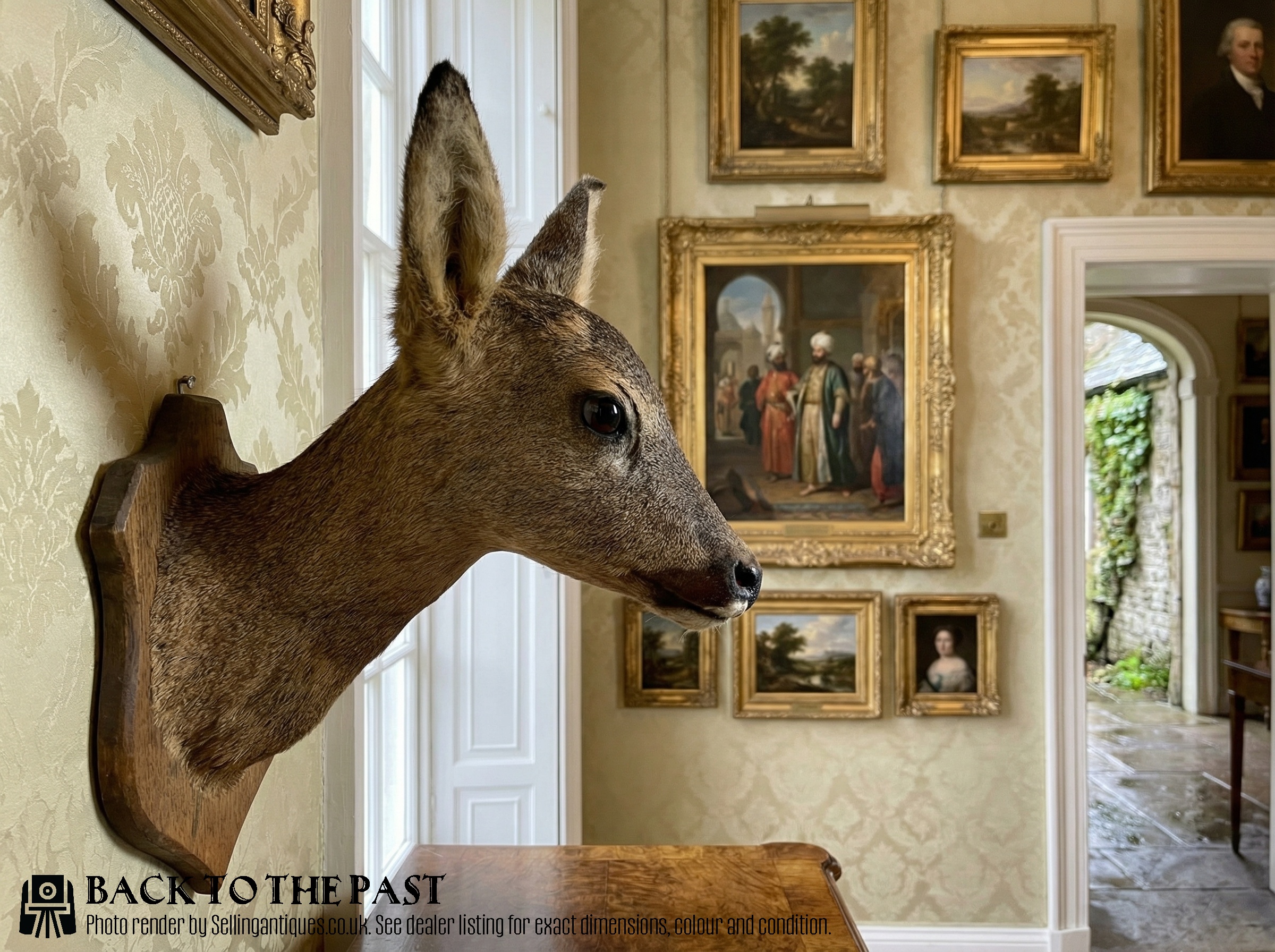
Natural History Taxidermy Specimen
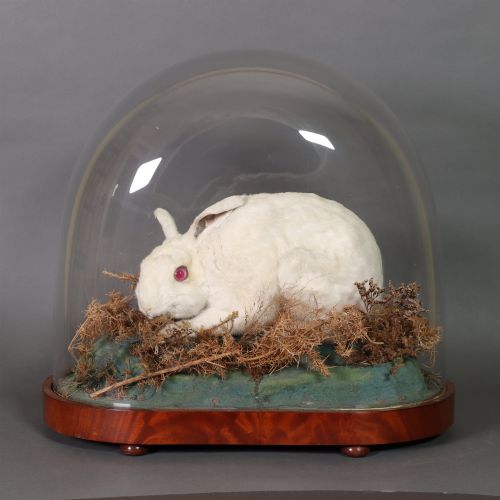
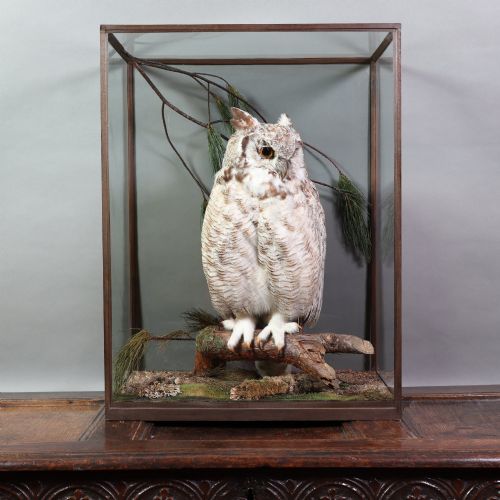
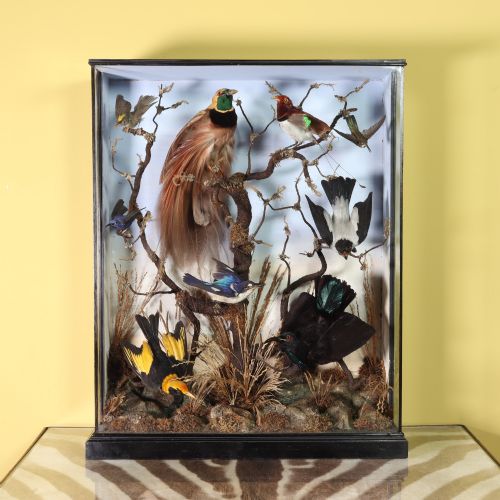
When you search for a natural history taxidermy specimen, you enter a field dominated by nineteenth-century and early twentieth-century examples, spanning the Victorian and Edwardian eras. The pieces on this page range from single birds mounted on simple wooden bases to complex dioramas housing multiple species within glazed enclosures.
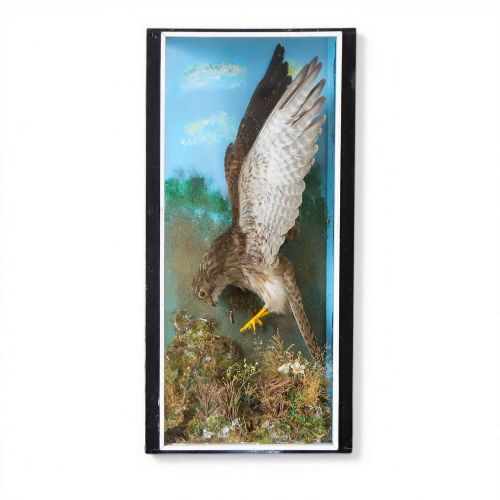
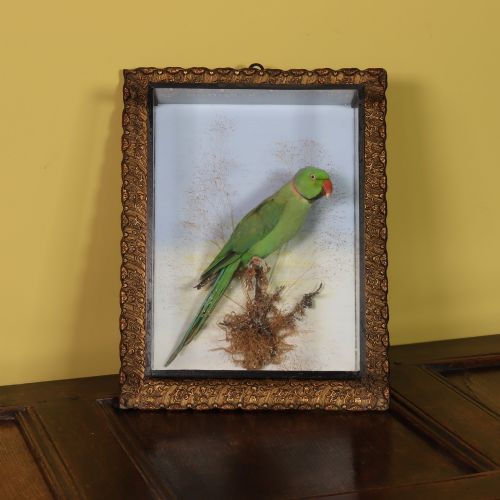
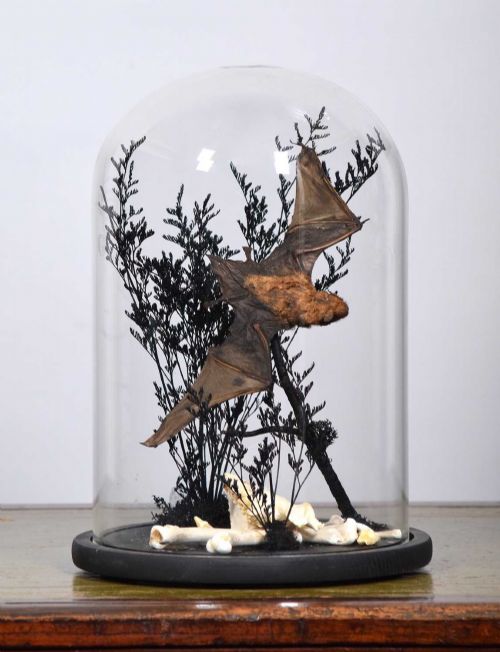
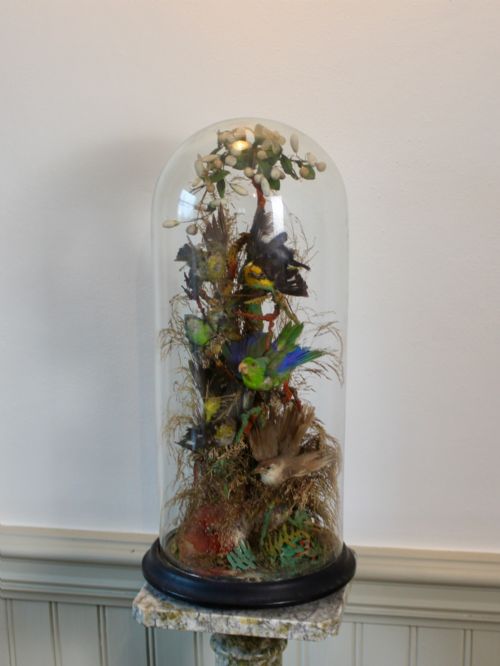
The most common formats you will meet here include glass domes, painted display cases, wall-hanging picture frames, and large mammal trophy heads mounted on carved oak shields. These objects reflect a historical fascination with natural history, originating from domestic display rooms and academic collections alike.
How they were made
Makers constructed these specimens using a combination of preserved biological material and handcrafted housing, shaping skins over carved bodies of wood, wire, and plaster. Feathers, bone, and shell were carefully arranged within timber frames, often accompanied by painted paper backgrounds to simulate a naturalistic habitat.
Protection from dust and insects required tailored glass enclosures, utilising blown glass domes or framed glass panes held together by ebonised wood and paper tape. The quality of the joinery and the durability of the glazing determined how effectively the internal specimen survived the decades.
Listings feature specimens from the nineteenth and twentieth centuries, utilising wood, glass, feathers, bone, and paper.
What varies in quality
The skill of the taxidermist dictates the lifelike posture and anatomical accuracy of the specimen, separating master practitioners from basic commercial work. Master craftsmen maintained correct skeletal proportions and convincing feather or fur alignment, avoiding rigid or distorted poses.
The housing also influences the standing of a piece, with custom-painted dioramas and signed wooden cases commanding greater interest than standard commercial mounts. Preservation condition, including the integrity of the glass dome and the stability of the underlying mount, completes the hierarchy.
J Griffiths of Burford·James Gardner·Rowland Ward Ltd·William Bazeley & Sons·A Pollard·Edward Gerrard & Sons·J Cooper & Sons·W.F. Homer·J Dobson
The Natural History Taxidermy Specimen Glossary
- Taxidermy display case
- A wooden and glass enclosure designed to protect a preserved specimen from dust and handling while providing a view from multiple angles.
- Glass dome
- A blown glass cover resting on a wooden base, historically utilised to protect delicate bird compositions and single specimens.
- Diorama
- A three-dimensional scene featuring one or more preserved animals set against a painted or constructed naturalistic background.
- Carapace
- The upper shell of a tortoise, turtle, or crustacean, preserved and dried as a decorative specimen.
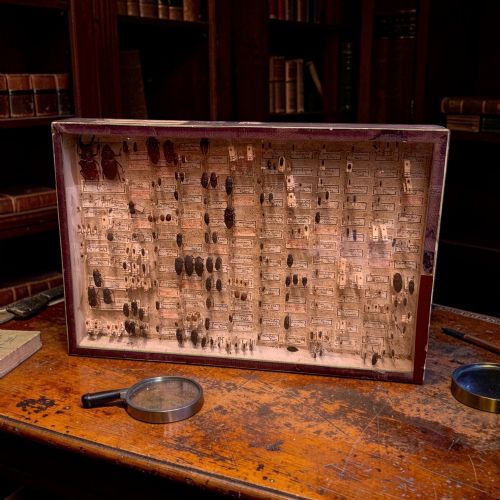
- Entomology case
- A shallow glazed wooden drawer or cabinet designed for the systematic display of preserved insects such as butterflies and beetles.
Natural History Taxidermy Specimen: Frequently Asked Questions
Where should I place a specimen in my home?
Position your piece away from direct sunlight and heat sources such as radiators. Ultraviolet light fades feathers and discolours paper backgrounds over time.
Stable room temperatures and low humidity levels prevent the wood from warping and protect the organic materials from insect activity.
How can I tell a Victorian case from a later one?
Examine the construction materials of the case, noting the presence of hand-blown glass, ebonised wood mouldings, and hand-written specimen labels. Victorian examples frequently utilise specific framing techniques and paper tapes unique to nineteenth-century workshop practices.
Later twentieth-century iterations often feature machine-cut timber, modern adhesives, and standardised glass panels that differ from earlier manufacturing methods.
Why do some birds have painted backgrounds?
Taxidermists painted background scenery on paper or wood to recreate the natural habitat of the bird, adding depth and context to the display. This technique transformed a simple preserved skin into an engaging ecological diorama for Victorian drawing rooms.
Skilled practitioners matched the foliage and sky to the geographical origin of the species, whether from South America, Australia, or local woodlands.