

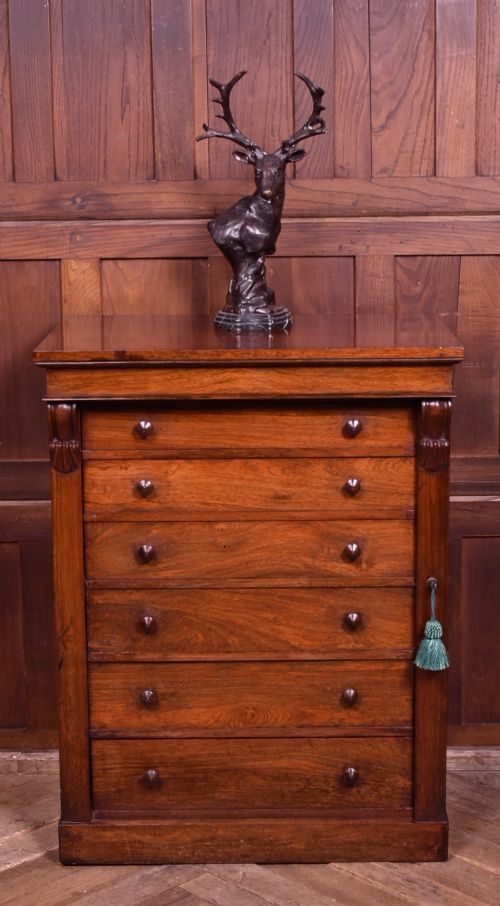
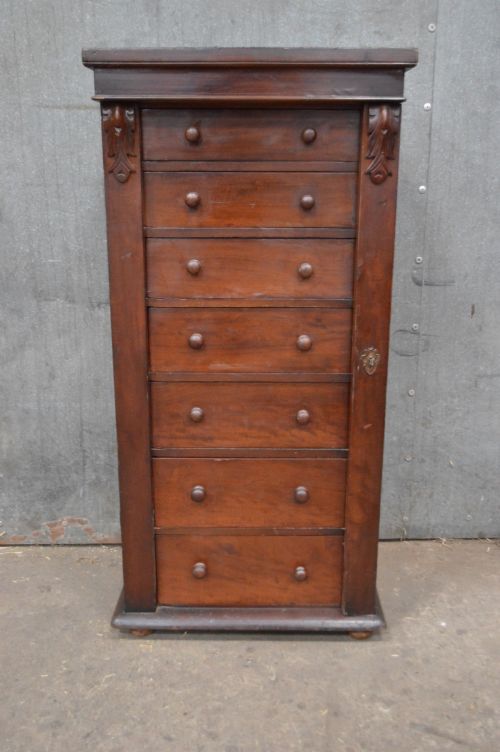

Narrow Wooden Chest Drawers
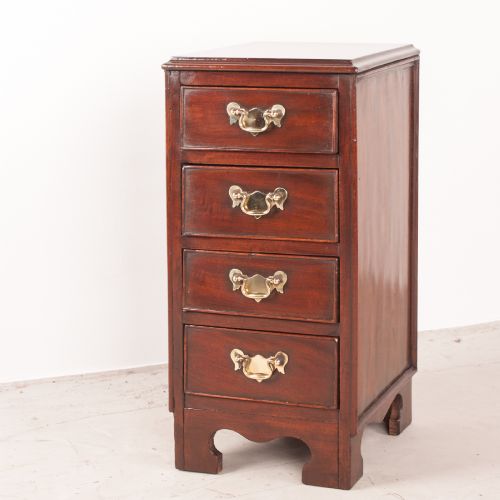
A narrow wooden chest drawers provides compact vertical storage for tight spaces, combining practical utility with period character.
Narrow Wooden Chest Drawers
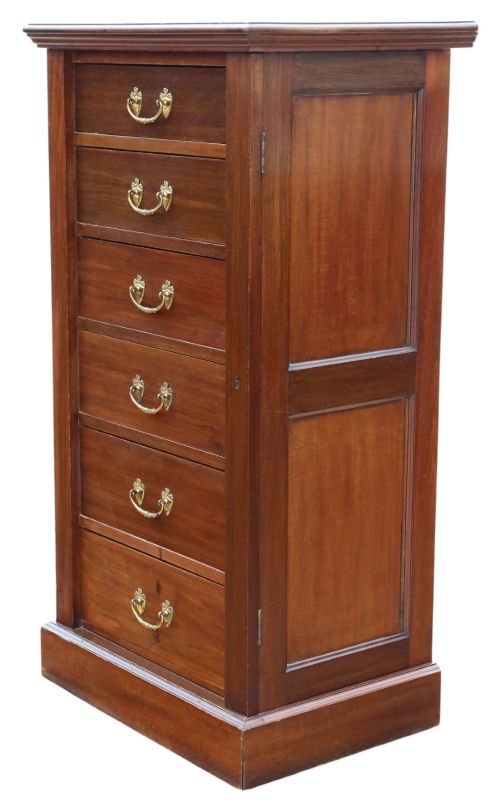
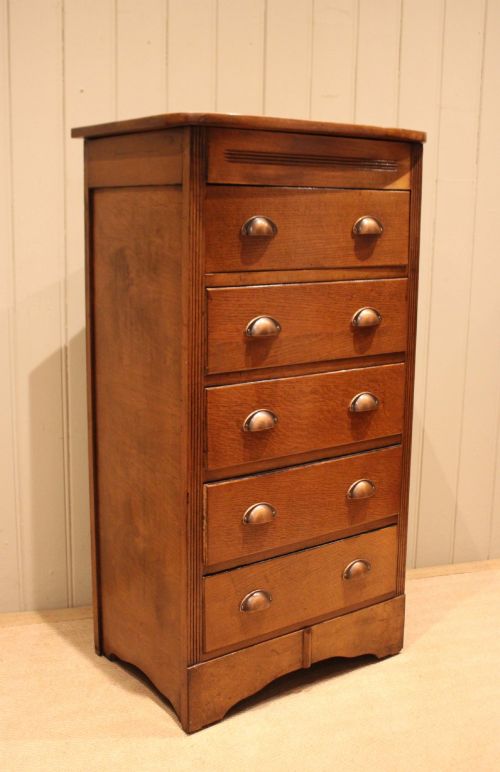
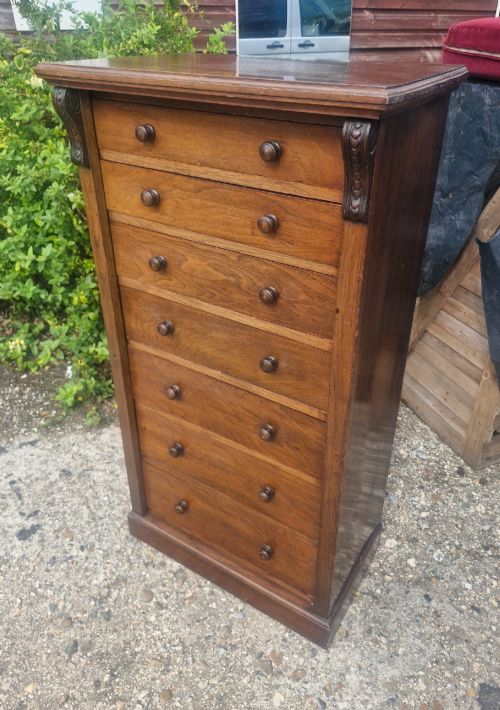
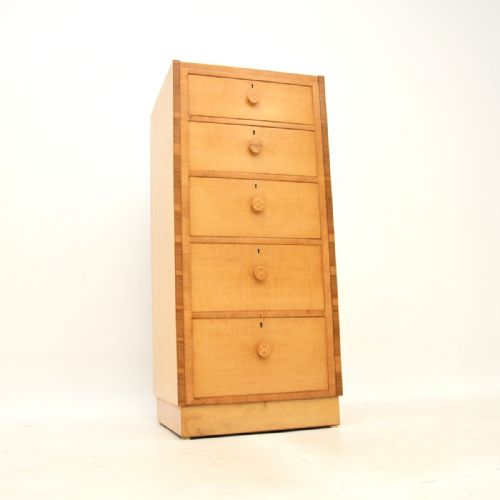
A narrow wooden chest drawers satisfies the demand for vertical storage within limited floor space, drawing primarily on nineteenth-century and early twentieth-century designs. Pieces matching this description appear across Victorian, Edwardian, and Georgian periods, alongside revival styles and Art Deco interpretations.
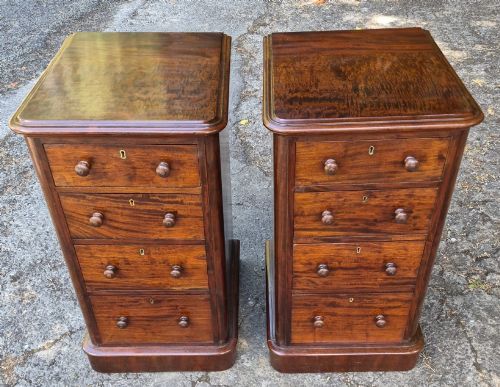
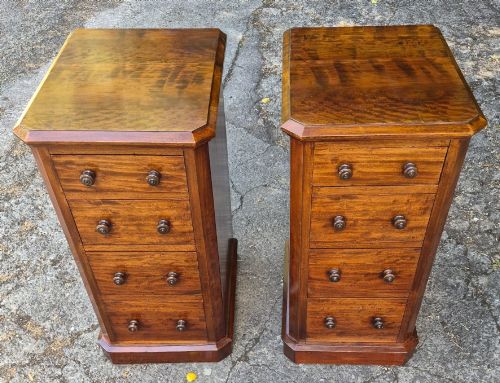
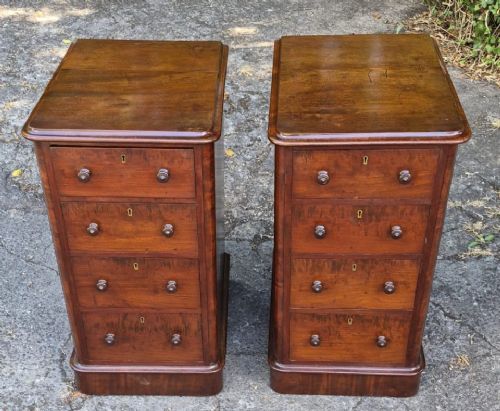
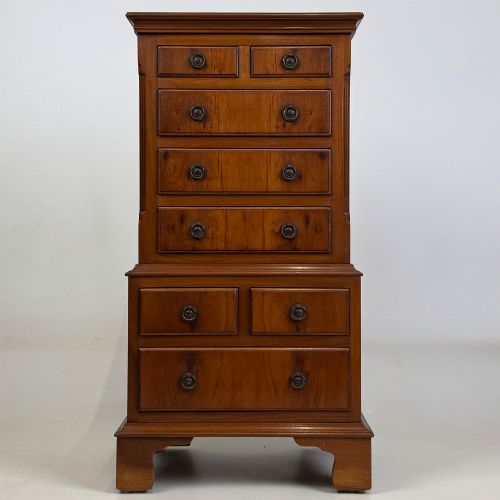
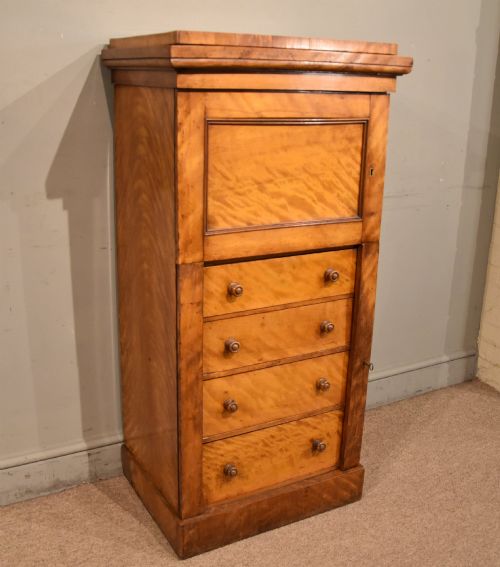
The format encompasses several distinct object types, with Wellington chests and tallboys dominating the selection. Buyers also encounter bedside chests, bedside cabinets, music cabinets, and small trinket storage units constructed in slender proportions.
Originating largely from domestic settings where floor space carried a premium, these chests utilise dense hardwoods and softer pine alternatives. Their narrow footprints make them adaptable for hallways, bedrooms, and studies.
How they were made
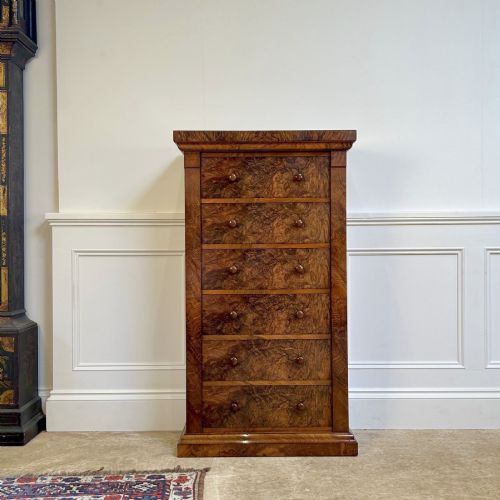
Cabinet makers constructed these narrow chests using solid and veneered timbers such as mahogany, walnut, burr walnut, oak, rosewood, satin birch, sycamore, yew wood, and pine. Grain patterns receive emphasis in veneer choices, particularly on drawer fronts and top surfaces.
Hardware elements like brass handles, locks, and hinges provide functional operation and structural reinforcement. Joinery methods connect carcases and drawers securely to withstand regular domestic use over generations.
Some nineteenth-century models double as locking safe chests, perfect for hiding your secret stash of vintage biscuits from household thieves.
What varies in quality
The grade of timber and the complexity of its figure dictate much of the inherent value in these pieces, with highly figured burr walnut or rosewood sitting apart from standard pine or plain oak. Timber selection governs both visual impact and structural longevity.
Execution of detail defines the upper tier of production, visible in precise joinery, fine inlay work, and robust locking mechanisms such as those found on Wellington chests. The integration of specialised hardware and proprietary locking bars distinguishes workshop output.
Gillows·Hille·S. Mordan & Co
The Narrow Wooden Chest Drawers Glossary
- Tallboy
- A tall chest of drawers standing on a base or frame, designed to maximise vertical storage capacity. The form elevates the storage area above the floor.
- Bowfront
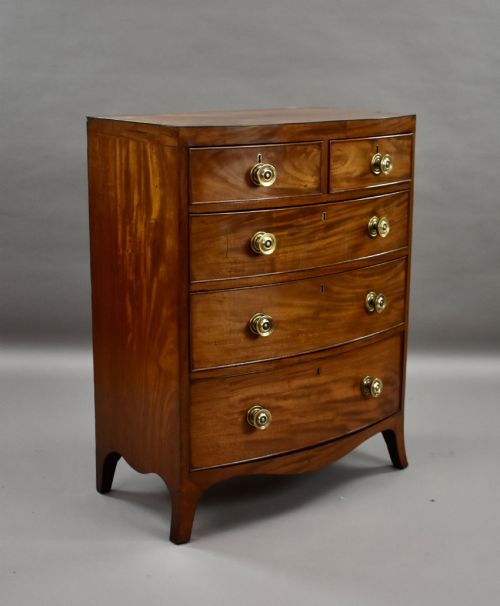
- A furniture front curved convexly outward in a gentle sweep. This profile appears on select Regency and Victorian case pieces.
- Marquetry
- Decorative veneer work forming patterns or pictures using various woods and organic materials. This technique decorates surfaces on French and period cabinets.
- Inlay
- Material embedded into a contrasting background timber to create surface decoration. Cabinet makers utilise contrasting veneers and fine lines to edge drawer fronts and tops.
Narrow Wooden Chest Drawers: Frequently Asked Questions
What is a Wellington chest?
A Wellington chest is a tall, narrow set of drawers distinguished by a hinged vertical locking bar on one side. This bar secures all drawers simultaneously when locked with a key.
The form gained popularity during the nineteenth century in Britain. It offered secure storage for valuables and documents in a compact footprint.
How do I identify a Victorian piece?
Victorian pieces often display dense hardwoods like mahogany and walnut, paired with hand-cut dovetail joints on the drawer construction. Look for period-specific hardware and construction traits typical of the nineteenth century.
Secondary timbers like pine frequently appear on drawer linings and back panels. Examining the interior construction helps confirm the period of manufacture.
Where can I use a narrow chest?
These chests suit narrow hallways, compact bedrooms, and corners where standard furniture proves too bulky. Their vertical orientation offers storage without demanding extensive floor area.
Bedside locations also accommodate smaller cabinets and chests from this selection. They provide convenient surface space alongside surface storage.
What woods were commonly used?
Makers relied heavily on mahogany, walnut, and oak for structural integrity and refined appearance. Burr walnut and rosewood provided decorative veneered surfaces for higher-grade items.
Pine served as a common material for painted finishes and secondary framing. Sycamore and yew wood also appear in specific twentieth-century and Edwardian designs.