
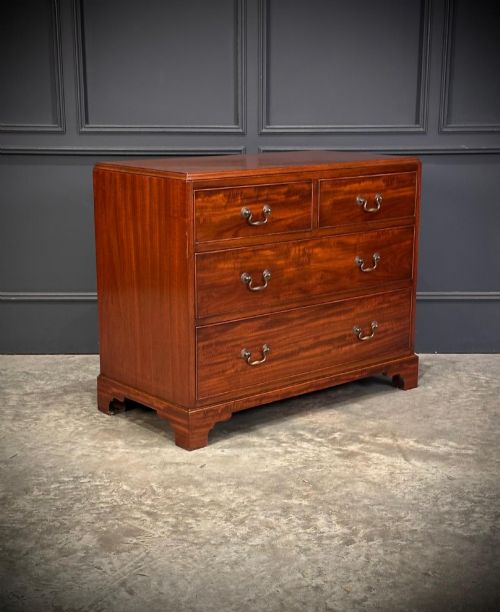


Compact Bedside Chest
A compact antique bedside chest offers diminutive scale and historical timber for smaller spaces.
Compact Bedside Chest
A compact antique bedside chest serves as a small-scale storage piece beside a bed, taking the form of a miniature chest of drawers or a bedside cabinet. When you search for a compact antique bedside chest, you encounter items built to miniature proportions from the Georgian period through to the Edwardian era.
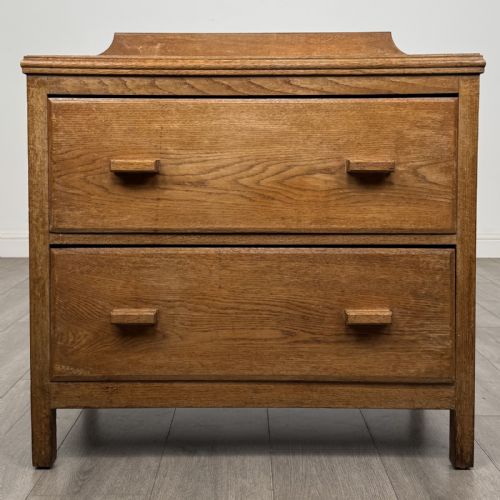
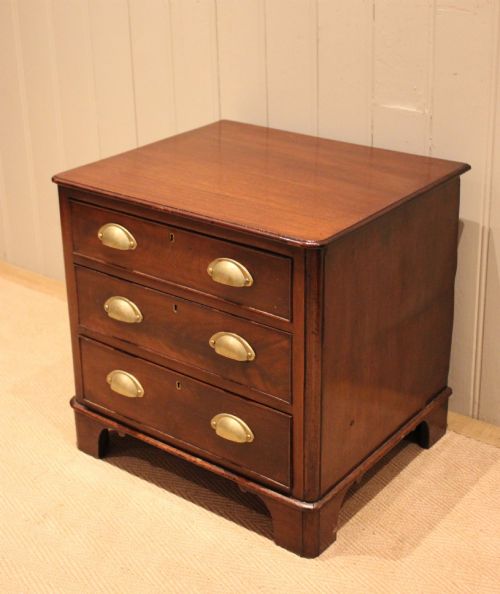
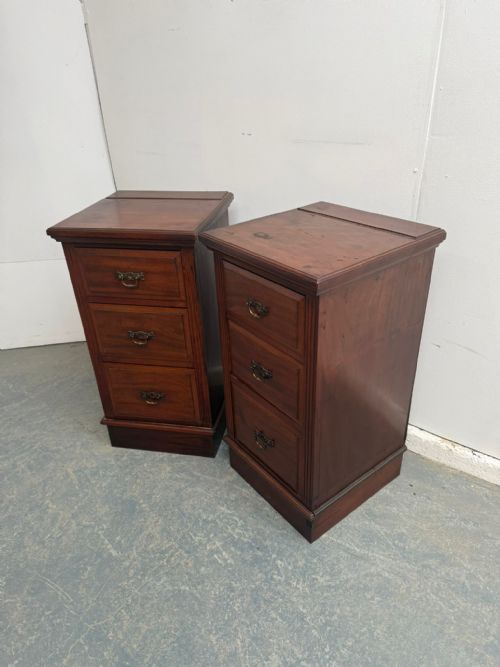
The versions most commonly met on this page include mahogany and walnut chests of drawers alongside teak and oak examples. These pieces adapt easily to modern rooms where floor space is limited but period character remains desirable.
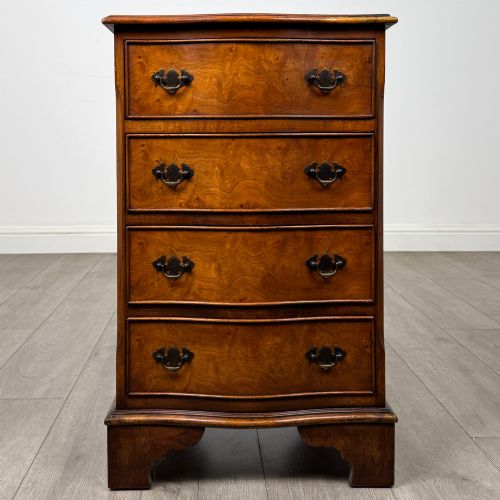
Originating in eras when furniture was built by hand for specific domestic needs, these items combine practical surface space with deep drawers. Makers often designed them with narrow footprints or serpentine and bowfront profiles to fit tight bedroom layouts.
Materials and construction methods
Makers utilised dense hardwoods such as mahogany, walnut, and burr walnut, often selecting figured veneers to create decorative drawer fronts and tops. Oak and teak also appear in the record, providing robust structural integrity for daily use.
Cabinetmakers employed traditional joinery techniques to construct the carcase and drawer boxes, incorporating brass fittings for handles and key escutcheons. Surfaces received hand-applied polish or wax finishes that enhanced the natural grain of the timber over decades of handling.
Certain miniature chests double as bedside lockers, proving that nineteenth-century Victorians appreciated secure storage for their midnight valuables just as much as we do.
Distinguishing quality across pieces
Superior examples display exceptional selection of timber grain, particularly in figured mahogany and burr walnut veneers, paired with crisp hand-cut mouldings and refined proportions. Lesser pieces rely on simpler construction and plainer wood selections without the same depth of finish.
The sophistication of the hardware and the tightness of the drawer joints separate fine workshop production from utilitarian manufacturing. A high-quality chest maintains structural harmony in miniature scale, whereas standard items show heavier framing.
The Compact Bedside Chest Glossary
- Serpentine
- A curved front shape with a convex centre flanked by concave sides. This undulating profile requires skilled woodworking to follow the precise contours of the drawers.
- Bowfront
- A convex curved front projecting outward in an arc. It provides a softer visual appearance and increased internal drawer capacity.
- Burr Walnut
- Timber taken from the warted growth on a walnut tree, yielding complex swirling grain patterns. Cabinetmakers prized this material for high-status veneering.
- Regency Style
- Design influenced by the British Regency period, known for classical restraint and clean architectural lines. Pieces from this tradition often feature dark mahogany timbers and subtle brass details.
- Edwardian
- Pertaining to the reign of King Edward VII, spanning the early twentieth century. Furniture from this period frequently reinterprets earlier Georgian forms with lighter proportions.
Compact Bedside Chest: Frequently Asked Questions
What periods do these chests come from?
The pieces span from the Regency era and the mid nineteenth century through to the Edwardian period and the early twentieth century.
Craftsmen built them across successive eras, reflecting shifting domestic fashions while retaining small dimensions.
How were these small chests originally used?
They served primarily in bedrooms to hold personal items, nightwear, or small valuables close to the bed.
Their diminutive height and surface area made them suitable for holding a candle, watch, or book during the evening hours.
Are these chests suitable for modern bedrooms?
Their narrow footprints and shallow depths allow them to fit easily beside contemporary bed frames without dominating the room.
They offer useful drawer storage while introducing tactile warmth through historical timber surfaces.
How do walnut and mahogany pieces differ?
Walnut and burr walnut exhibit rich brown tones with complex swirling figure marks that catch the light.
Mahogany provides a deep reddish-brown hue with straight or figured grain that takes a high polish.