


Bachelor Chest Brushing Slide
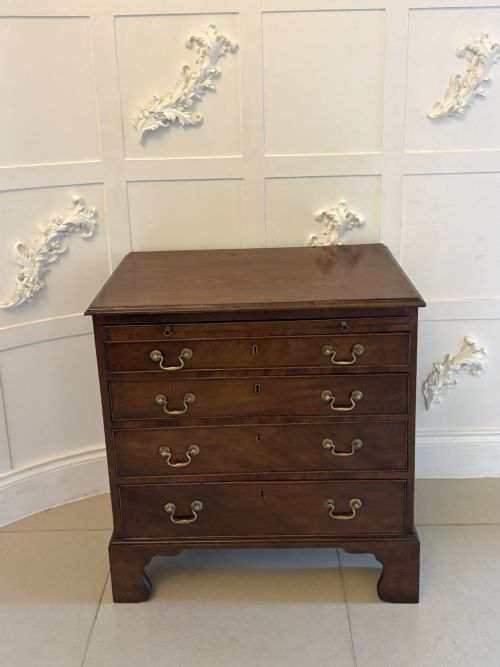
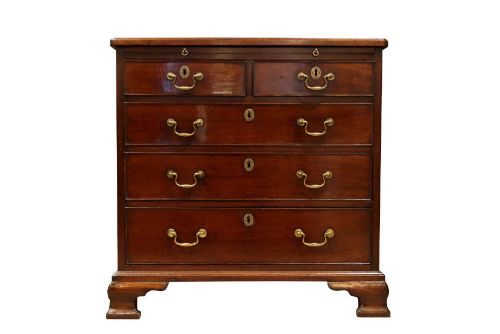
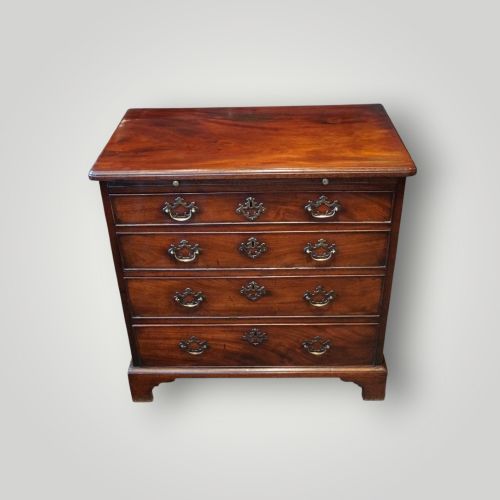
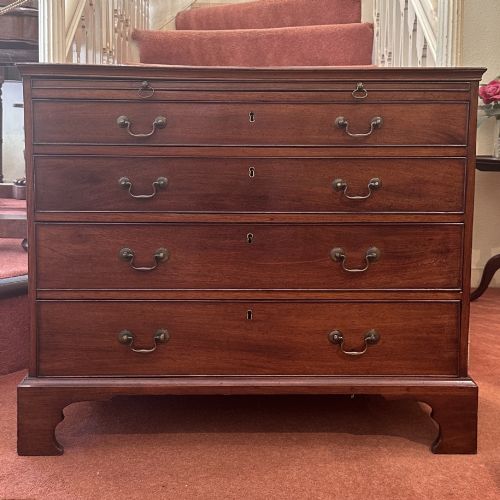
A bachelor chest brushing slide combines compact storage with a pull-out shelf, offering a practical workspace in a tight footprint.
Bachelor Chest Brushing Slide
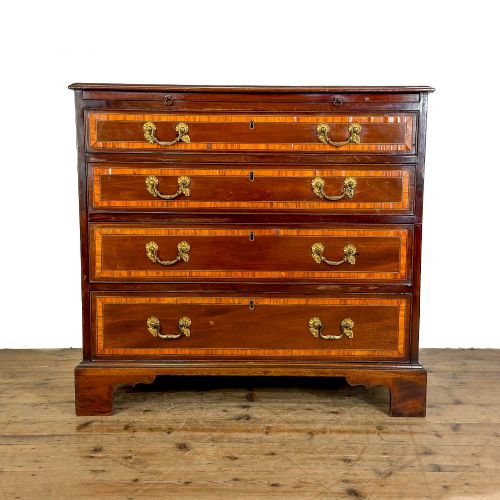
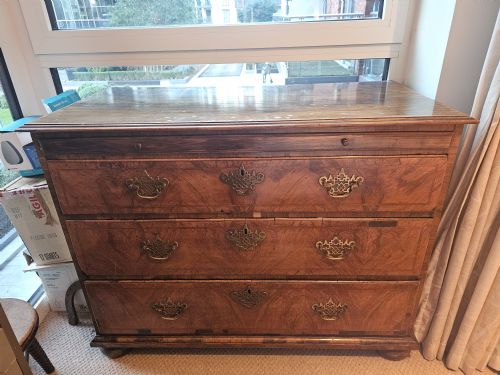
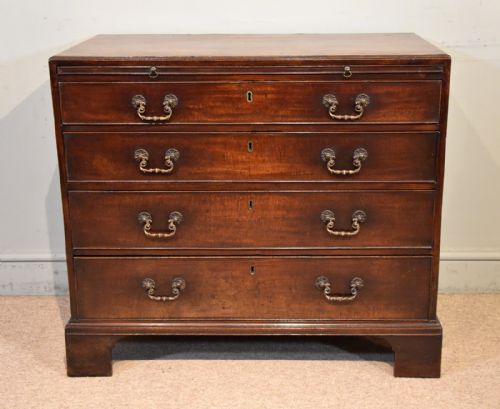
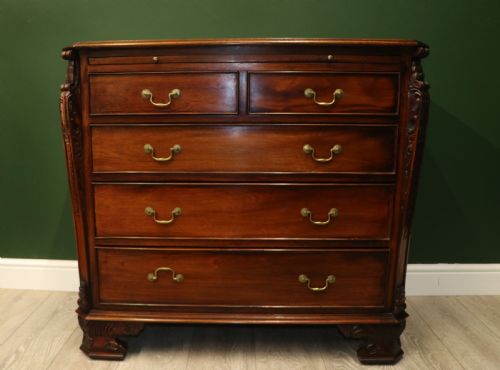
When you search for a bachelor chest brushing slide, you are looking at a compact chest of drawers featuring a pull-out shelf directly above the main drawer stack. The pieces available span the 18th century through the 19th century, alongside occasional Edwardian, 1930, and 1960 examples, predominantly built in the Georgian and George III styles.
These forms primarily function as chests of drawers scaled for smaller rooms, while the integrated sliding panel provides a convenient surface for writing or sorting papers without occupying extra floor space. Most examples appear in mahogany, walnut, or oak, often constructed with small proportions suited to period bedchambers.
What varies in quality
Quality rests in the choice of timber and the crispness of the cabinetwork, visible in the grain matching across drawer fronts and the tightness of the corner dovetails. Superior examples display carefully selected flame mahogany or burr walnut veneers that retain rich natural patination.
The smoothness of the sliding mechanism and the integrity of the secondary timbers further distinguish finer pieces from standard utilitarian chests. Proportion and scale also dictate worth, as smaller, well-balanced chests command greater interest than bulky alternatives.
Materials recorded on this page comprise brass, mahogany, oak, walnut, satinwood, rosewood, burr walnut, and flame mahogany.
The Bachelor Chest Brushing Slide Glossary
- Brushing slide
- A pull-out wooden shelf integrated immediately beneath the top surface of a chest. It served historically for brushing clothes or as a temporary writing surface.
- Flame mahogany
- A timber veneer displaying a distinct flickering, flame-like grain pattern. Cabinetmakers favoured this cut for primary decorative surfaces on high-status furniture.
- Dovetail
- An interlocking wood joint formed by interlocking wedge-shaped fingers. It secures drawer corners with notable tensile strength.
- Patina
- The deep surface sheen and mellow colour developed by aged wood over centuries of handling and polishing. It marks genuine age and exposure to light.
Bachelor Chest Brushing Slide: Frequently Asked Questions
What is a brushing slide used for?
The sliding panel served as a convenient surface for brushing clothes or sorting small items in a bedchamber. It also functioned as a compact writing desk when space was limited.
Cabinetmakers integrated the slide just above the top drawer so it could be pulled out easily without disturbing the contents below.
How do I date an 18th-century chest?
Dating relies on examining the timber species, construction methods, and hardware styles. Earlier pieces often feature walnut or oak, whereas later Georgian examples predominantly use mahogany.
Internal details like hand-cut dovetails, secondary wood choices, and the profile of the drawer dividers provide further clues to the period of manufacture.
Are all bachelors chests small?
Most examples possess relatively small proportions compared to standard chest of drawers, as they were originally designed for private chambers. However, sizes vary across different periods and regional workshops.
Compact dimensions remain a defining characteristic for pieces carrying this description.
How do I care for antique mahogany?
Keep wooden surfaces away from direct sunlight and steady heat sources to prevent the timber from drying out or splitting. Dust regularly with a dry cloth and apply occasional wax polishing.
Avoiding synthetic cleaning sprays preserves the original polish and natural patina of the wood.