

Mahogany Bachelor Chest Drawers
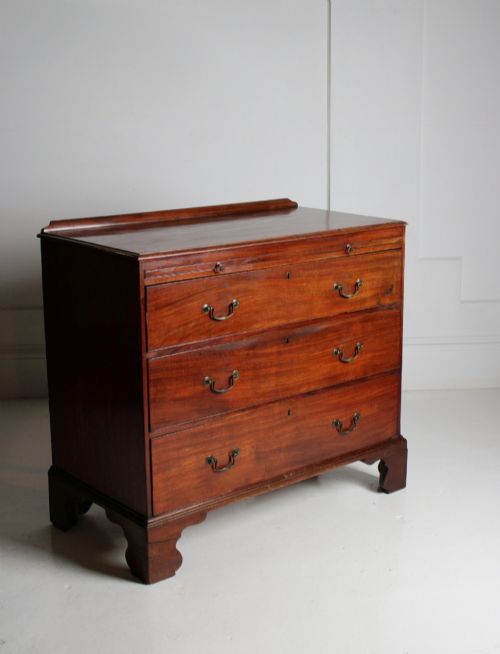
When you search for mahogany bachelor chest drawers, you are looking at adaptable case furniture designed for compact spaces with a pull-out slide.
Mahogany Bachelor Chest Drawers
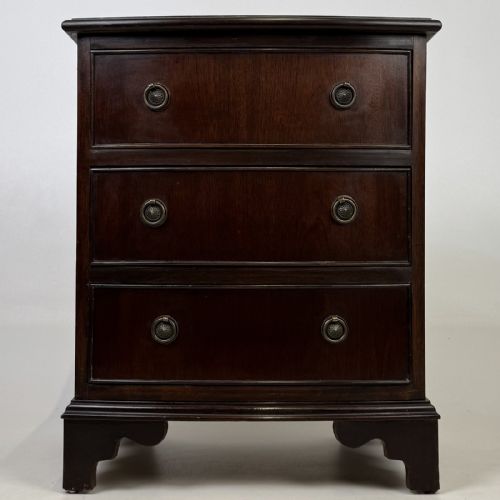
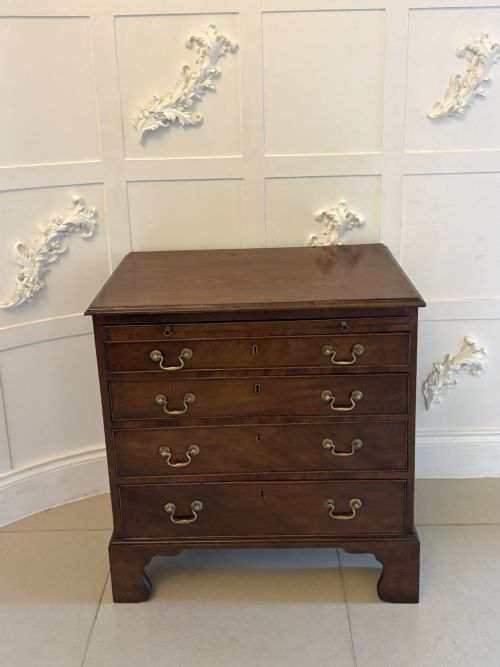
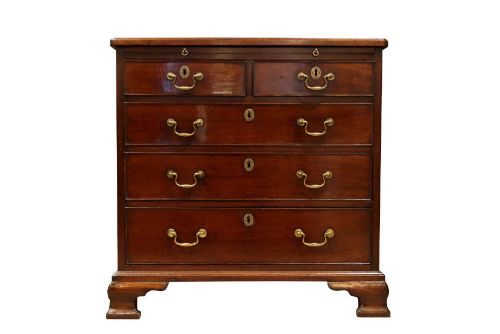
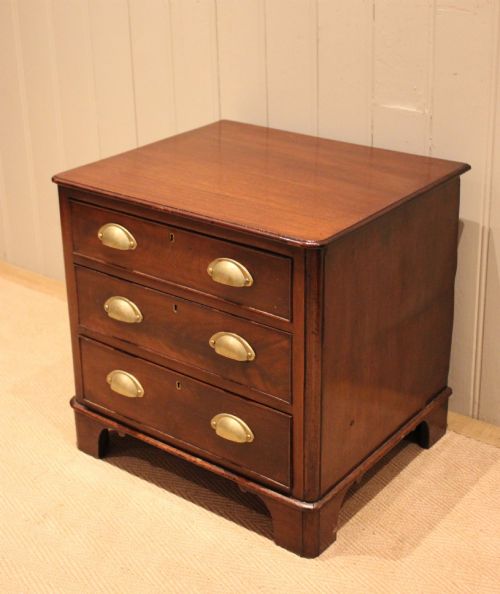
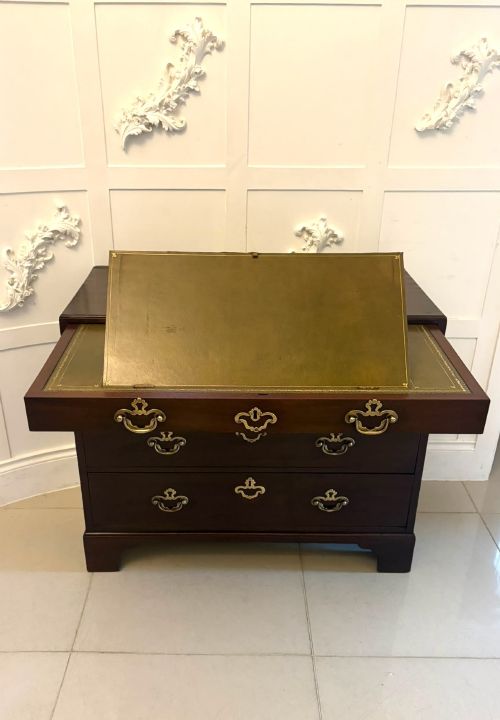
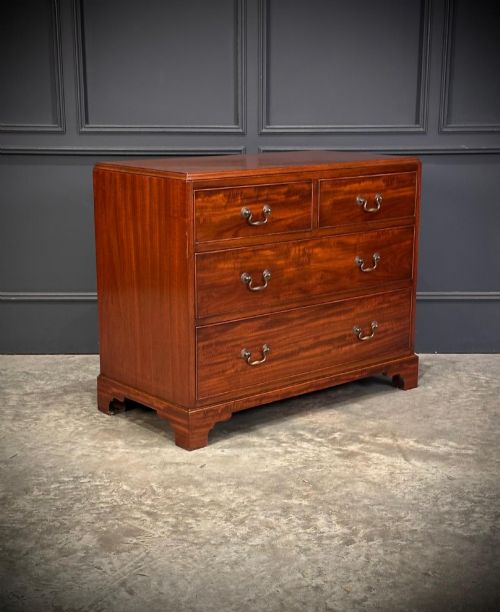
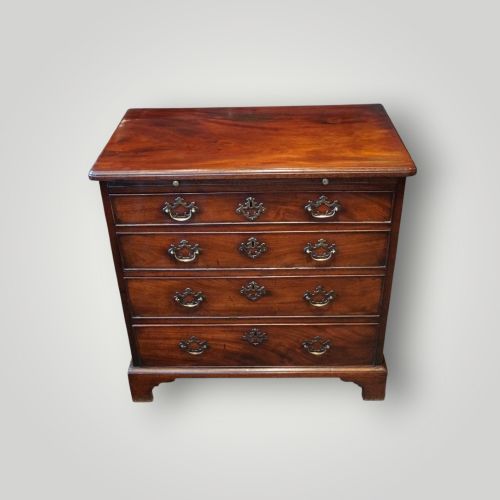
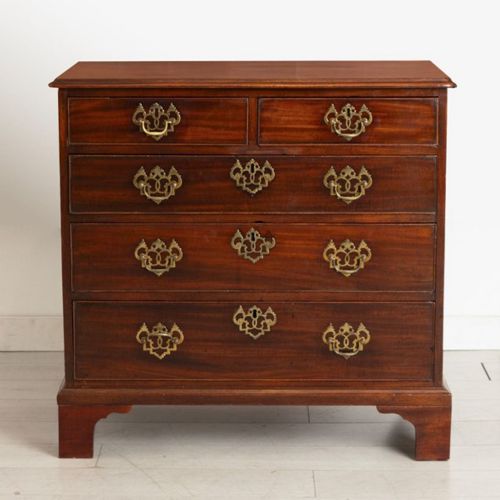
A mahogany bachelor chest drawers piece serves as a compact chest of drawers equipped with a pull-out writing slide or fitted desk compartment, originating primarily from the Georgian and Victorian periods. These pieces combine domestic storage with a functional writing surface, frequently appearing in smaller proportions suited for chambers and dressing rooms.
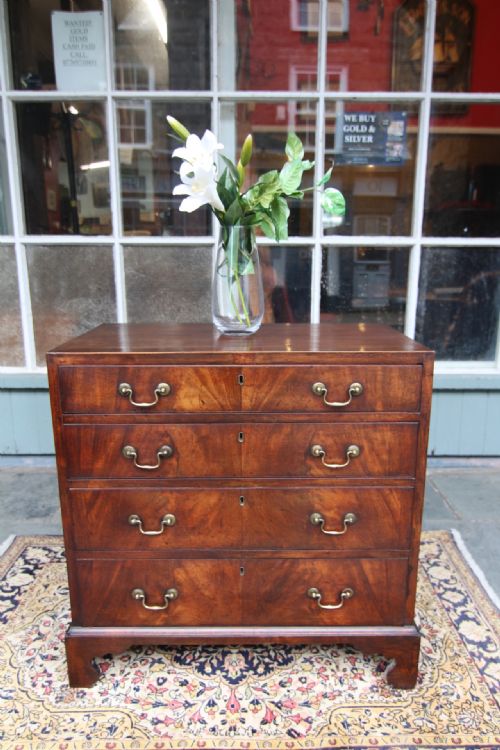
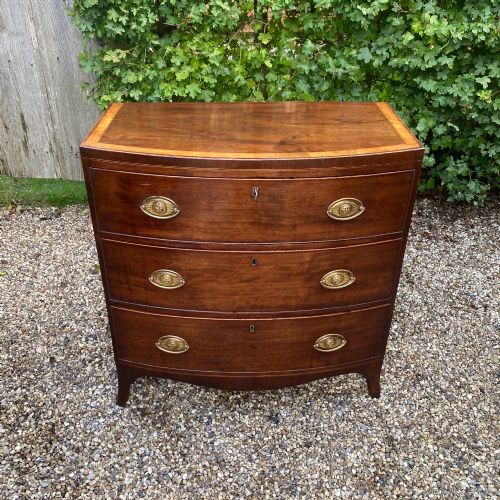
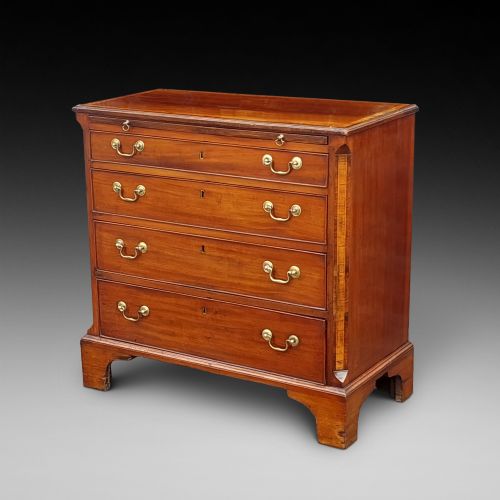
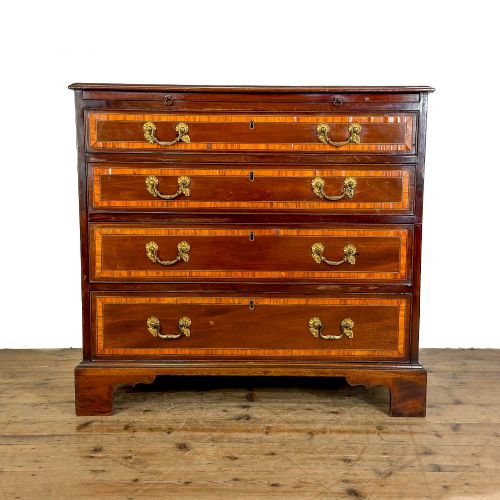
The selection ranges from George II and George III cabinet-making to later 19th-century interpretations and 20th-century revivals. Many examples feature graduated drawer arrangements supported by bracket feet, while others incorporate bow fronts or cross-banded veneers.
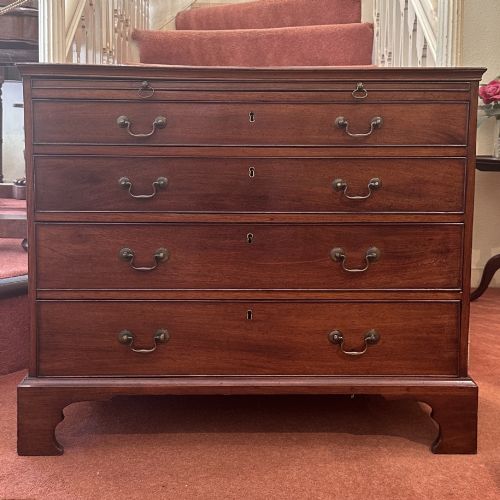
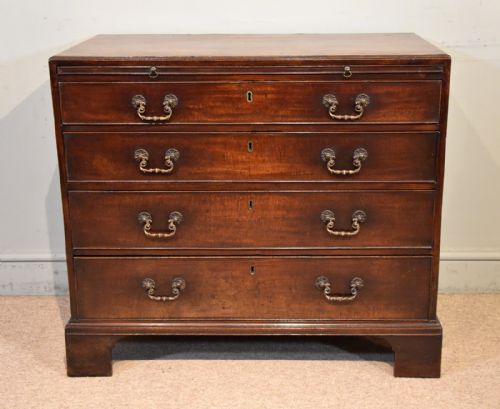
Buyers encounter numerous variations defined by their internal fittings, such as secret compartments or fitted writing desks behind the upper drawer. The presence of the original brushing slide remains a defining characteristic that separates these compact chests from standard drawer units.
Assessing quality and proportion
Quality rests in the choice of timber and the crispness of the cabinet work, particularly how the mahogany grain is matched across the drawer fronts. Finer examples display subtle details such as cross-banding, fine string inlay, and original brass fittings that sit correctly within their historic screw holes.
Proportion dictates desirability, with smaller low chests and neat bow-front formats commanding particular attention. The smooth operation of the brushing slide and the integrity of the oak-lined drawer construction further distinguish the standard of craftsmanship.
Hidden secret drawers tucked away behind the main facade offer a delightful place to misplace your letters.
The Mahogany Bachelor Chest Drawers Glossary
- Brushing slide
- A pull-out shelf located immediately beneath the top surface, traditionally used for writing or brushing clothes.
- Caddy top
- A raised or moulded table top with a stepped edge reminiscent of tea caddy designs found on 18th-century furniture.
- Cross-banding
- A narrow strip of veneer laid perpendicularly to the surrounding grain along the border of a drawer front or top.
- Bracket foot
- A simple supporting foot shaped like an L-bracket, commonly found on Georgian case furniture.
- Flame mahogany
- Timber cut from the fork of the mahogany tree, producing a distinctive flickering flame pattern across the surface.
Mahogany Bachelor Chest Drawers: Frequently Asked Questions
How do I spot a Georgian piece?
Georgian examples typically display hand-cut dovetails, oak secondary linings, and traditional bracket feet. The timber exhibits a deep, natural patina developed over centuries of polish and handling.
Proportions tend to be neat and restrained, avoiding the heavier ornamentation seen in later Victorian revivals.
What was the slide used for?
The pull-out slide served as a temporary writing surface or a place to fold garments. It allowed individuals to write letters without occupying a full-sized desk.
When pushed back into the case, the slide sits flush with the upper moulding, keeping the furniture compact.
Where should I place one?
These chests fit well in hallways, living rooms, or bedrooms where floor space is limited. Their modest proportions allow them to sit comfortably against walls without dominating the room.
The top surface provides a convenient display area for lamps or small decorative objects while the drawers hold everyday items.