


Narrow Glass Cabinet
These narrow glass cabinet examples deliver upright display space for collections without crowding the room, blending practical storage with period elegance.
Narrow Glass Cabinet
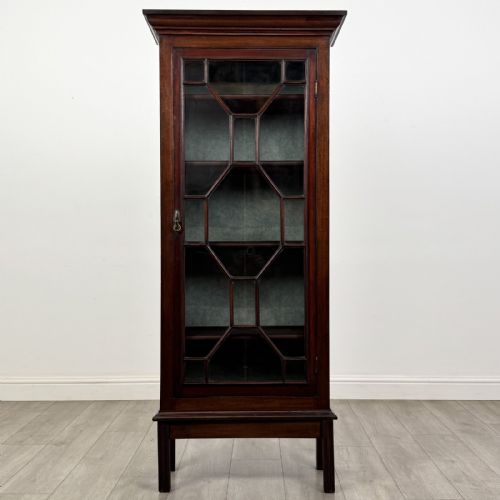
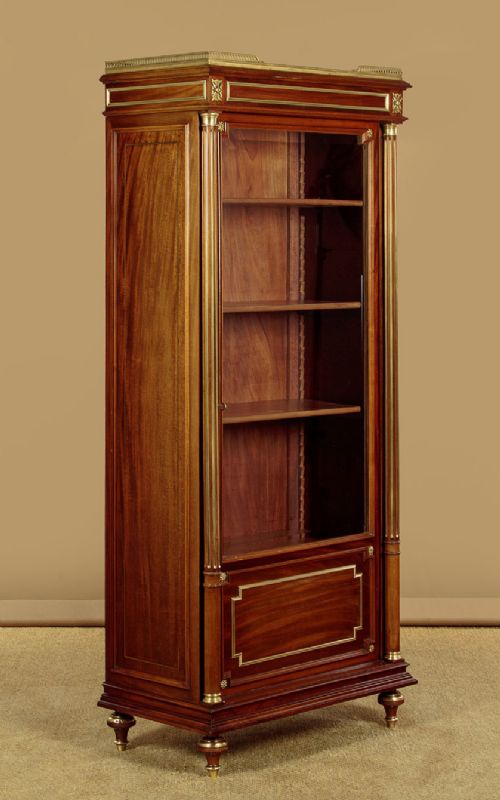
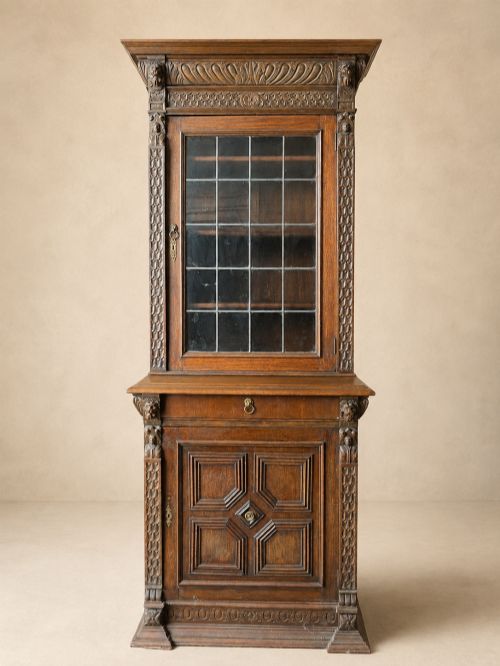
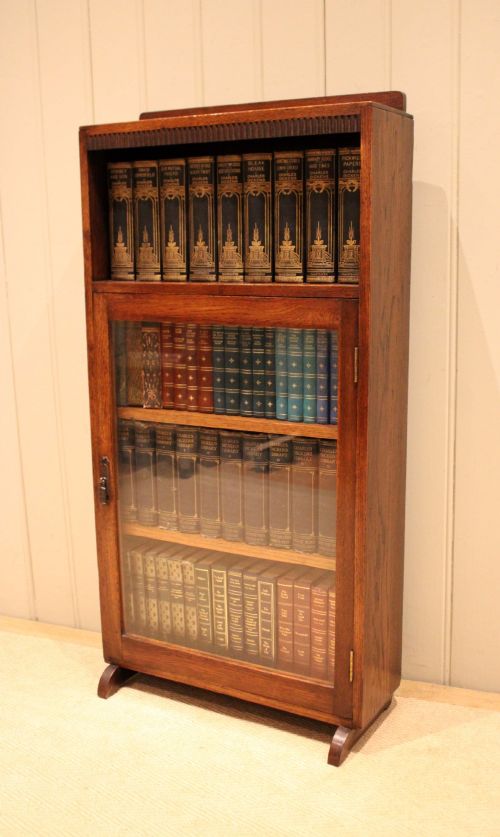
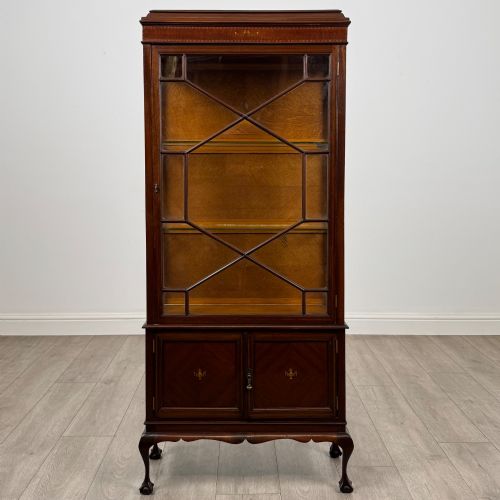
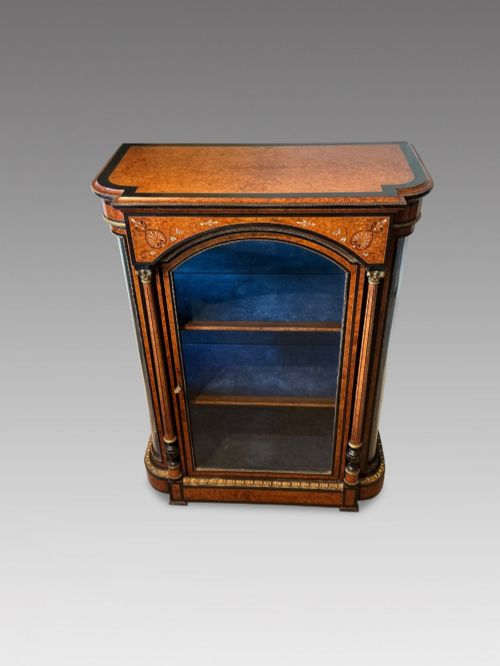
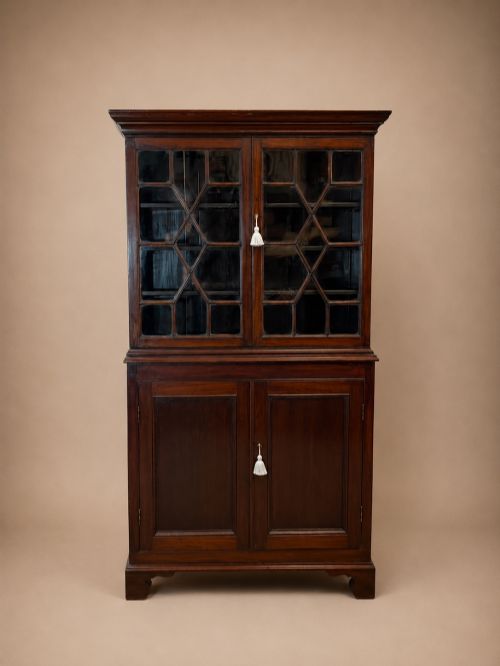
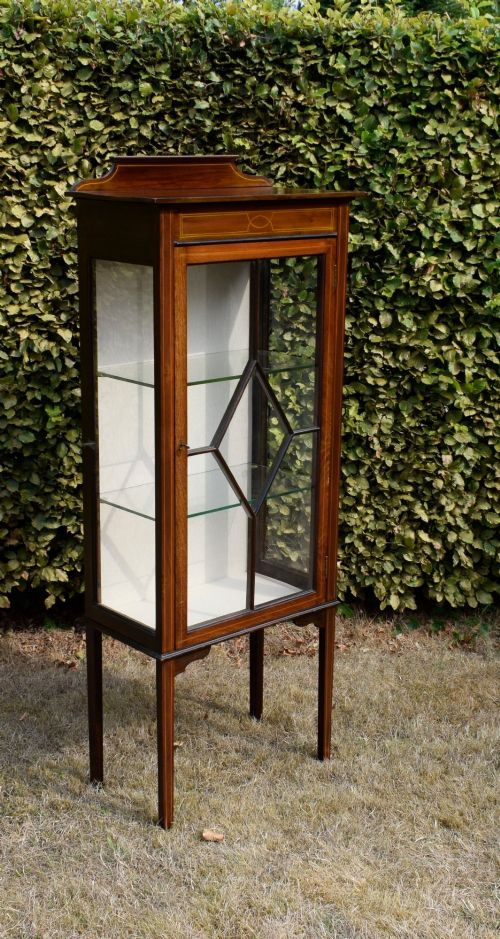
A narrow glass cabinet encompasses upright display furniture designed to house precious items in compact footprints. The selection on this page centres heavily on Victorian and Edwardian pieces, ranging from slender pier cabinets to tall bookcases.
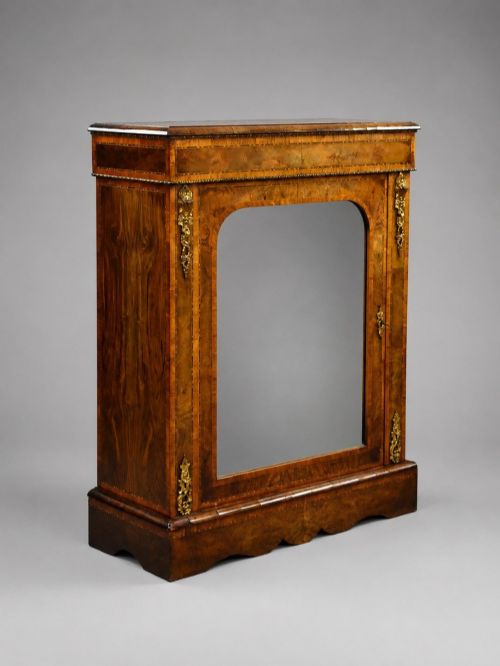
Buyers frequently encounter nineteenth-century walnut pier cabinets alongside Edwardian mahogany display furniture. These tall, slim forms suit smaller sitting rooms where floor space remains at a premium while vertical capacity is required.
Origins stretch across English workshops and French provincial makers, offering various heights and door configurations. Most examples combine glass viewing panels with fitted internal shelving for china, books, or ornaments.
How They Were Made
Cabinet makers utilised dense hardwoods including mahogany, walnut, and oak to construct the foundational carcass and framing. Timber selection dictated the strength required for tall, slender proportions and supported decorative marquetry or inlay work.
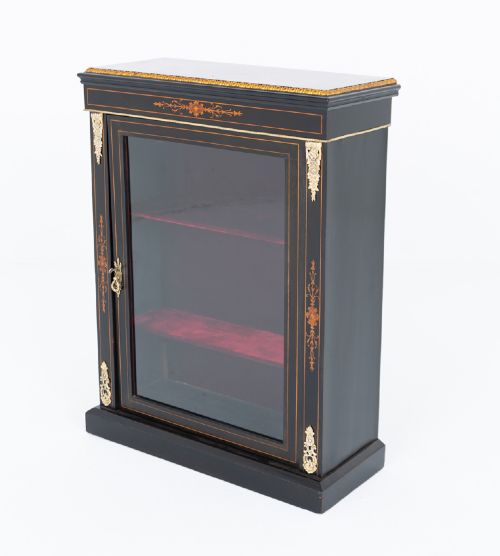
Glass panels were glazed into doors using timber rebates, often accompanied by brass hinges and locks. Ormolu mounts and velvet interior linings appear on finer Victorian pier cabinets to frame the displayed contents.
Surfaces received French polish or ebonising treatments to enrich the natural grain and colour of the wood. Carved details and satinwood stringing highlight the hand-finished nature of these period pieces.
Some Edwardian cabinets come with claw feet, allowing your china to stand atop miniature wooden talons.
What Varies in Quality
The refinement of the timber and the crispness of marquetry inlay separate ordinary examples from the finest pieces. Rich burr walnut veneers and intricate brass or ormolu mounts signal superior workshop execution.
Structural integrity in tall, slim forms depends on seasoned timber that resists warping over decades. Superior joinery ensures that glazed doors hang true and locks operate smoothly without sagging.
Shapland and Petter·Minty
The Narrow Glass Cabinet Glossary
- Pier cabinet
- A low or tall slim cabinet designed to fit against the wall space between windows. These pieces often feature glass doors and decorative marquetry.
- Ormolu
- Gilded bronze mounts applied to furniture for decorative effect. It appears frequently on French and high-status Victorian cabinets.
- Ebonised
- Timber finished with a dark stain or polish to imitate ebony. This technique was popular during the nineteenth century for dramatic contrast.
- Marquetry
- Decorative patterns formed by fitting together small pieces of veneer. Craftsmen used various coloured woods to create floral or geometric designs.
Narrow Glass Cabinet: Frequently Asked Questions
Where should I place a narrow glass cabinet?
These slim cabinets suit narrow wall spaces, hallways, or corners where standard furniture proves too bulky. Their vertical orientation draws the eye upward while keeping a minimal footprint on the floor.
Ensure placement avoids direct sunlight to protect antique timber finishes and any velvet interior linings from fading over time.
How do I care for antique wood and glass?
Maintain the finish by applying quality beeswax sparingly and buffing with a soft cloth. Avoid silicone sprays or modern chemical polishes that can degrade nineteenth-century polishes.
Clean the glass panels using a gentle glass cleaner applied to a cloth rather than directly onto the surface, preventing moisture seepage into antique timber joints.
Can these cabinets support heavy books?
Many examples on this page function as bookcases with adjustable or fixed timber shelving. Heavier volumes sit best on lower shelves to maintain overall stability in tall, slender furniture.
Inspect the shelf supports and internal battens to ensure they remain secure before loading substantial collections of books.
How do I identify a Victorian pier cabinet?
Victorian pier cabinets typically exhibit dark timbers such as walnut or ebonised finishes, frequently accompanied by inlaid marquetry or Sevres style porcelain plaques. They were built to stand against narrow wall piers.
Look for traditional construction methods including hand-cut dovetails in the drawers and early brass hardware fittings.