
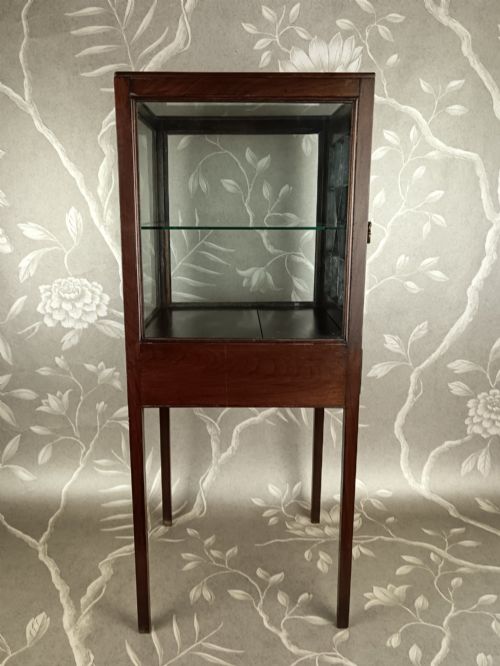
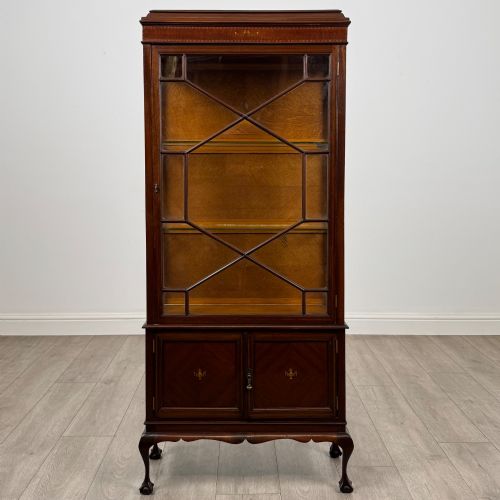
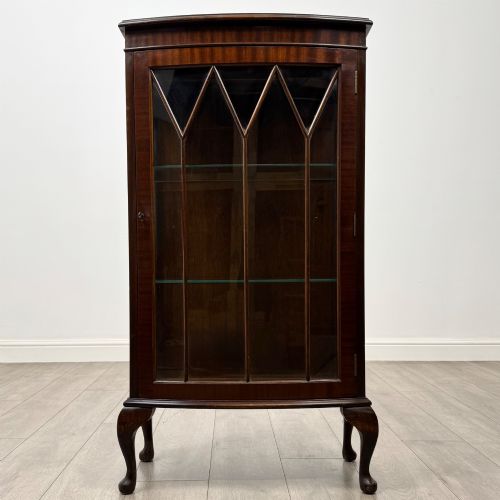
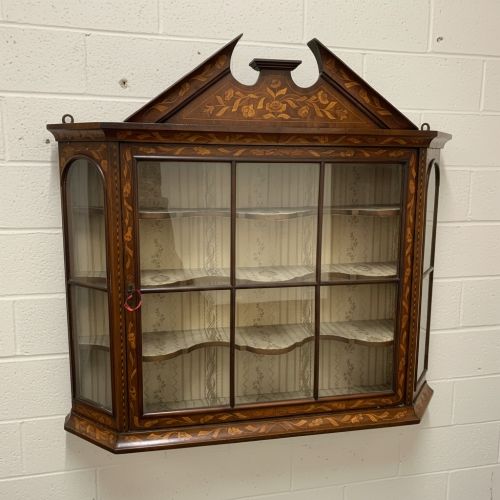
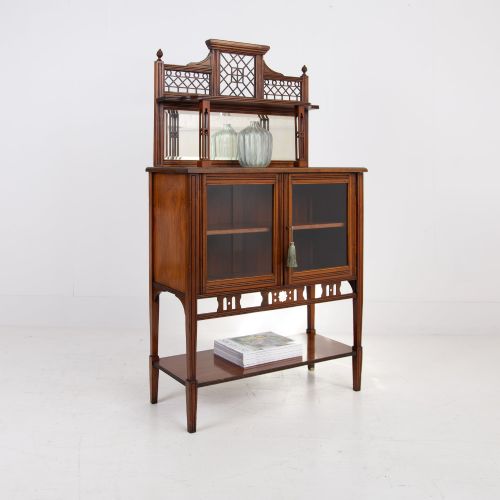
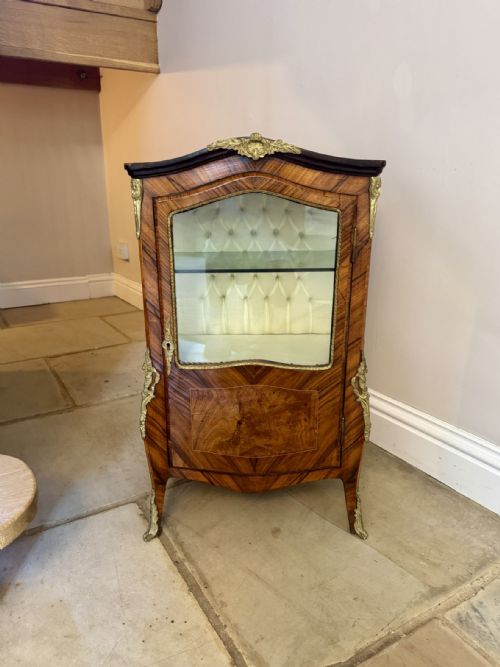
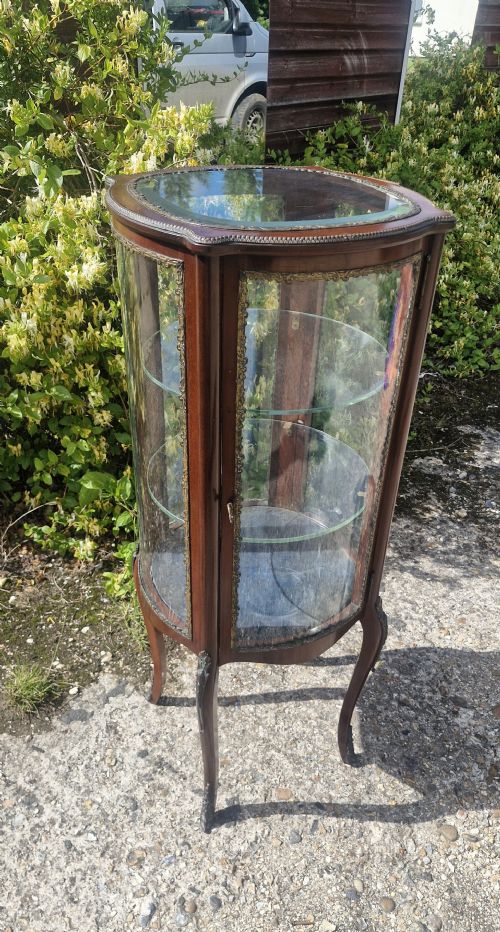
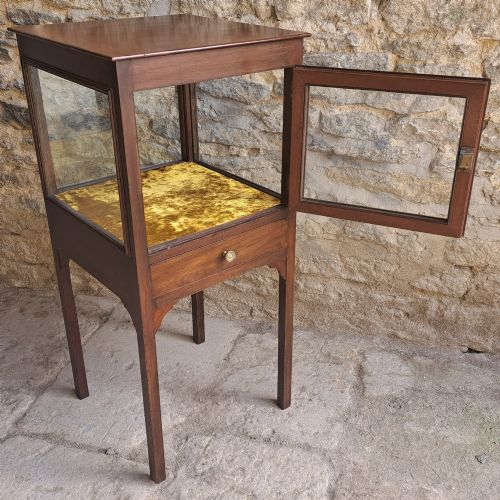


Small Curio Cabinet
A small curio cabinet holds personal treasures behind glass, bringing order and light to miniature collections and curiosities.
Small Curio Cabinet
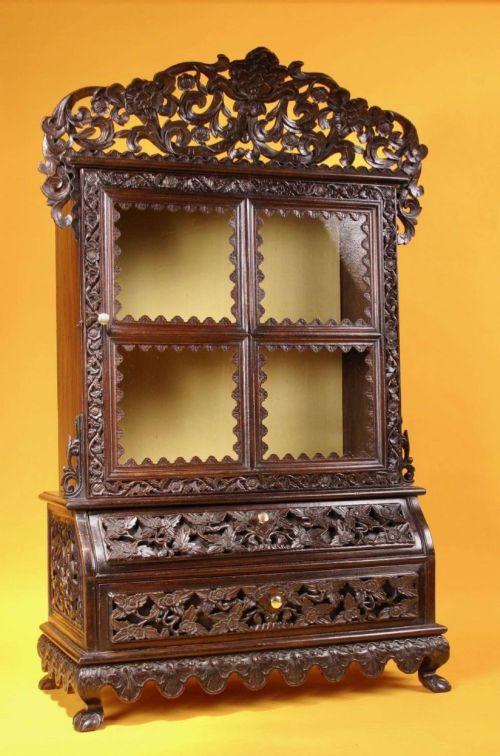
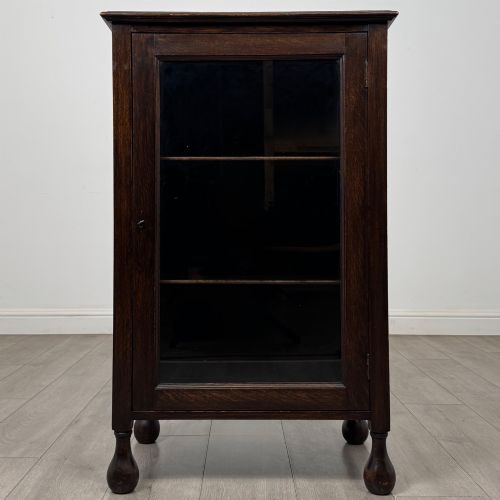
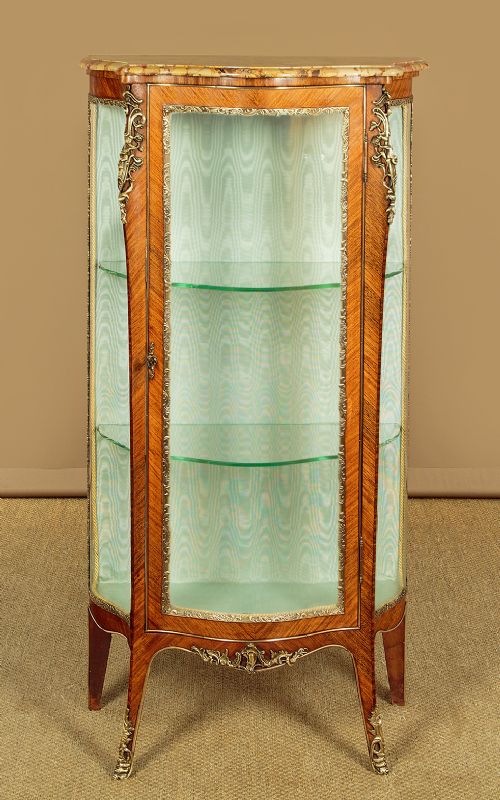
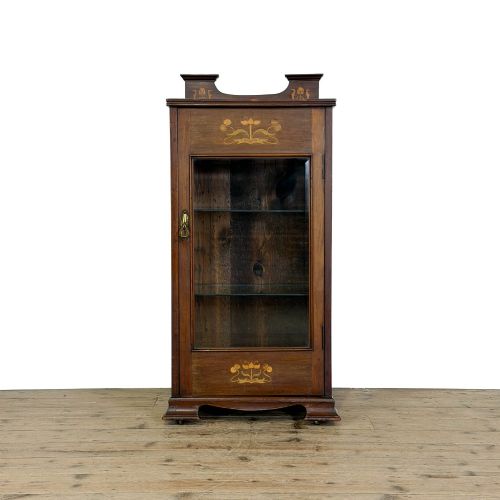
When you search for a small curio cabinet, you encounter compact display pieces designed to showcase collections on tabletops, walls, or delicate legs. The pieces on this page span several centuries, reaching from the eighteenth century through the Victorian and Edwardian eras into the twentieth.
You meet various forms ranging from wall-mounted cabinets and hanging cases to freestanding vitrines, miniature cabinets, and glass-topped bijouterie tables. Mahogany forms the backbone of these selections, accompanied by walnut, satinwood, and kingwood.
The aesthetic vocabulary stretches across Georgian proportions, French Louis XV and Rococo revivals, Art Nouveau, and the Aesthetic Movement. Edwardian examples with inlaid satinwood crossbanding appear frequently alongside nineteenth-century table cabinets.
How they were made
Cabinet makers utilised dense timbers like mahogany and walnut as the primary structural foundations, often applying delicate veneers and satinwood bandings to the exterior surfaces. Glass panels were integrated into doors and hinged lids to protect contents while maintaining visibility from multiple angles.
Ormolu mounts, brass fittings, and gilt metal details were cast and applied to accentuate corners, legs, and cornices, particularly on pieces influenced by French styles. Fabric linings in velvet provided a soft base inside display cases and bijouterie tables to cushion delicate objects.
Marquetry and inlay techniques introduced contrasting wood tones and floral or geometric motifs across drawer fronts and friezes, especially on Edwardian and eighteenth-century Dutch pieces.
Listings feature mahogany as the dominant timber, accompanied by walnut, satinwood, and kingwood across Edwardian, Victorian, and eighteenth-century periods.
What varies in quality
The distinction between standard examples and superior pieces rests on the crispness of the cabinet work and the choice of timber figuring. Grain selection in mahogany, burr walnut, and kingwood dictates the visual depth of the exterior surfaces.
Refinement shows in the execution of decorative elements, such as finely fitted glass joints, well-cast ormolu mounts, and precise marquetry inlay rather than simpler painted decoration. The structural integrity of slender legs on bijouterie tables and the smooth action of hinged glass lids also separate workshop standards.
Edwards and Roberts
The Small Curio Cabinet Glossary
- Vitrine
- A glass-fronted display cabinet used for showing porcelain, curiosities, and small valuables. These pieces often feature glazed sides to maximise ambient light.
- Bijouterie table
- A glass-topped display table designed specifically for holding jewellery, medals, and small trinkets. They frequently incorporate hinged lids for easy access.
- Marquetry
- Decorative woodwork where pieces of contrasting veneer are applied to form pictorial or geometric patterns. It appears frequently on cabinet friezes and tabletops.
- Ormolu
- Gilded bronze mounts applied to furniture for decorative enrichment. This technique gained widespread use on French-inspired nineteenth-century cabinets.
- Crossbanding
- A border veneer applied around the edges of a panel where the wood grain runs perpendicular to the central section. It frames the primary timber with a contrasting stripe.
Small Curio Cabinet: Frequently Asked Questions
What is a bijouterie table?
A bijouterie table is a glass-topped display case on legs designed for jewellery and small curiosities. These pieces lift items to eye level for close inspection.
They emerged strongly during the Victorian and Edwardian periods as fashionable drawing room furniture for collectors.
How do I hang a wall cabinet?
Hanging wall cabinets utilise built-in brackets or secure wooden mounting strips fixed to the rear framework. Professional installation ensures the weight of the timber and glass is safely distributed.
Wall-mounted glass cases keep delicate collections away from busy tabletops and foot traffic.
How do I care for antique mahogany wood?
Antique mahogany requires regular dusting with a soft, dry cloth to prevent particulate accumulation. Avoid placing wooden cabinets in direct sunlight or near heat sources to protect the polished finish.
Occasional treatment with appropriate wax preserves the moisture balance and natural lustre of the timber.