




Georgian Revival Vitrine
A georgian revival vitrine is a display cabinet built to showcase prized possessions, combining eighteenth-century elegance with later craftsmanship.
Georgian Revival Vitrine
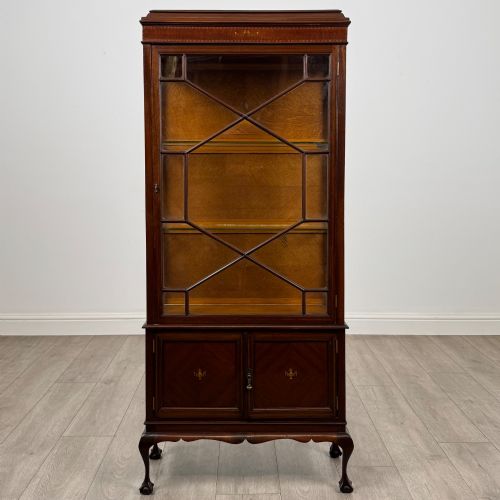
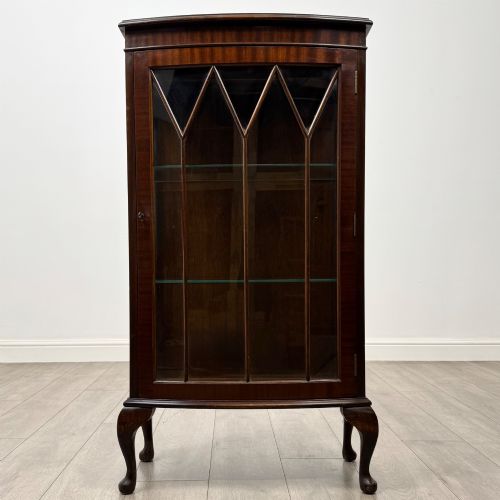
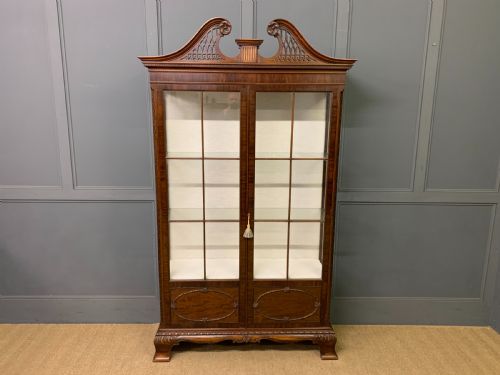
A georgian revival vitrine brings formal display into domestic spaces through glazed cabinets and corner units. These pieces range from compact wall-hanging vitrines to large two-part corner cabinets and cabinets-on-stand.
Most examples encountered here date from the Edwardian era and the late nineteenth century. Makers drew directly on Sheraton, Chippendale, and George I vocabularies to create these refined display vessels.
The primary forms include freestanding display cabinets, corner cabinets, and bijouterie pieces. Each type serves the collector who wishes to exhibit ceramics, glass, or small valuables behind glass.
Materials and construction
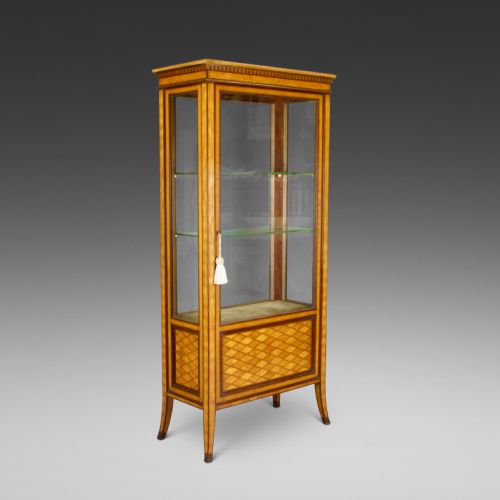
Makers utilised solid timbers and veneers of mahogany and walnut as the primary carcase materials. Satinwood surfaces frequently received elaborate marquetry, parquetry, and painted details.
Glass panels are held within delicate astragal glazing bars of wood or brass. Secondary woods and fabric linings complete the interiors designed to reflect light onto displayed objects.
Some cabinets feature internal fabric linings designed to make your grandmother's porcelain look entirely regal.
Judging quality
The standard of a georgian revival vitrine rests upon the crispness of its timber inlay and carving. Finely executed satinwood marquetry and precise brass mounts distinguish superior workshop production from simpler output.
Structural harmony also defines better pieces, seen in balanced proportions and well-fitted glazed doors. The depth of the timber finish and the delicacy of the glazing bars reveal the maker's hand.
Edwards and Roberts
The Georgian Revival Vitrine Glossary
- Vitrine
- A glass-fronted cabinet designed for displaying fine objects or china. This term is interchangeable with display cabinet in many period contexts.
- Marquetry
- Decorative veneer work forming pictorial or geometric patterns using various coloured woods. It appears frequently on satinwood surfaces of this period.
- Astragal
- A small mould profile used in glazing bars to divide glass panes within a door. These bars structure the visual rhythm of the cabinet front.
- Bijouterie cabinet
- A specialised display case with a glass top and sides intended for smaller treasures and jewellery. Examples often stand on slender legs.
- Parquetry
- Geometric mosaic woodwork forming patterns like cubes or squares on cabinet surfaces. This technique demonstrates high-level cabinetmaking skill.
Georgian Revival Vitrine: Frequently Asked Questions
What is a georgian revival vitrine?
A georgian revival vitrine is a glazed display cabinet produced mainly during the late nineteenth and early Edwardian periods. These pieces emulate eighteenth-century aesthetics to showcase porcelain and small collectibles.
They utilise woods like mahogany, walnut, and satinwood, often decorated with intricate inlay. The form allows natural light to enter from multiple sides.
Where should I place a corner cabinet?
Corner cabinets fit efficiently into unused room angles while adding architectural interest to an interior. Two-part corner models offer enclosed storage below and glazed display above.
Position them away from direct sunlight to protect interior fabric linings and sensitive timber surfaces. Ensure the floor is level so the glazed doors hang true.
How do I clean mahogany and satinwood?
Dust timber surfaces regularly with a soft, dry cloth to prevent grit accumulation. Avoid modern silicone sprays that can damage antique polishes over time.
Feed the wood periodically with traditional beeswax to maintain its natural lustre. Glass panels require standard non-ammonia cleaner applied to a cloth rather than sprayed directly.
How do I date a revival vitrine?
Examine the secondary woods, screw types, and interior linings for clues to the manufacturing era. Edwardian pieces often display machine-sawn backing boards alongside hand-finished cabinetwork.
Stylistic cues also help; Sheraton and Chippendale revivals became particularly popular between eighteen-eighty and nineteen-twenty. Maker stamps or labels provide the most reliable chronological anchor.