



Narrow French Chest
A narrow french chest offers upright storage with a modest footprint, bringing continental proportion and timber grain to compact spaces.
Narrow French Chest
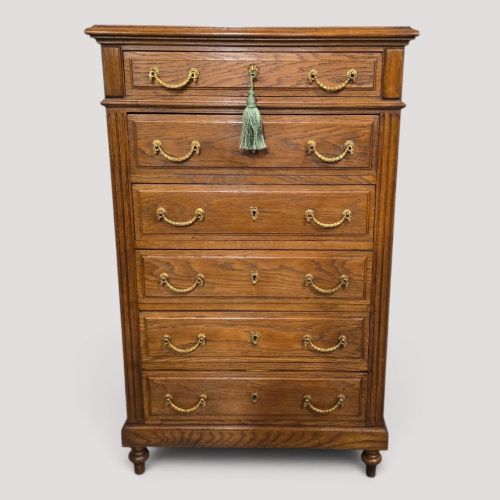
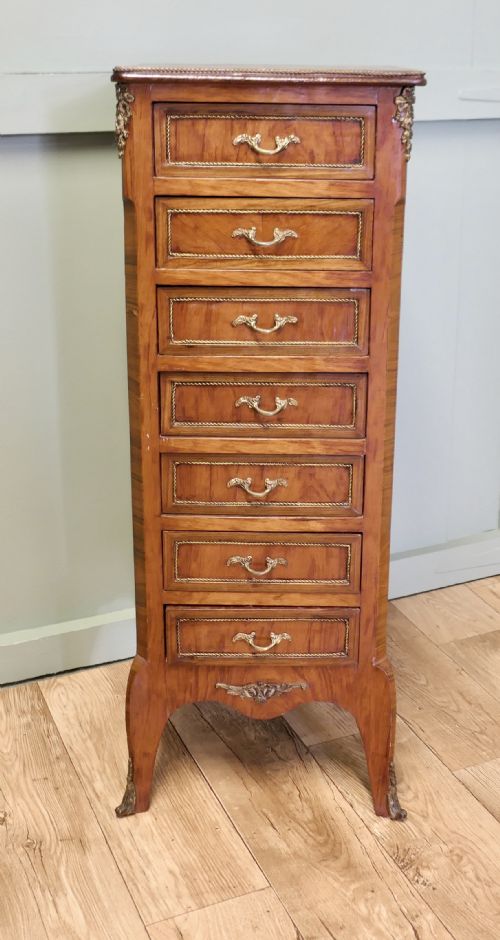
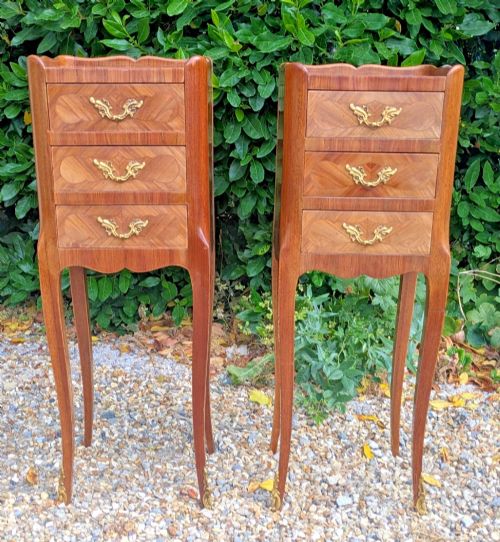
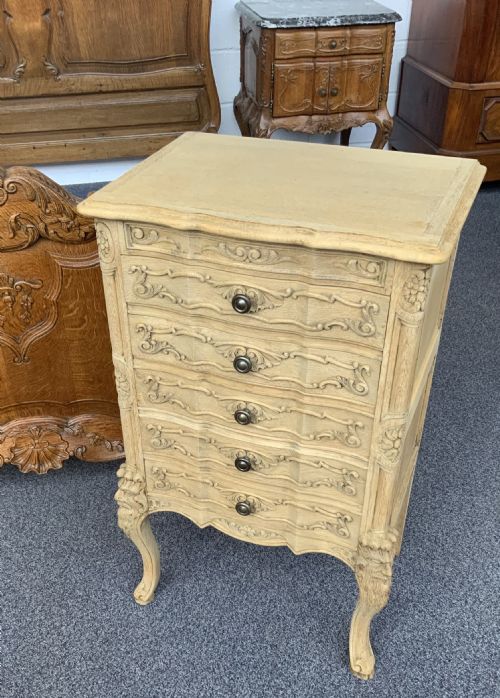
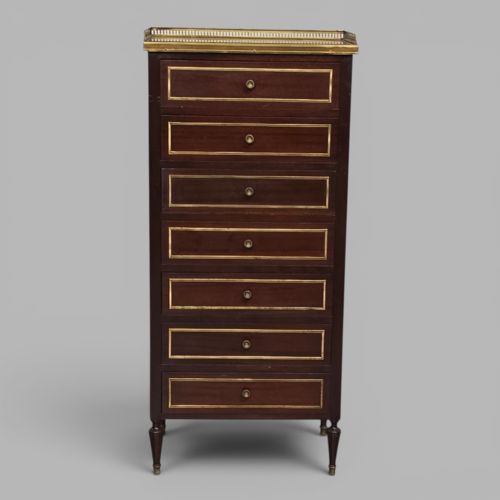
A narrow french chest serves as a space-saving storage piece, frequently encountered as a tall chest of drawers, a semainier, or a bedside cabinet across this selection. These items span periods from the nineteenth century through to the early decades of the twentieth century, reflecting varied regional aesthetics.
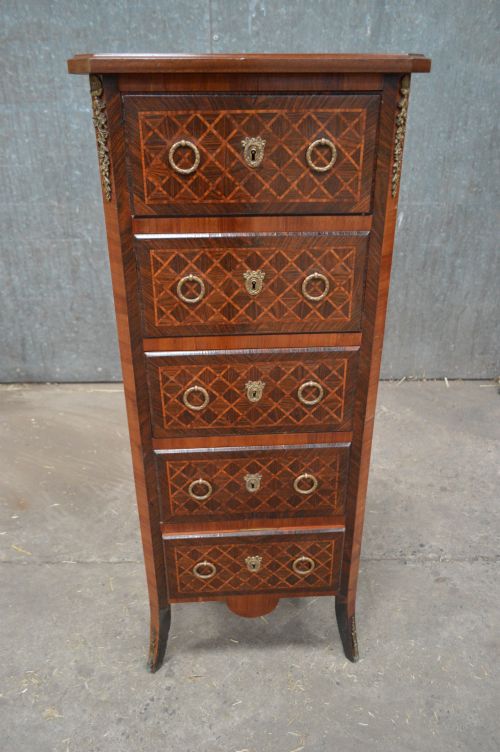
The forms range from marble-topped parquetry and marquetry pieces to carved oak and walnut specimens. Buyers often meet Louis XV revival styles, French provincial designs, and Empire banks of drawers, each maintaining a slender profile suited to smaller rooms.
How they were made
Cabinetmakers utilised dense timbers including walnut, mahogany, rosewood, kingwood, and oak, frequently laid as veneers over structural carcasses. Many examples incorporate intricate parquetry and marquetry patterns, demonstrating precise geometric or floral wood placement.
Surfaces often feature contrasting details such as brass inlays, ormolu mounts, and heavy polished marble slabs fitted to the top. Drawers are built to fit the restricted width, maintaining stability across taller forms like the seven-drawer semainier.
The listings show nineteenth-century pieces alongside 1900, 1920, and 1930 examples, constructed in walnut, rosewood, oak, and mahogany.
What varies in quality
The distinction between tiers of quality rests on the crispness of the timber marquetry and the precision of the veneer work across the drawer fronts. Finer examples display seamless matching of grain patterns and tighter joints in the cabinet construction.
Hardware and secondary materials also indicate grade, with substantial brass mounts, integrated brass inlays, and thick, polished marble tops marking out superior pieces against simpler solid oak or painted alternatives.
The Narrow French Chest Glossary
- Semainier
- A tall, narrow seven-drawer chest traditionally designed for holding a week's worth of linen or clothing. This form is common among nineteenth-century French pieces.
- Parquetry
- A geometric mosaic of wood pieces used for decorative surfacing on floors and furniture. It appears on drawer fronts and tops in contrasting timbers.
- Marquetry
- The art and craft of applying pieces of veneer to a structure to form decorative patterns and pictures. Floral designs are frequently rendered in this manner.
- Wellington chest
- A tall, narrow chest of drawers secured by a hinged locking side-bar that fastens with a key. This mechanism locks all drawers simultaneously.
Narrow French Chest: Frequently Asked Questions
What is a semainier chest?
A semainier is a tall, narrow chest specifically built with seven drawers, one for each day of the week. This form emerged in France to provide practical vertical storage without demanding extensive floor space.
Makers often topped these pieces with marble and utilised fine veneers like rosewood or walnut. They suit bedrooms and dressing areas where width is limited.
How do I identify a revival style?
Revival pieces borrow decorative motifs, curves, and structural silhouettes from earlier reigns such as Louis XV or the French Empire. Cabinetmakers recreated these historical aesthetics using nineteenth and early twentieth-century timber techniques.
Look for characteristic elements like cabriole legs, ormolu mounts, and asymmetrical marquetry. These details signal the revival rather than the original eighteenth-century period.
Where do I place a narrow chest?
These compact chests fit easily into alcoves, hallways, and beside beds where standard furniture proves too wide. Their vertical proportions draw the eye upward while offering deep storage drawers.
Marble-topped versions function well in reception rooms as small sideboards or console surfaces. Bedside variants provide balanced bedside storage for narrower guest rooms.
What woods were commonly used?
Cabinetmakers relied on walnut, mahogany, oak, and exotic hardwoods like kingwood and rosewood for surface decoration and structure. Tulipwood and fruitwoods also appear in lighter marquetry arrangements.
Many pieces use these dense timbers as decorative veneers over a secondary carcass wood. This technique allowed workshops to create complex geometric patterns across drawer fronts.