

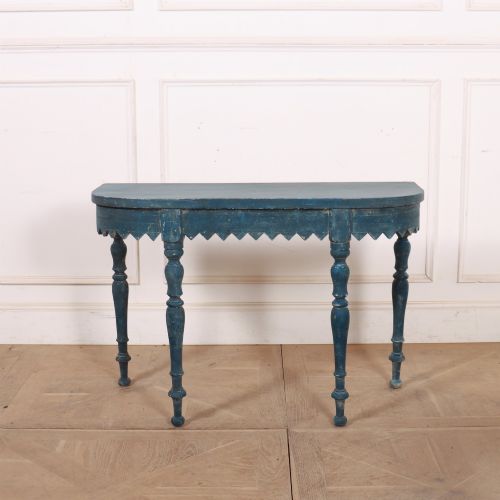
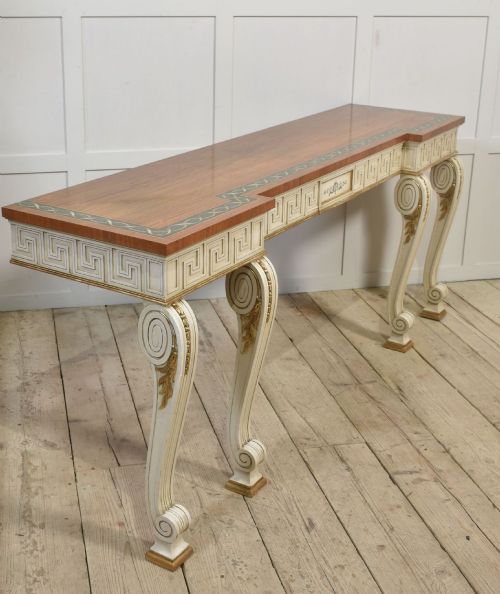
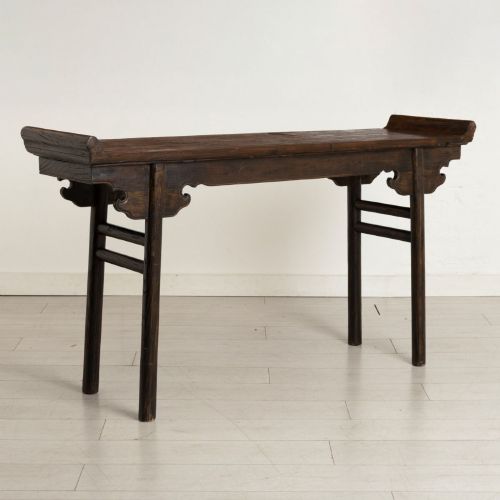

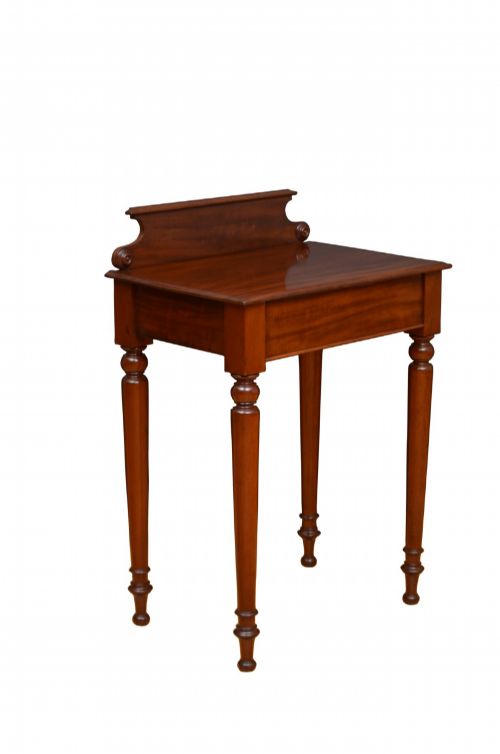
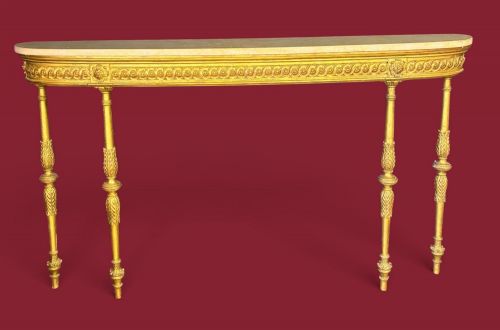
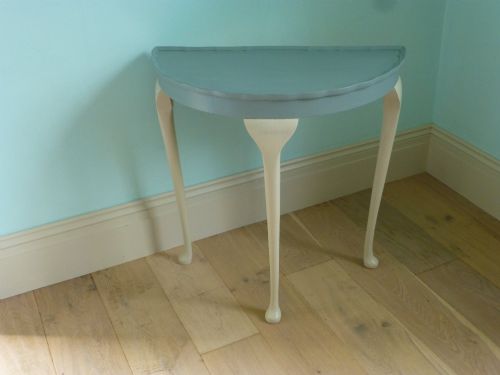
Narrow Console Side Table
These narrow console side table pieces offer slender proportions and practical surfaces, making them ideal for hallways and compact spaces.
Narrow Console Side Table
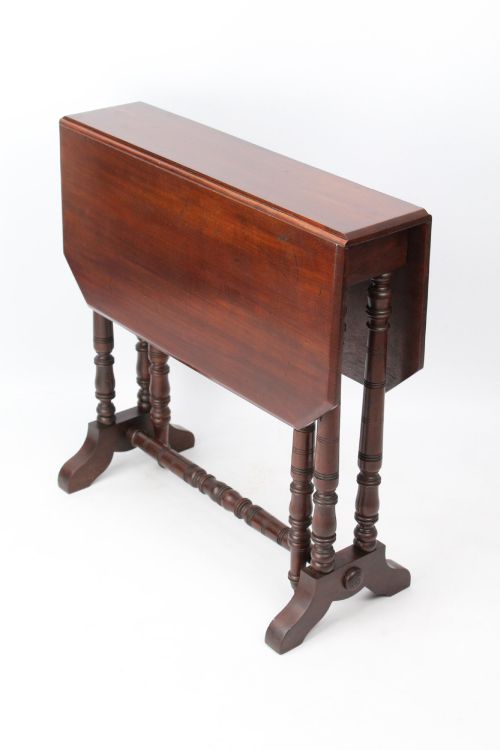
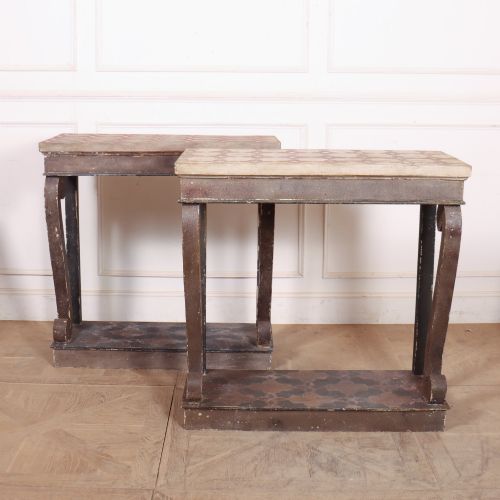
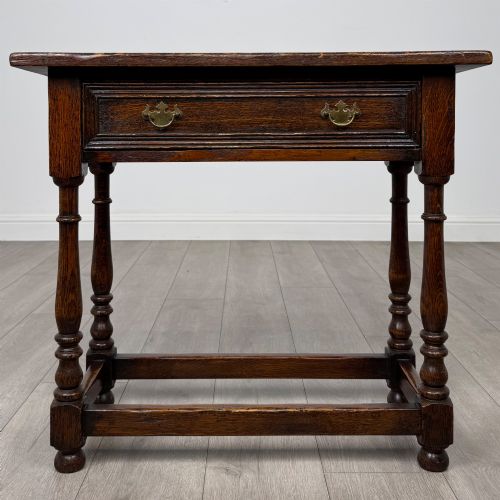
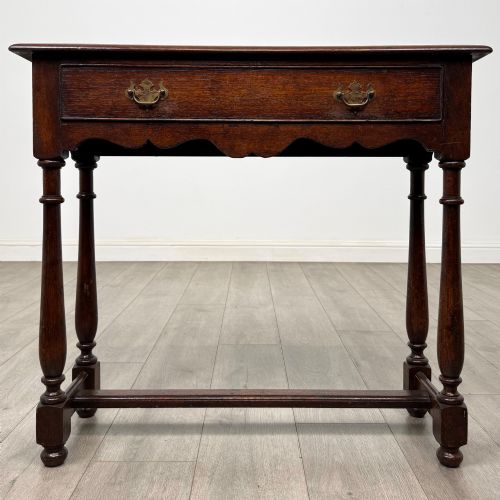
A narrow console side table provides a shallow surface designed to fit against walls in hallways, drawing rooms and dining spaces. These items appear across the nineteenth and early twentieth centuries, spanning Victorian, Edwardian and revival periods.
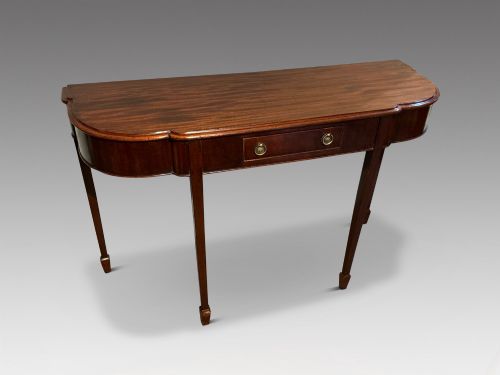
The selections here include console tables, side tables, hall tables, altar tables and small dressers with slender depths. Mahogany, oak and pine form the main timber structures, often accompanied by marble tops or painted finishes.
Makers and workshops constructed these pieces in English, French, Spanish and Chinese traditions. Buyers frequently meet Victorian mahogany examples alongside painted Edwardian and country house variants.
How they were made
Cabinetmakers utilised solid timbers such as mahogany, oak, walnut and pine for the main framework and legs. Joinery methods relied on traditional tenon and mortise joints alongside sturdy underframes to support the shallow footprint.
Surfaces received various treatments including clear polish to reveal mahogany grain, decorative painting on beech and pine, or heavy giltwood application. Marble slabs and steel tops also appear fitted directly to the wooden rails.
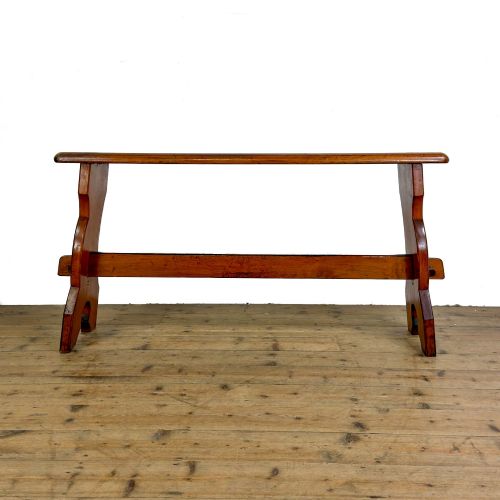
Several listings repurpose unexpected items, including sturdy ships gallery tables and organ benches, into narrow hallway furniture.
What varies in quality
Quality rests upon the selection of timber figures, such as figured mahogany or dense oak, paired with fine hand-cut joinery. Better examples maintain crisp mouldings and stable structural frames without excessive timber shrinkage.
Decorative execution separates standard items from finer works, visible in the precision of painted finishes, carved details and fitted marble tops. The integration of period brass hardware or gallery rails further elevates a piece.
Druce and Co
The Narrow Console Side Table Glossary
- Demi-lune
- A half-moon shape used for console and hall tables designed to sit flush against a wall. This curved form saves floor space in narrow corridors.
- Altar table
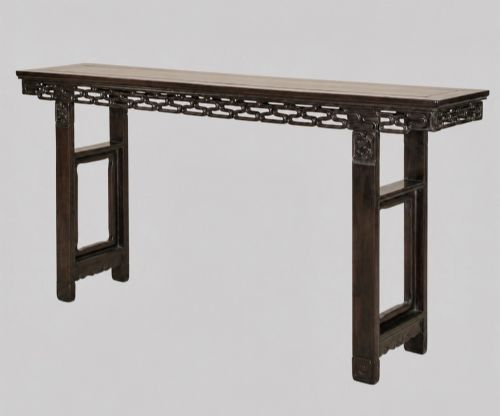
- A traditional Chinese form featuring long, narrow proportions and recessed legs. These pieces provide stable surfaces suited for display.
- Sutherland table
- A narrow drop-leaf table with folding flaps supported by swinging gate legs. It folds down flat when not in use.
- Giltwood
- Wood coated with a thin layer of gold leaf or metallic gilt paint. This technique creates a bright, reflective surface seen on neoclassical furniture.
- Serpentine
- A furniture front shaped with a convex centre flanked by concave curves. This profile adds movement and complexity to the woodwork.
Narrow Console Side Table: Frequently Asked Questions
Where should I place a narrow console side table?
These pieces suit narrow hallways, landings and tight passages where standard furniture blocks movement. Their shallow depth allows them to sit flat against walls while holding lamps or decorative items.
They also function effectively behind sofas or inside dining rooms as serving surfaces. The restricted footprint keeps floor space open.
How do I identify a Victorian piece?
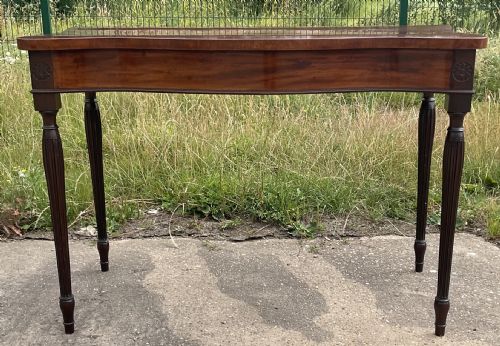
Victorian items often feature dense mahogany timbers, heavy turned legs and dark polished finishes. Look for traditional construction methods and period brass fixtures.
Makers during this era frequently combined functional utility with rich timber grain. Proportions tend to be solid and robust.
What is a Chinese altar table?
Chinese altar tables are long, narrow wooden tables originally designed for ceremonial use. They feature recessed legs and often display traditional joinery without metal nails.
These pieces use hardwoods like elm or various domestic Chinese timbers. Their minimalist lines contrast with ornate European revival styles.
How do I clean a marble top?
Marble surfaces require soft, damp cloths and mild soap to remove dust and surface marks. Avoid acidic cleaners or vinegar which can etch the polished stone.
Dry the surface thoroughly after cleaning to prevent water spots. Gentle care preserves the natural finish of the marble.