


Narrow Display Case
A narrow antique display case offers compact glass-fronted storage for precious objects, drawing on Victorian and Edwardian craftsmanship to suit modern rooms.
Narrow Display Case
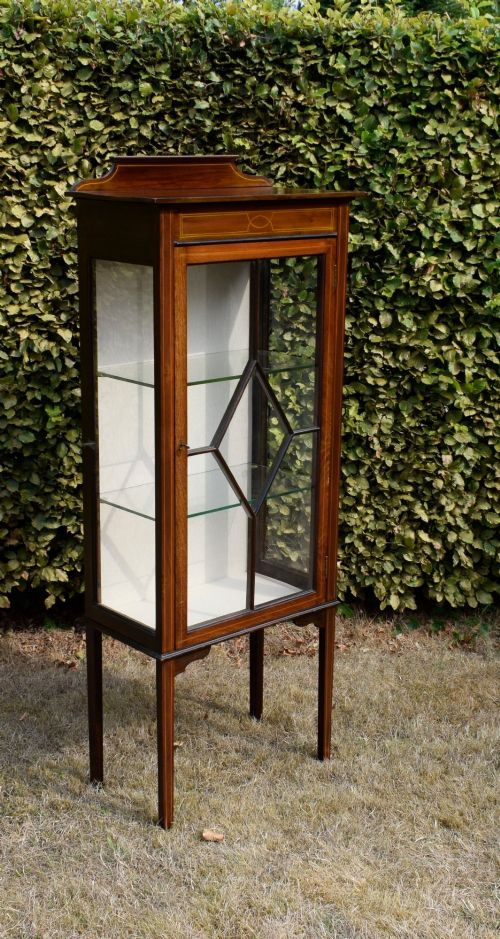
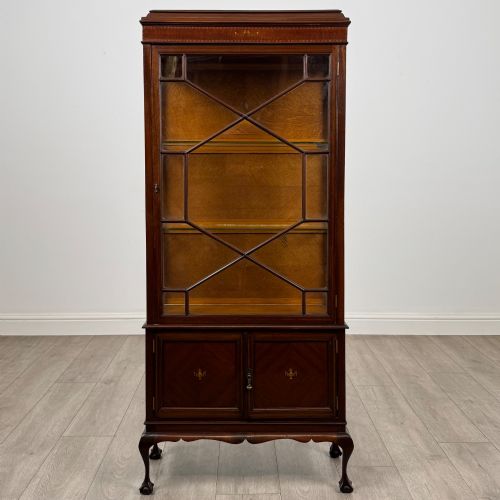
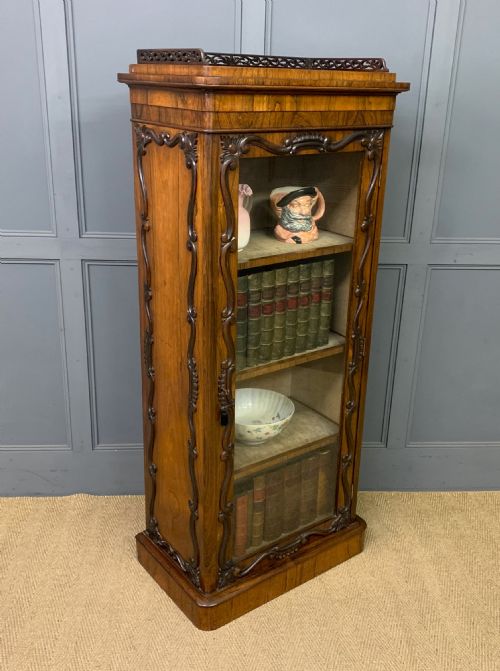
A narrow antique display case brings vertical glazed storage into compact spaces, drawing from Victorian, Edwardian, and 1930s periods. Buyers seeking these pieces typically find upright pier cabinets, tall mahogany cupboards, and slim glazed bookcases designed to hold books and decorative items.
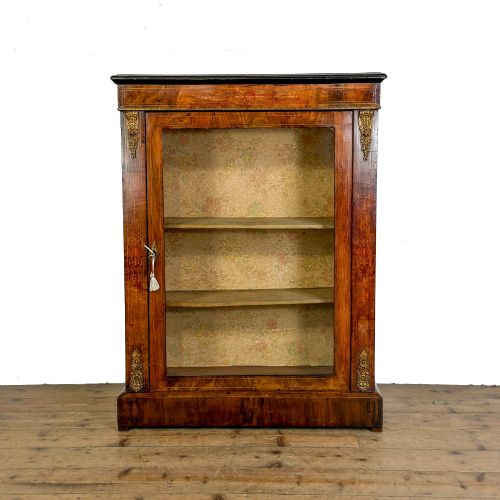
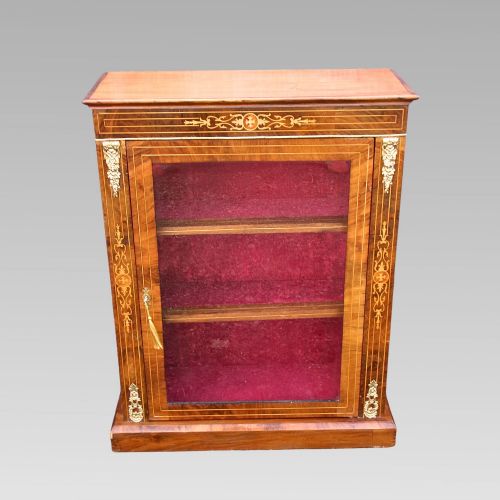
The selection ranges from low walnut pier cabinets fitted with glass doors to tall freestanding shop display cases and Edwardian inlaid china cabinets. Many examples utilise modest footprints while offering multiple shelves behind glazed timber frames.
Origins span English workshops, French cabinet makers, and twentieth-century revival styles such as Georgian Revival and Art Deco. These pieces serve primarily to exhibit collectibles or house small book collections without dominating a room.
How they were made
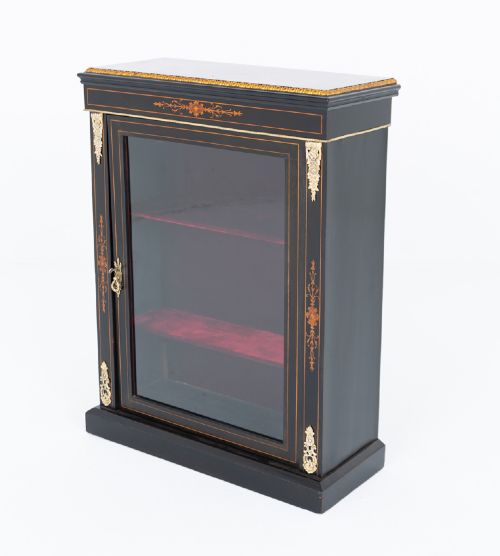
Cabinet makers constructed these pieces using solid timbers like mahogany, oak, walnut, and rosewood, frequently applying finely figured veneer to primary surfaces. Ebonised wood and satinwood also appear, sometimes paired with delicate brass mounts and decorative fabric linings.
Glazing relies on timber frames holding glass panes to protect contents from dust while maintaining visibility from the front and sides. Inlaid marquetry, contrasting stringing, and applied mouldings complete the exterior decoration of Edwardian and Victorian examples.
Cabinet interiors occasionally retain faded nineteenth-century fabric linings that whisper of long-departed collections.
What varies in quality
The standard of timber selection and veneer matching largely dictates the finish of a narrow antique display case. Superior examples feature continuous grain patterns across drawer fronts and doors, whereas simpler builds rely on plain solid woods or straightforward painted finishes.
Cabinet construction reveals itself in the precision of the glazed door seating, the integrity of internal shelving supports, and the crispness of inlaid details. Pier cabinets decorated with porcelain plaques or fine brass detailing sit distinctly apart from utilitarian storage cupboards.
James Winter
The Narrow Display Case Glossary
- Pier cabinet
- A low, freestanding display cabinet designed to fit the narrow wall space between windows. These Victorian pieces frequently feature glass doors and velvet-lined interiors.
- Pier glass
- A tall mirror intended to hang on the wall space between windows, often paired beneath with a matching pier table or cabinet.
- Marquetry
- The art of applying decorative pieces of veneer to a structure to form intricate patterns and pictures. It is commonly seen on Edwardian satinwood and walnut furniture.
- Ebonised wood
- Timber treated with a dark stain or finish to imitate ebony. This technique gained popularity during the nineteenth century for accentuating cabinet details.
- Stringing
- A thin strip of contrasting wood inlaid into the surface of furniture to create a fine border. It defines the edges of panels on many Edwardian cabinets.
Narrow Display Case: Frequently Asked Questions
What fits inside a narrow display case?
These cabinets suit collections of small porcelain figures, glassware, and compact leather-bound books behind glass doors.
The shallow depth keeps items visible without requiring deep floor space in smaller rooms.
How do I date an Edwardian cabinet?
Edwardian pieces often display lighter satinwood or mahogany veneers with delicate stringing and Sheraton revival motifs.
Construction methods shift towards factory standardisation around the turn of the twentieth century while retaining hand-finished details.
Are pier cabinets sturdy enough for books?
Pier cabinets were originally built to hold ornaments and ceramics rather than heavy volumes of books.
Most feature lightweight internal shelving supported by fixed wooden bearers suited for lighter decorative displays.
Where should I place a pier cabinet?
These cabinets work best against narrow wall sections, alcoves, or flanking a fireplace where standard furniture overwhelms the space.
Their shallow proportions allow them to sit neatly in hallways and dining rooms without obstructing walkways.