






Napoleon III Tier Table
These pieces of a napoleon iii tier table bring French Second Empire elegance into a room with multi-tiered surfaces for display.
Napoleon III Tier Table
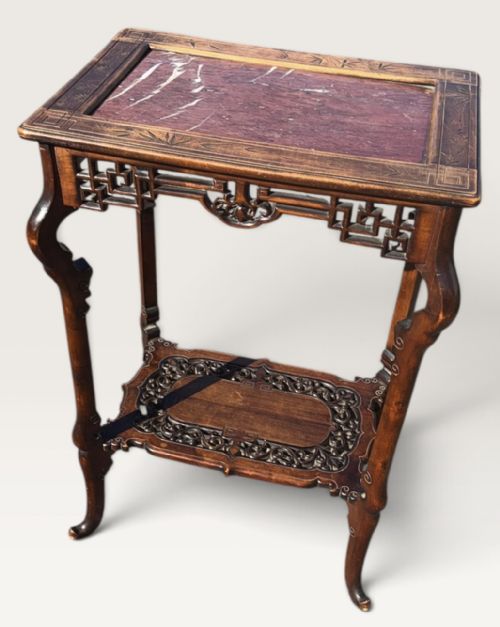
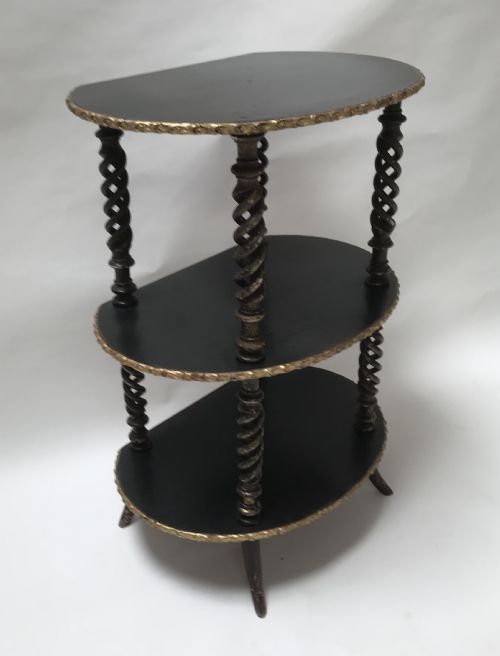
When you search for a napoleon iii tier table, you are looking at multi-level French furniture from the nineteenth century designed for display and practical use in domestic spaces. The listings here predominantly feature étagères, side tables, and whatnots that utilise tiered platforms supported by slender uprights.
Most examples hail from the French Napoleon III and Second Empire styles, spanning the mid to late nineteenth century up to the early twentieth century. You will encounter pieces taking the form of centre tables, work tables, and display stands alongside traditional étagères.
These tables serve well in drawing rooms and reception spaces where vertical display is desired without occupying a large floor footprint. Their stacked tiers provide distinct surfaces for ornaments, books, or tea services.
How they were made
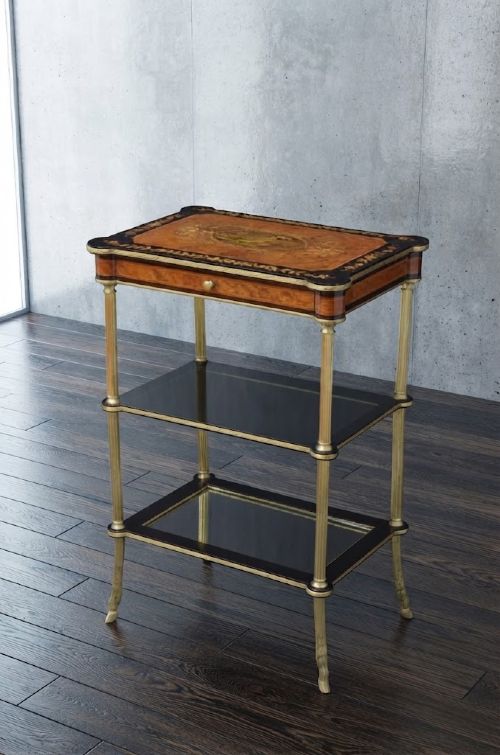
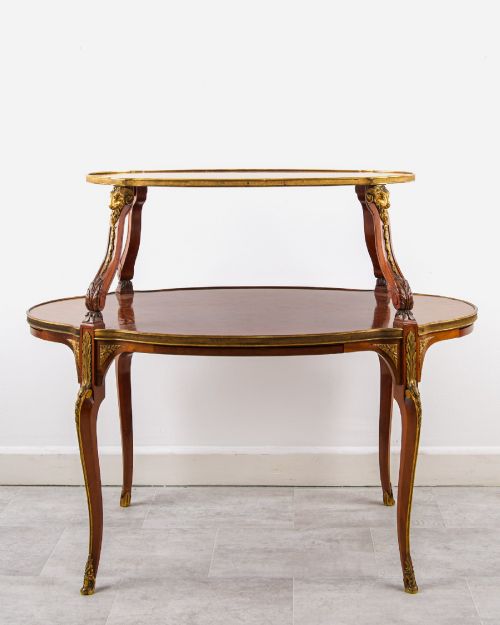
Cabinetmakers constructed these tables using a variety of foundational timbers including walnut, mahogany, and ebonised wood, frequently applying decorative veneers of amboyna and fruitwood. Marquetry inlays add intricate surface decoration across the tops and shelves of many pieces.
Metalwork played a defining role in the construction and ornamentation, with brass and ormolu mounts enhancing corners, edges, and legs. Mirrored panels and glass inserts also appear on select tiers to reflect light and objects placed upon them.
Napoleon III Tier Table Retail Price Guide 2026
Typical asking prices for napoleon iii tier table among the pieces listed under this phrase on Sellingantiques today, from the lower quarter to the upper quarter. They describe what is for sale here now, not the wider market.
The listings show nineteenth-century French pieces utilising walnut, amboyna veneer, ebonised wood, and ormolu mounts.
What varies in quality
The sophistication of the timber preparation and veneer selection marks the distinction between standard examples and finer works. Rich grain patterns in amboyna or plum pudding mahogany elevate the visual impact significantly.
The crispness and weight of the ormolu or bronze mounts demonstrate the level of craftsmanship involved. Well-cast metalwork fitted tightly to the wooden structure indicates a higher standard of workshop production.
The Napoleon III Tier Table Glossary
- Étagère
- A set of open shelves or tiers for displaying small objects. This form developed in France and became central to nineteenth-century interior decoration.
- Ormolu
- Gilded bronze used for furniture mounts and decorative hardware. It provides a bright metallic contrast against dark ebonised wood or walnut.
- Marquetry
- Decorative veneer patterns formed by fitted pieces of various woods. Artisans applied these designs to tabletops and tiers to create pictorial or geometric effects.
- Amboyna
- A highly prized burl veneer with a mottled, swirling grain. Cabinetmakers utilised it on elite nineteenth-century French tables for decorative impact.
- Whatnot
- A piece of furniture consisting of shelves for books or ornaments. It shares similarities with the étagère and serves a comparable display function.
Napoleon III Tier Table: Frequently Asked Questions
What is a napoleon iii tier table?
A napoleon iii tier table is a multi-level French nineteenth-century display piece featuring stacked wooden surfaces supported by slender uprights.
These tables were designed during the Second Empire period to hold decorative objects, books, or tea wares in formal reception rooms.
How were these tables used originally?
Original use centered on the display of porcelain, small ornaments, and reading materials within the domestic parlours of prosperous homes.
Certain variations functioned as work tables or poudreuses, incorporating compartments alongside their open display tiers.
Where do these tables originate?
The majority originate from French workshops working in the Napoleon III and Second Empire styles during the nineteenth century.
Cabinetmakers in France produced them using native and exotic woods supplemented by cast bronze or ormolu mounts.
How do I style a tier table today?
These tables fit well in living spaces and hallways where vertical surface area is needed without bulk.
Distribute objects across the tiers thoughtfully, balancing heavier items on lower shelves with lighter decorative pieces above.
What materials are common on these tables?
Common structural woods include walnut and mahogany, alongside ebonised finishes and fruitwood or amboyna veneers.
Details often incorporate brass inlay, mirrored glass panels, and ormolu mounts.