
French Inlaid Occasional Tables
French inlaid occasional tables bring warmth and ornamental detail to a room, ranging from kidney shapes to multitiered etageres.
French Inlaid Occasional Tables
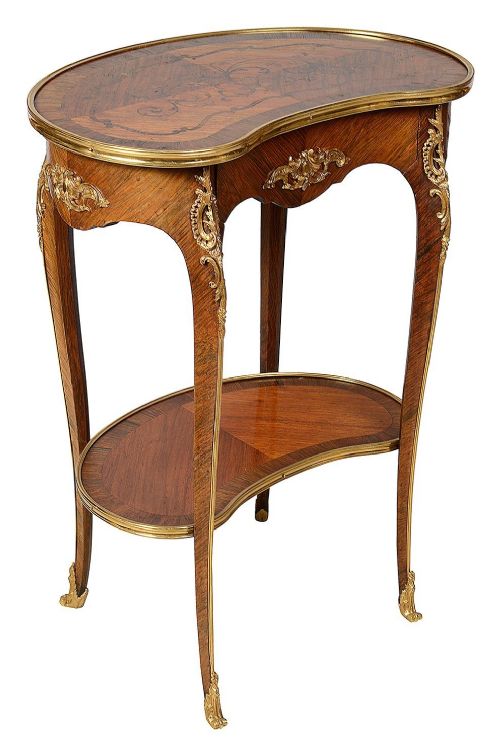
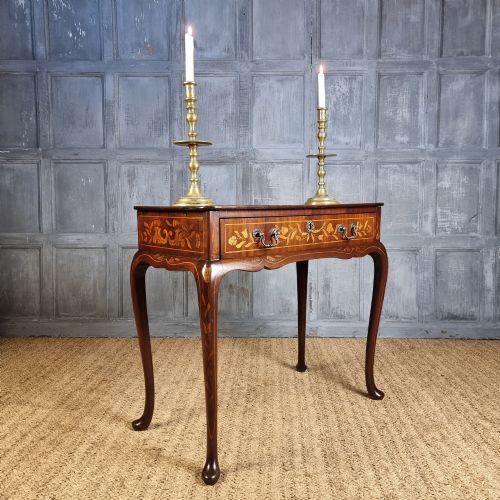
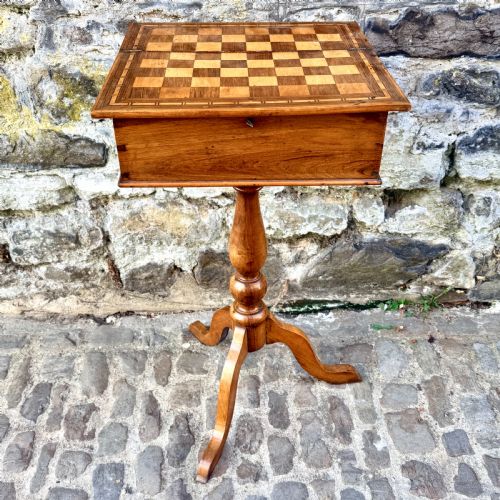
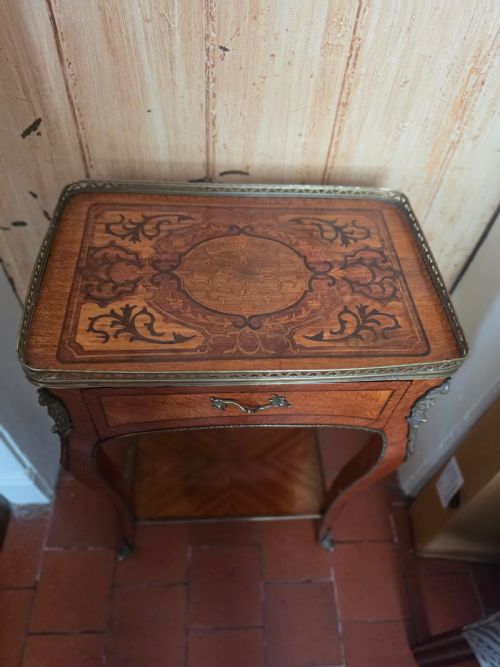
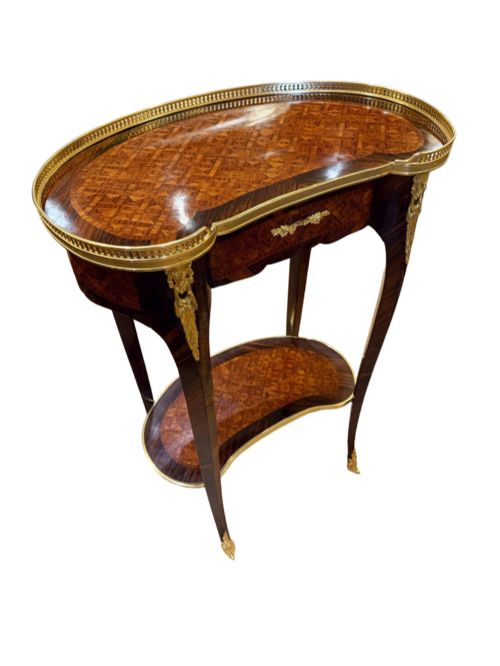
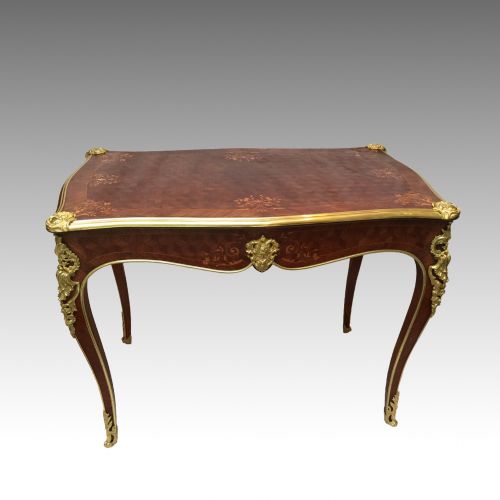
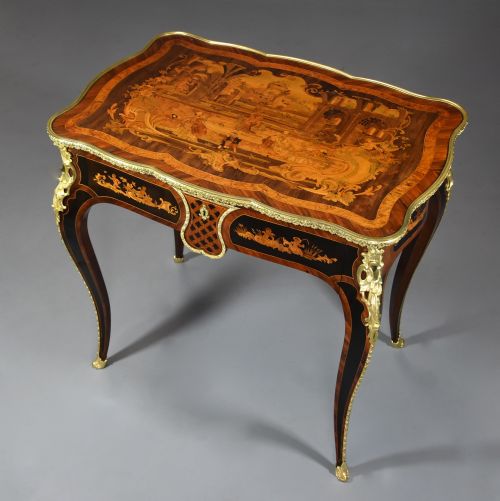
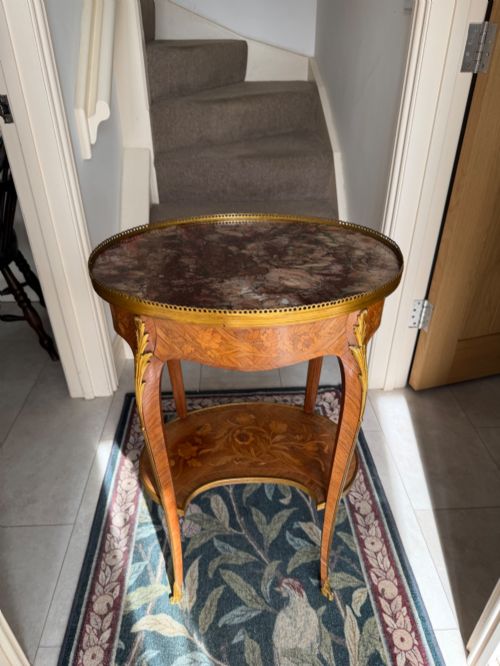
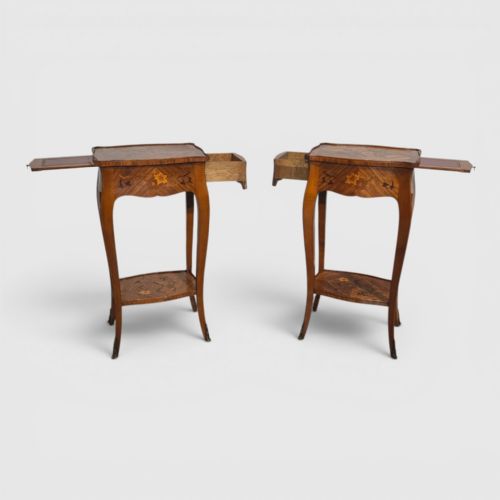
French inlaid occasional tables encompass a variety of small movable furniture designed for display and convenience, including side tables, centre tables, lamp tables and bedside tables. When searching for french inlaid occasional tables, buyers encounter forms spanning the nineteenth century through the early twentieth century, with nineteenth-century examples appearing most frequently.
These tables served diverse functions in period interiors, from holding lamps and books to displaying decorative objects on mirrored tiers or multiheight shelves. Their compact sizes and finished backs make them versatile additions to contemporary rooms.
What varies in quality
The sophistication of the timber selection and the precision of the inlay set different tiers of work apart, with finely figured burr woods and intricate pictorial marquetry representing higher craftsmanship. The crispness of the cast ormolu mounts and the integration of secondary woods like mahogany or oak inside drawers further distinguish finer examples.
Proportion and structural integrity define the overall success of a piece, where balanced curves in Louis XV style frames and solid joinery determine whether a table holds its presence in a room. Maker attribution, through signatures or distinctive construction habits, also influences distinction.
The listings feature nineteenth-century periods ranging from the 1850s through the Edwardian era, utilising kingwood, walnut, and rosewood.
JAS Shoolbred·Millet·Edwards & Roberts·Gillows
The French Inlaid Occasional Tables Glossary
- Marquetry inlay
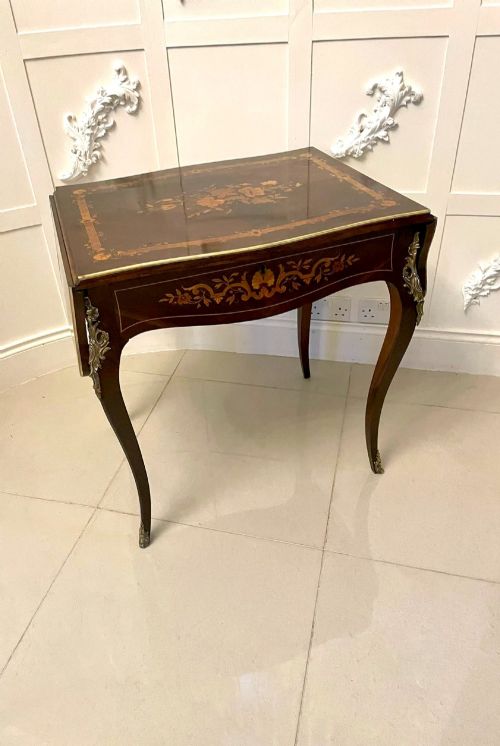
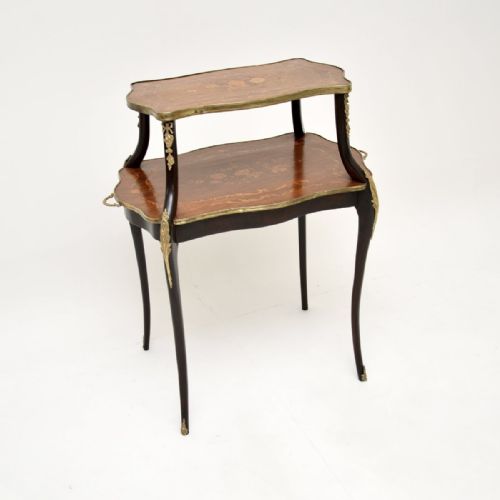
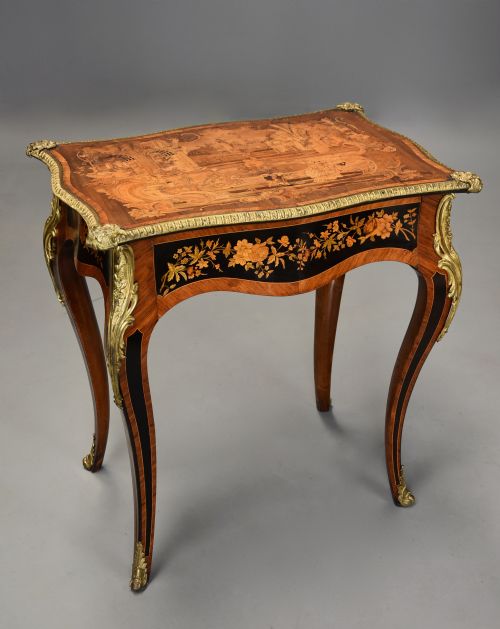
- A decorative technique where small pieces of various veneers are assembled to form pictorial or abstract patterns on a wooden surface. This method allows for detailed floral and architectural designs across tabletops.
- Parquetry
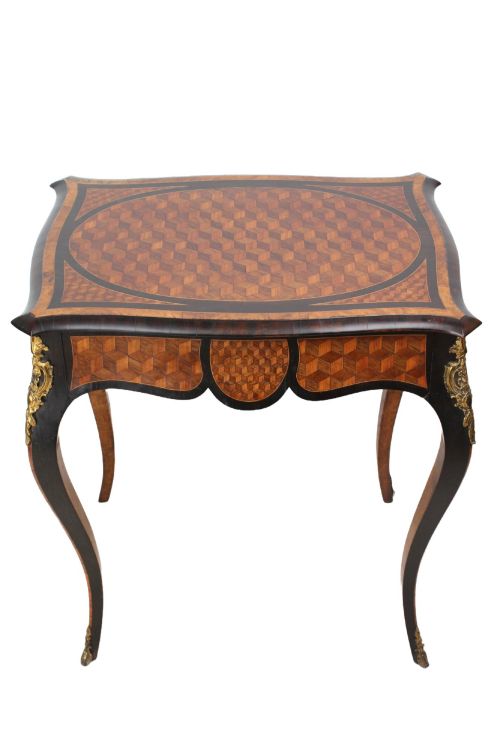
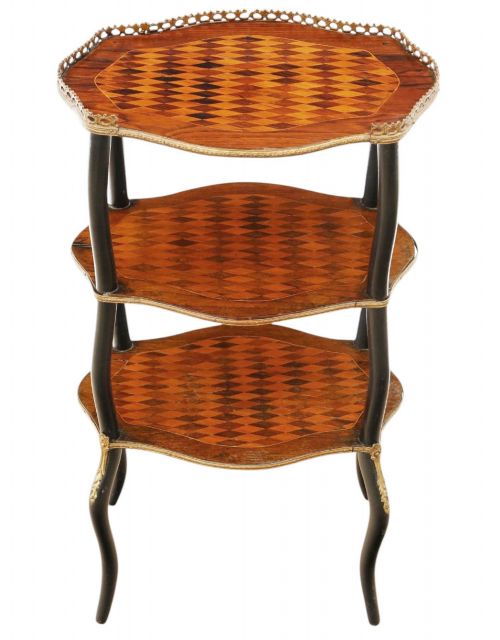
- Geometric wood inlay arranged in repeating patterns such as cubes, chequered squares, or herringbone motifs. It creates a structured texture distinct from organic marquetry pictures.
- Ormolu
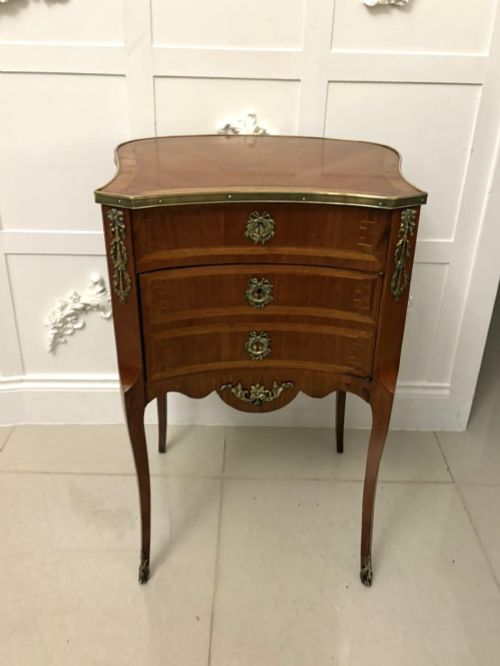
- Gilded bronze mounts and decorative trimmings applied to furniture corners, feet, and edges. The mounts protect vulnerable areas while adding metallic contrast to dark woods.
- Etagere
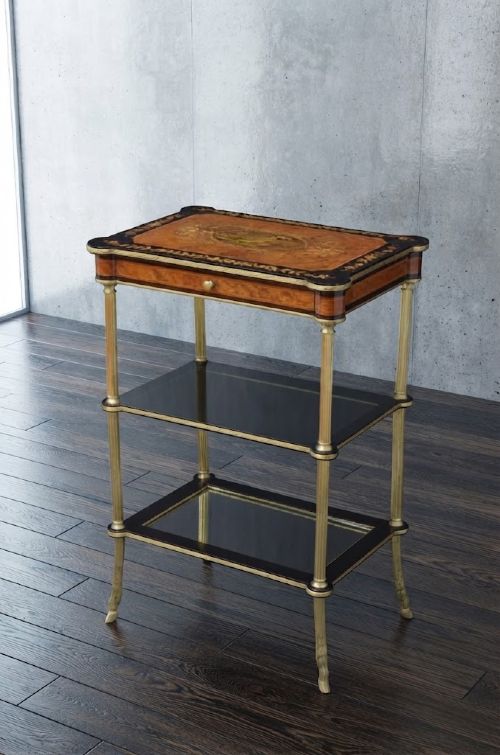
- A set of open display shelves supported by columns or pillars, designed for ornaments and small objects. Many incorporate mirrored tiers to reflect light.
- Kidney shaped
- A curved tabletop profile resembling a kidney bean, popular in nineteenth-century writing and side tables. This shape allows the user to sit closer to the surface.
French Inlaid Occasional Tables: Frequently Asked Questions
How were French occasional tables used?
These tables served multiple domestic purposes in nineteenth-century drawing rooms and boudoirs, functioning as movable surfaces for tea, writing, or sewing.
Over time, their roles shifted towards display, holding table lamps, decorative bronzes, and collection items on tiers and shelves.
What is the difference between parquetry and marquetry?
Parquetry relies on geometric shapes like squares, triangles, and cubes to create structured, repeating patterns across a wooden surface.
Marquetry uses varied wood veneers to picture organic subjects such as flowers, ribbons, and landscapes with pictorial fluidity.
How do I identify Napoleon III furniture?
Napoleon III pieces often feature rich rosewood or ebonised surfaces accented with intricate brass inlay and gilt-bronze mounts.
This style frequently draws inspiration from earlier French royal periods while incorporating nineteenth-century comfort and utility.
Can I use an etagere table for lamps?
Etagere tables provide sturdy tiered shelving suitable for placing small table lamps on the main surface.
The lower shelves or mirrored tiers then accommodate books, plants, and decorative objects without crowding the top.