
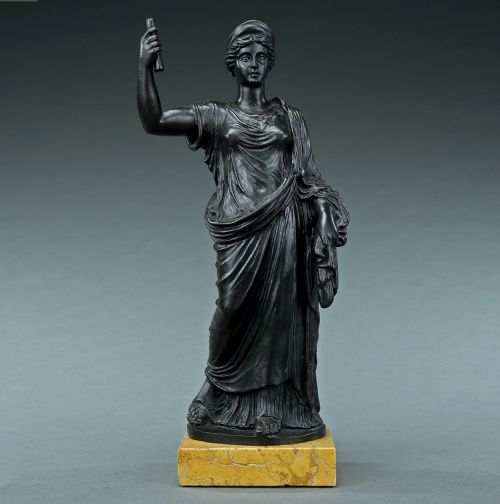
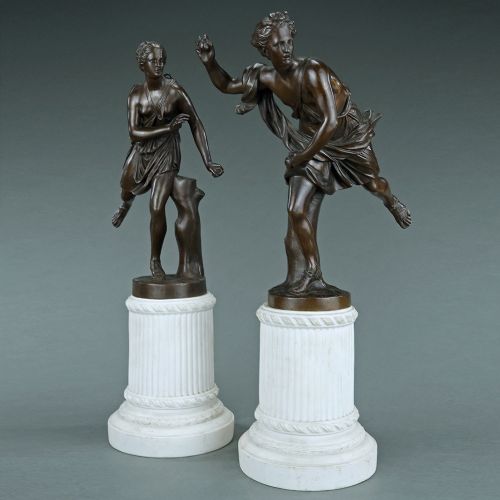
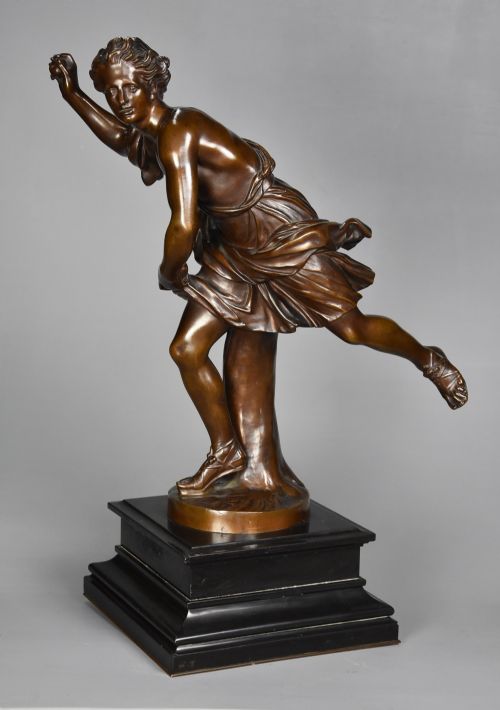
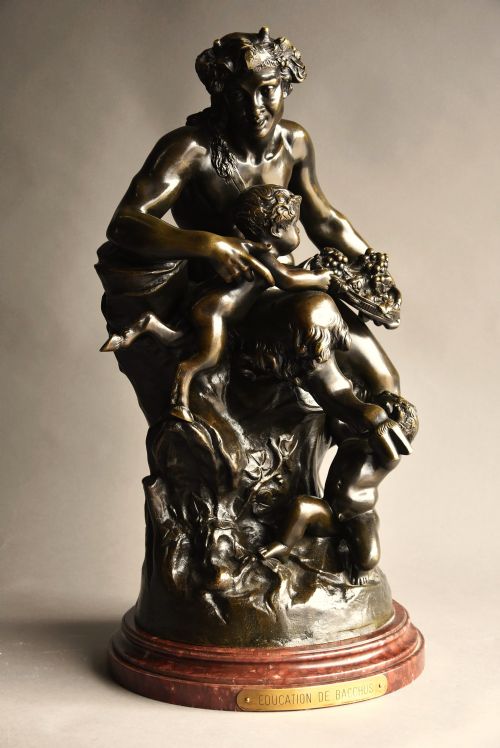
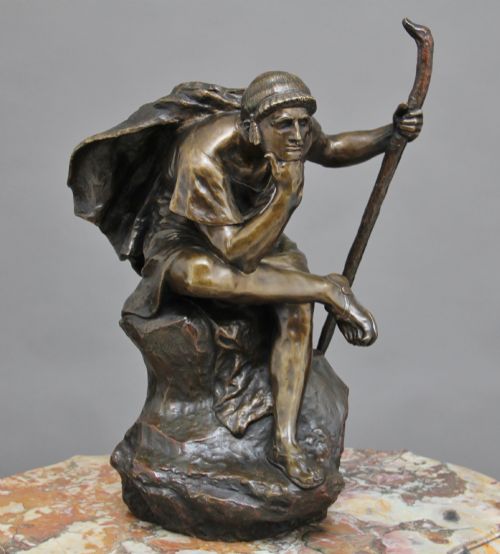
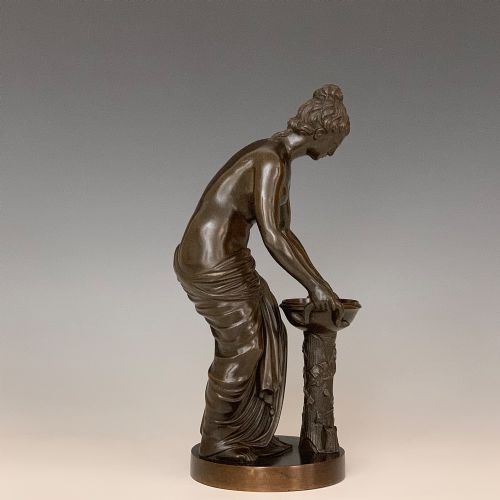


Mythology Bronze Statue
A mythology bronze statue brings classical antiquity into a room, capturing figures from ancient legend through cast metal.
Mythology Bronze Statue
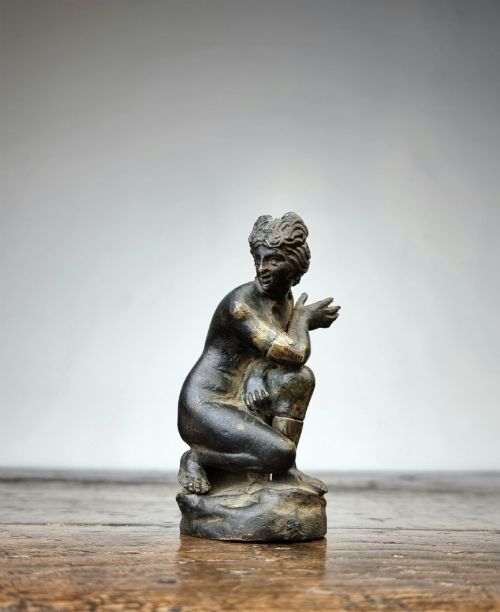
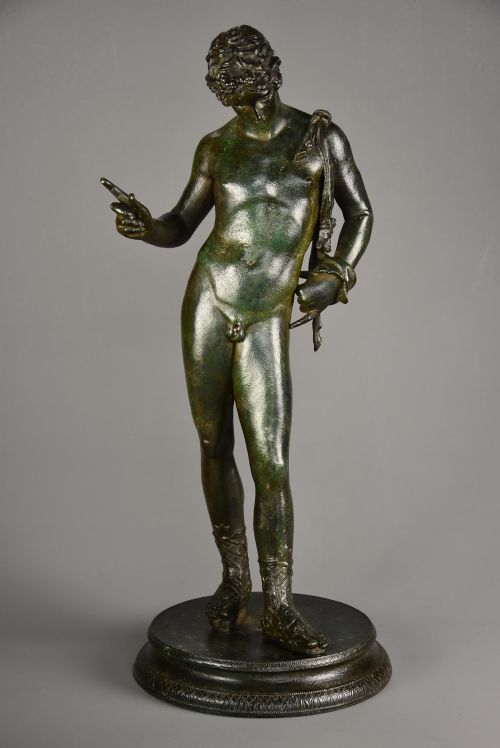
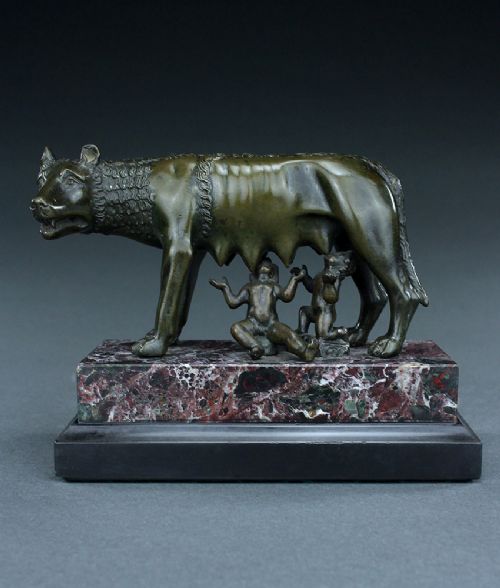
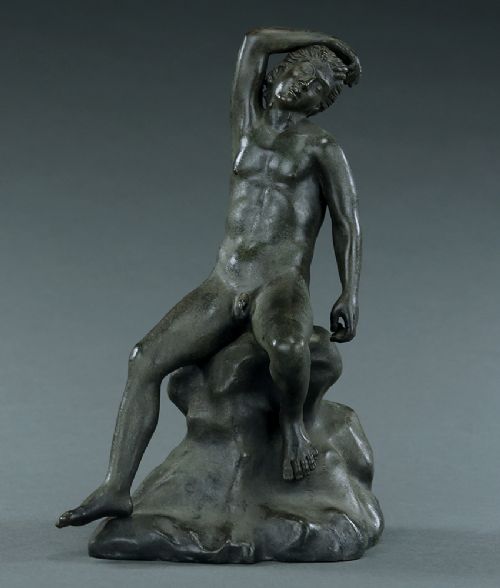
When you search for a mythology bronze statue, you find figures and groups drawn from classical legend, historical sculpture, and Grand Tour souvenirs. These range from small desk statuettes to large exhibition castings depicting deities, heroes, and mythical creatures.
The pieces on this page lean heavily towards nineteenth-century interpretations of ancient Greek and Roman masterpieces. You will frequently encounter reductions of famous museum sculptures alongside French foundry editions and Italian souvenirs.
Subjects stretch from major Olympians like Apollo and Bacchus to legendary mortals such as Narcissus and Perseus. These works translate myth into tactile metal forms designed for domestic display.
How they were made
Foundries utilised the lost-wax casting method or sand casting to produce these bronzes, allowing intricate musculature and drapery to emerge from molten metal. Skilled chasers then worked the cooled surface with chisels and files to sharpen details.
Finishing treatments define the visual character of the metal, employing chemical patination to achieve deep brown tones, verdigris highlights, or polished gilt surfaces. Many figures are mounted directly onto integral or separate bases made of marble, stone, or ebonised wood.
Periods represented span the seventeenth century, the nineteenth century, the late Meiji period, and the early twentieth century.
What varies in quality
Quality depends upon the crispness of the chase work and the fidelity of the cast to the original prototype. Superior castings preserve subtle facial expressions, fine hair strands, and precise anatomical proportions without blurring.
The weight of the bronze and the depth of the patination also distinguish finer pieces from simpler commercial souvenirs. Foundries with renowned signatures often achieved greater definition in complex groupings and multi-figure compositions.
Barbedienne·Claude Michel Clodian·Augusto Rivalta·Albert Hussmann·Aug. Moreau·Franz Iffland·Simon Louis Boizot
The Mythology Bronze Statue Glossary
- Patinated bronze
- Bronze that has been treated with chemical solutions to produce a specific surface colour, ranging from dark brown to green.
- Grand Tour
- A nineteenth-century tradition of travelling through Europe to collect art and souvenir bronzes cast after classical antiquities.
- Ormolu
- Gilded bronze, where finely ground gold is applied to a bronze base using a mercury amalgam or electrical process.
- Lost-wax casting
- A technique where a wax model is melted out of a mould to create a cavity for pouring molten bronze.
- Neoclassical
- A style reviving classical antiquity's architectural and artistic principles during the eighteenth and nineteenth centuries.
Mythology Bronze Statue: Frequently Asked Questions
How do I clean a bronze statue?
Dust the surface gently with a soft, dry brush to prevent dirt accumulation over time. Avoid using water, detergents, or metal polishes, which strip the protective patina.
Apply microcrystalline wax very sparingly if the metal requires protection against moisture. Buff the surface lightly with a clean cloth to maintain a stable finish without creating an unnatural shine.
What is a Grand Tour bronze?
Grand Tour bronzes are miniature or reduced-scale copies of famous ancient sculptures purchased by travellers in Italy during the nineteenth century. Wealthy collectors brought these home as intellectual souvenirs of their travels.
These pieces typically reference specific Roman or Greek originals housed in European museums. Their scale made them suitable for display in nineteenth-century studies and libraries.
Why do some bronzes have green patination?
Green patination mimics the natural weathering and oxidation found on ancient buried bronzes recovered from archaeological sites. Nineteenth-century foundries deliberately applied chemical treatments to replicate this antique appearance.
This specific finish was particularly popular on Grand Tour pieces to evoke excavated classical statuary. The verdigris effect highlights the recessed details of the casting.
How can I date a nineteenth-century bronze?
Examine the quality of the chasing, the colour of the patination, and any foundry stamps or signatures inscribed on the base. Nineteenth-century castings often exhibit crisp detailing and specific foundry marks associated with the period.
Check whether the bronze is secured to its base using period-appropriate threaded bolts or screws. Comparing the casting to documented foundry catalogues helps narrow down the production era.