
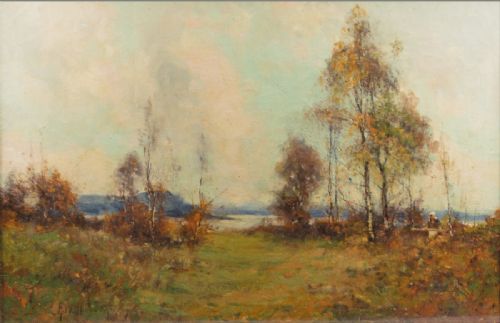


Muted Green Landscape Artwork
Quiet valleys and open fields rendered in subdued tones, muted green landscape artwork brings the subtle palette of the countryside directly into your interior.
Muted Green Landscape Artwork
When you search for muted green landscape artwork, you encounter pastoral scenes, riverbanks, and woodland paths captured in gentle, natural hues. These pieces reflect the rural topography of Britain and beyond, recorded through the lens of early twentieth-century observation.
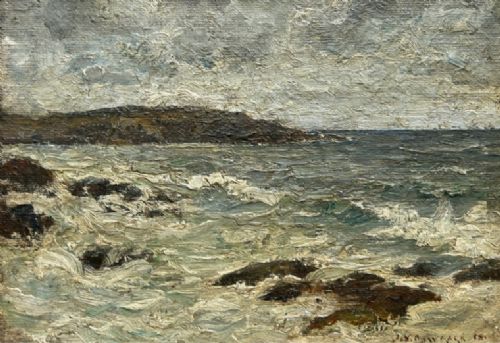
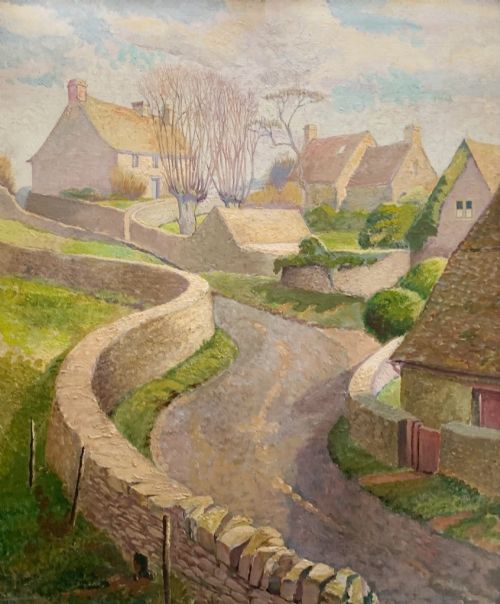
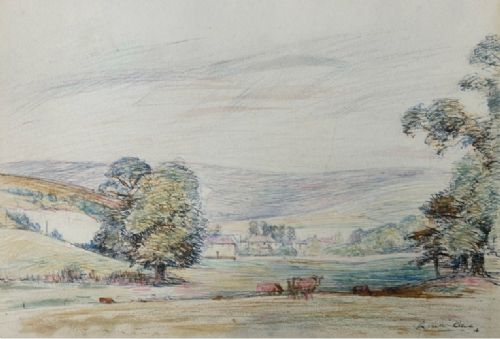
The selections available here rely heavily on works from the Victorian era through the mid-twentieth century. Paintings of this character range from pastoral watercolours depicting cattle in fields to textured oil paintings of coastal inlets and rural villages.
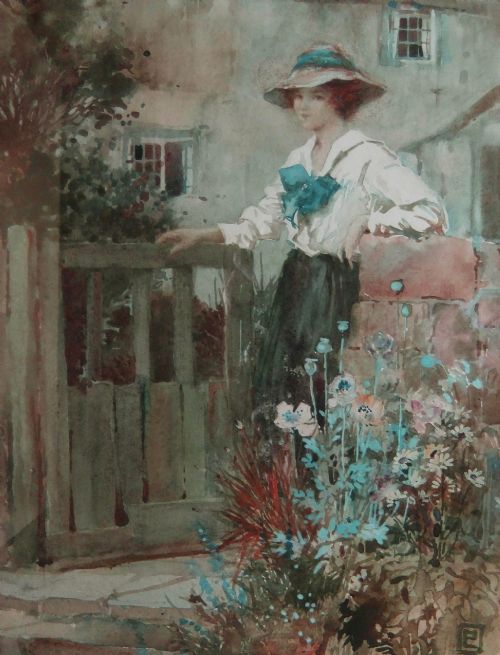
You are most likely to meet original watercolours on paper and oil paintings on canvas or panel dating from the Edwardian decades and the interwar years. These formats present quiet rural subjects where subdued greens and earthy browns dominate the composition.
Materials and technique
Artists rendering these subjects employed traditional media such as watercolour pigments applied to heavy paper and oil paint worked onto canvas or wooden panels. These materials allowed painters to build up layered atmospheric effects, capturing the damp air and foliage of rural environments.
Techniques varied between the fluid, transparent washes typical of watercolour watercolours and the heavier impasto strokes found in oil paintings. Painters worked en plein air or in studios using established academic methods to translate natural light and vegetation into harmonious colour schemes.
Muted Green Landscape Artwork Retail Price Guide 2026
Typical asking prices for muted green landscape artwork among the pieces listed under this phrase on Sellingantiques today, from the lower quarter to the upper quarter. They describe what is for sale here now, not the wider market.
Several watercolours quietly preserve the exact moment children fished at dusk in Thameside villages over a century ago.
Distinctions in quality
The distinction between a standard painting and a superior work rests on the artist's handling of light, atmospheric depth, and structural drawing. Stronger pieces demonstrate a confident command of tonal gradation, where muted greens and grey-blues hold the eye without losing definition in shadowed areas.
Compositional balance and the preservation of the original medium further divide the range. Works that retain their original paper tone or uncracked oil surfaces reveal the intended subtlety of the artist's palette far better than neglected or heavily restored examples.
Ernest Higgins Rigg·Henry Charles Fox·Percy Lancaster·James Orrock·Henry John Sylvester Stannard
The Muted Green Landscape Artwork Glossary
- Impasto
- Paint applied thickly to a canvas or panel, standing out in relief from the surface and retaining the marks of the brush or palette knife.
- Watercolour
- A painting method in which the paints are made of pigments suspended in a water-based solution, typically applied to paper.
- En plein air
- The act of painting outdoors to capture the actual light and atmosphere of a landscape directly.
- Barbizon School
- A nineteenth-century French art movement towards realism in landscape painting, emphasising woodland and rural views.
- Provenance
- The chronology of the ownership or location of a historical work of art.
Muted Green Landscape Artwork: Frequently Asked Questions
What periods do these artworks represent?
The pieces span from the nineteenth century through the Victorian and Edwardian periods into the mid-twentieth century.
They capture successive artistic movements including British Impressionism and Post-Impressionism.
How should I frame an antique watercolour?
Watercolours require framing behind glass with acid-free mounts to protect the paper from humidity and ultraviolet light.
Keeping the paper from touching the glass prevents condensation damage over time.
Where were these landscape scenes typically painted?
Artists recorded rural views across British counties such as Yorkshire, West Sussex, and Leicestershire, alongside pastoral scenes in Ireland.
Many painters worked directly in the countryside to capture local topography.
Are these paintings signed by the artists?
Many examples feature original signatures, monograms, or inscriptions left by the painter on the front or reverse.
Some period pieces remain unsigned or indistinctly signed while maintaining strong stylistic attribution.