



Muted Brown Painting
A muted brown painting brings calm earthy tones into a room, capturing coastal scenes, landscapes and portraits from past centuries.
Muted Brown Painting
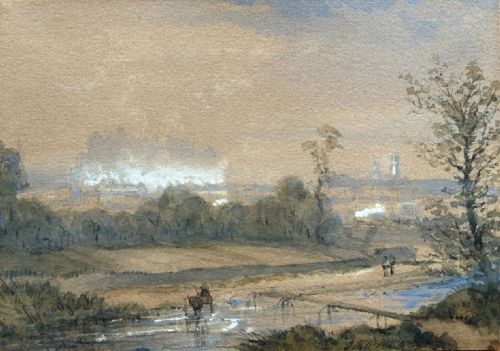
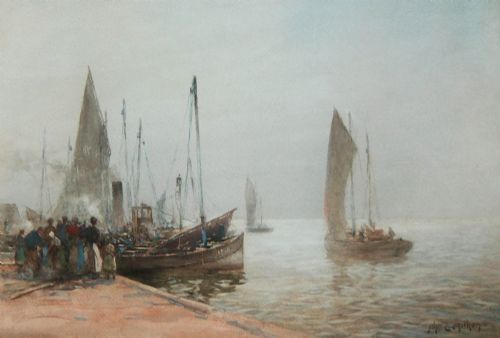
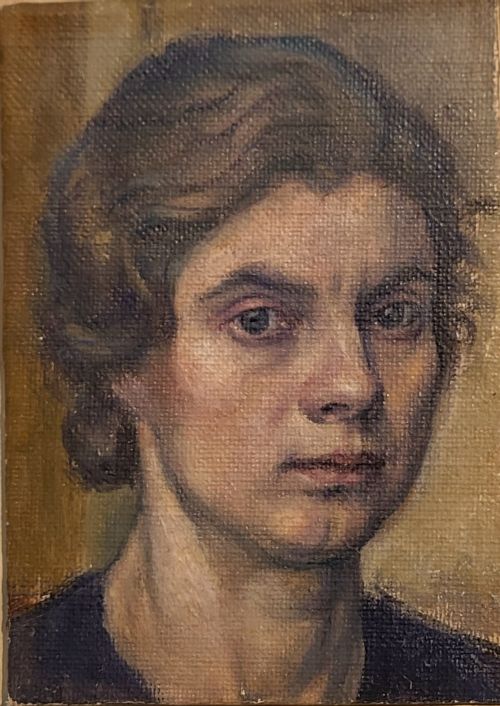
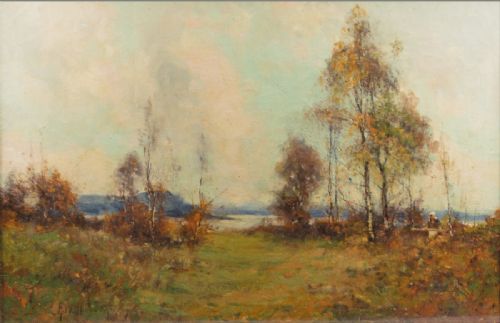
A muted brown painting encompasses works executed in oil, watercolour and gouache across the nineteenth and twentieth centuries. These artworks often depict maritime views, rural cottages, harbour scenes and figurative studies rendered in restrained, earthy palettes.
Buyers searching for a muted brown painting encounter pieces stemming from British Impressionism, Victorian Realism and Post-Impressionism. The selection includes works on paper, canvas and board originating from British, French, Canadian and South African artists.
Works carrying this aesthetic range from intimate watercolours of Yorkshire and Scottish landscapes to larger oils depicting street sellers or winter scenes. Each piece reflects the specific atmospheric conditions and tonal preferences of its period.
Materials and Techniques
Artists built these compositions using oil paint on canvas and board, or watercolour pigment on paper. The choice of ground dictated the final texture, with canvas yielding visible weave and board providing a rigid, flat surface for detailed brushwork.
Watercolour works rely on washes applied to absorbent paper to create soft gradients and subdued tones, while oil paintings utilise layered pigment to build depth. Painters applied these mediums to capture light and shadow without relying on bright primary colours.
The selection includes works from the Victorian era up to the mid-twentieth century, executed in oil and watercolour on canvas, paper and board.
Factors That Distinguish Quality
Quality in these works rests upon the artist's control of tone and handling of medium, where subtle shifts in hue create spatial depth rather than harsh contrast. Superior examples demonstrate confident brushwork and a balanced composition that anchors the subdued palette.
The condition of the support, whether paper, canvas or board, influences the integrity of the piece over time. Well-preserved works retain the original pigment strength and surface tension intended by the painter.
The Muted Brown Painting Glossary
- Watercolour pigment
- A colourant suspended in a water-soluble binder, applied to paper to create transparent washes.
- Oil paint
- A slow-drying paint made by mixing pigments with a drying oil, typically linseed.
- Board
- A rigid substrate used instead of canvas for painting, common in the nineteenth and twentieth centuries.
- Impressionism
- An art movement focusing on accurate depiction of light and ordinary subject matter.
- Post-Impressionism
- A subsequent style extending Impressionism while rejecting its limitations for expressive forms.
Muted Brown Painting: Frequently Asked Questions
How should I frame an antique painting on paper?
Watercolour paintings require mounting behind glass with acid-free materials to prevent humidity damage and discolouration of the paper support.
Keep these works away from direct sunlight to preserve the muted tones of the pigments over time.
What subjects appear most often in these works?
The subjects include British and European landscapes, coastal harbours, winter scenes and traditional portraiture.
Artists frequently recorded rural life, agricultural work and maritime views using restrained earth tones.
How do I identify a painting on board?
Paintings on board utilise a rigid wooden or composite backing rather than a stretched fabric canvas. This material provides a firm, stable surface that painters utilised for both quick plein-air studies and finished works.
How do Victorian and 20th-century paintings differ?
Victorian pieces often lean towards detailed realism and narrative subjects, while twentieth-century works frequently explore looser brushwork and atmospheric abstraction.
Both periods embraced earthy palettes to capture natural light and shadow.