
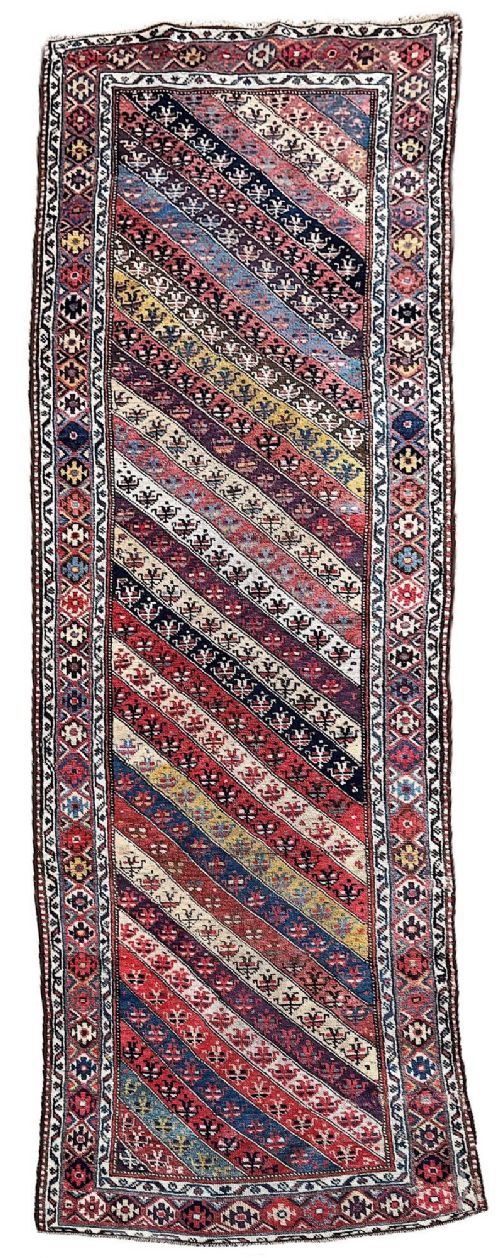


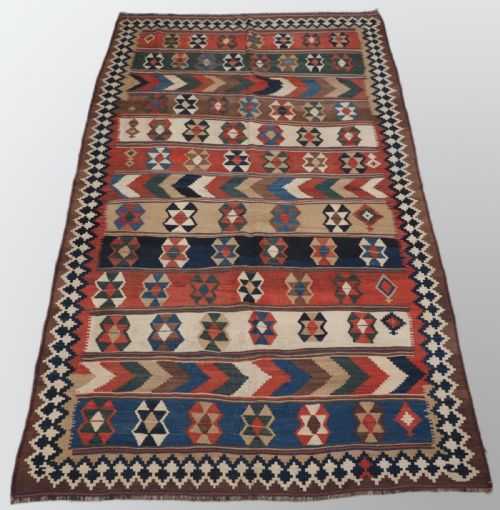


Multicoloured Wool Runner Rug
These multicoloured wool runner rug examples bring warmth and intricate tribal geometry to long hallways.
Multicoloured Wool Runner Rug
A multicoloured wool runner rug brings traditional tribal geometry and saturated dyes to narrow spaces such as hallways and corridors. You will frequently encounter nineteenth and early twentieth-century pieces originating from Caucasian, Persian, Anatolian, and Moroccan weaving traditions.
The format typically spans narrow dimensions suited for corridors, featuring long formats balanced by geometric medallions, boteh motifs, or repeating tribal symbols. Surviving examples demonstrate the endurance of nomadic weaving techniques across different regions.
Materials and construction
These textiles rely primarily on wool and hand-spun wool, often paired with cotton foundations, providing both pile depth and flatweave durability. Natural dye sources create the characteristic multicoloured palettes that age gracefully over decades.
Weavers utilised knotting techniques and flatweave methods depending on the regional tradition, from piled Caucasian Kazak pieces to Anatolian kilims. Each piece reflects the specific material availability and textile heritage of its origin.
Several runners manage to squeeze entire menolagies of cloud bands, memling guls, and weeping boteh motifs into spaces barely wider than a stride.
Assessing quality in nomadic runners
Quality rests in the precision of the tribal motifs, the saturation and balance of the multicoloured dyes, and the integrity of the wool. Finer knot density and tightly beaten flatweave structures indicate superior craftsmanship.
Condition and originality dictate the standing of a piece within the range, where intact borders and minimal structural restoration preserve the weaver's original intent.
The Multicoloured Wool Runner Rug Glossary
- Kilim
- A flatweave carpet produced without a pile, common across Anatolian and Caucasian traditions. These textiles offer crisp geometric patterns.
- Boteh
- A traditional teardrop or almond-shaped motif representing a floral spray or cypress tree. This symbol frequently appears in multicoloured runner designs.
- Kazak
- A style of rug originating from the Caucasus region known for bold geometric designs and primary colours. These pieces display strong tribal character.
- Gabbeh
- A coarsely knotted, long-pile rug traditionally made by nomadic tribes for personal use. They typically feature open fields with minimal, expressive motifs.
Multicoloured Wool Runner Rug: Frequently Asked Questions
Where should I place a long runner?
These narrow textiles suit hallways, corridors, and transitional spaces where linear formats soften hard flooring.
Their proportions allow them to anchor high-traffic areas while introducing warmth and historical character.
How do I care for antique wool rugs?
Regular gentle vacuuming without a beater bar removes grit that damages the wool fibres over time. Professional cleaning ensures the natural dyes remain stable and protected.
Avoid excessive moisture and direct sunlight to preserve the multicoloured palette.
What is the difference between piled and flatweave?
Piled rugs feature knotted wool yarn that creates a soft, plush surface underfoot. Flatweaves are woven without a pile, resulting in a lighter, thinner textile.
Both methods produce durable flooring suited to different functional preferences.
How do I identify regional tribal designs?
Caucasian pieces often display crisp geometric medallions and primary colours, whereas Anatolian and Persian examples utilise varied border structures and boteh motifs.
Moroccan Berber pieces generally present simpler graphic symbols on thick wool piles.