


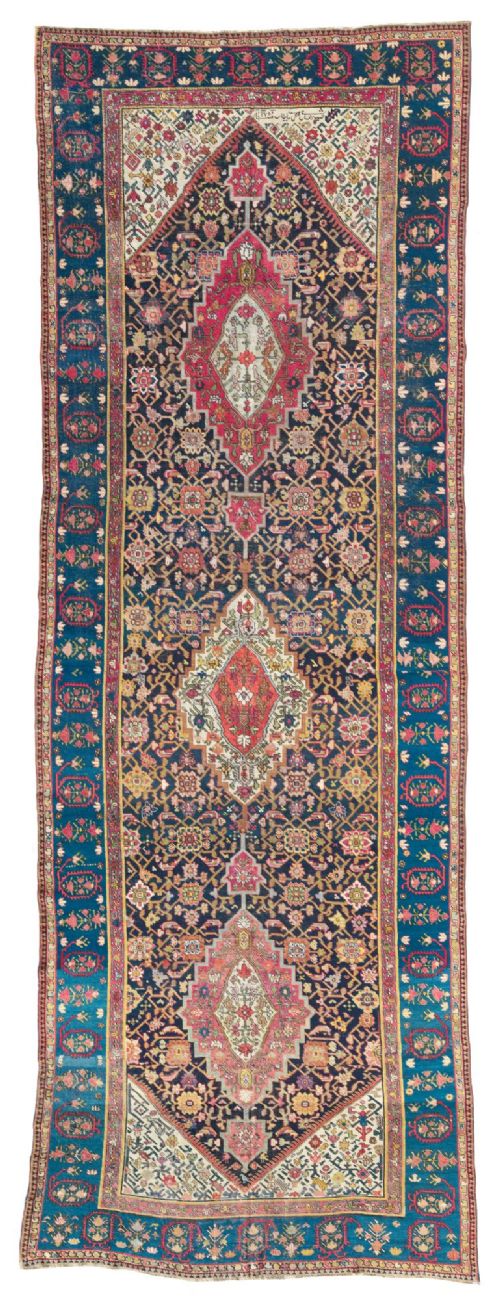
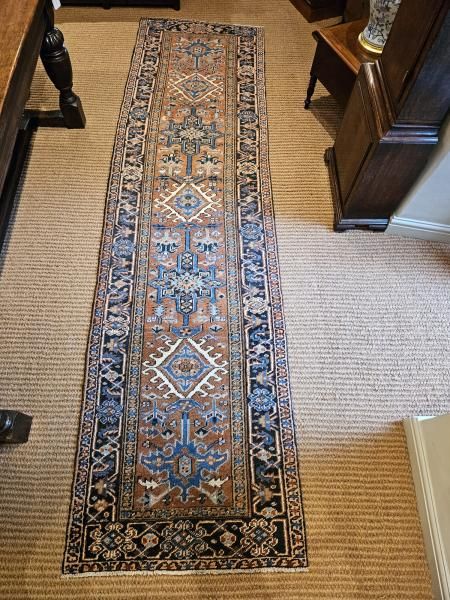
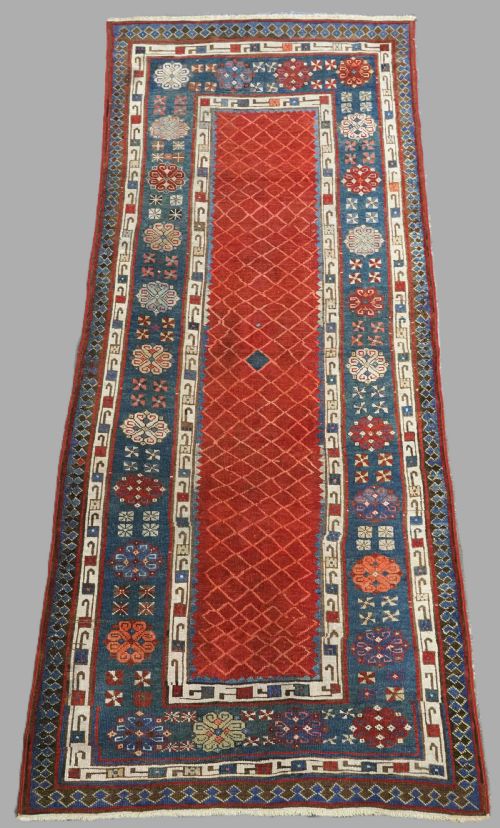
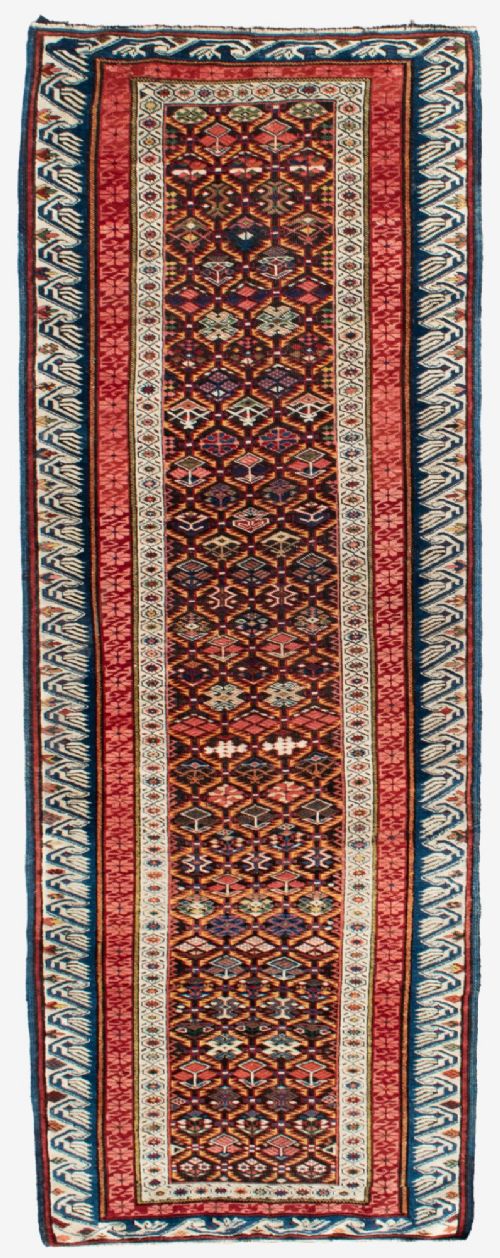
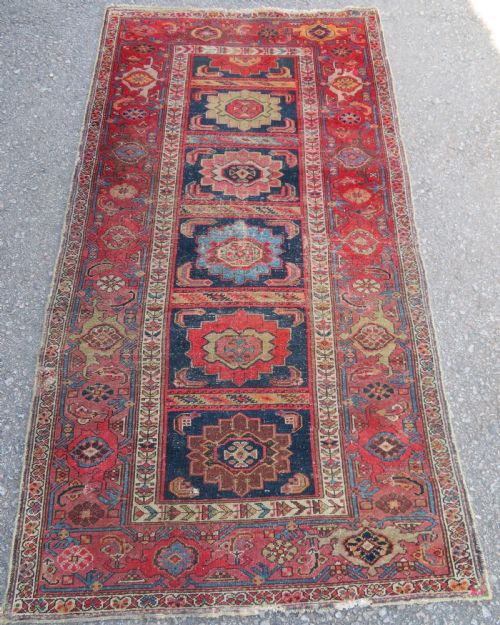
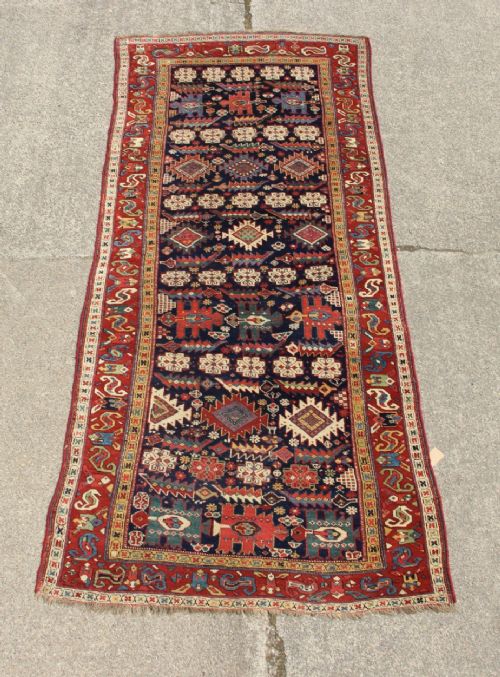
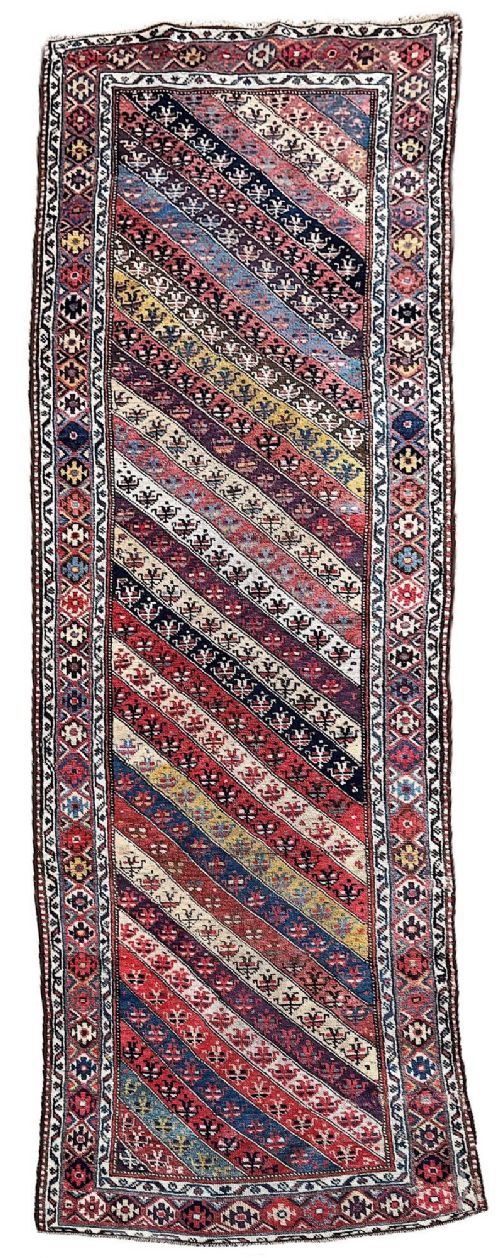
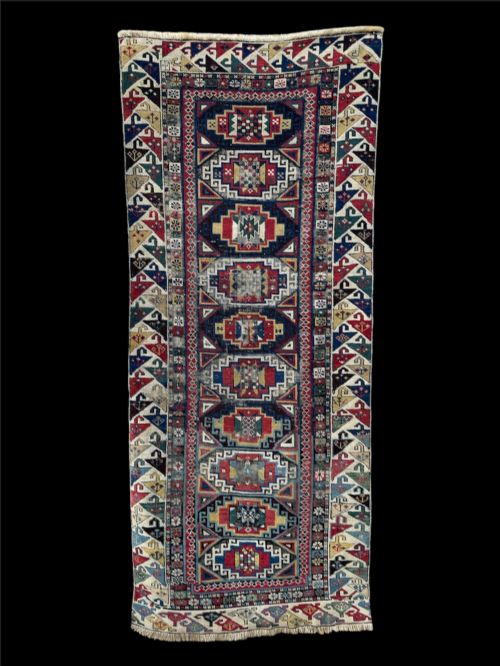



Caucasian Long Carpet Runner
When you search for a caucasian long carpet runner, you are stepping into a world of woven tribal geometry and rich wool floor coverings.
Caucasian Long Carpet Runner
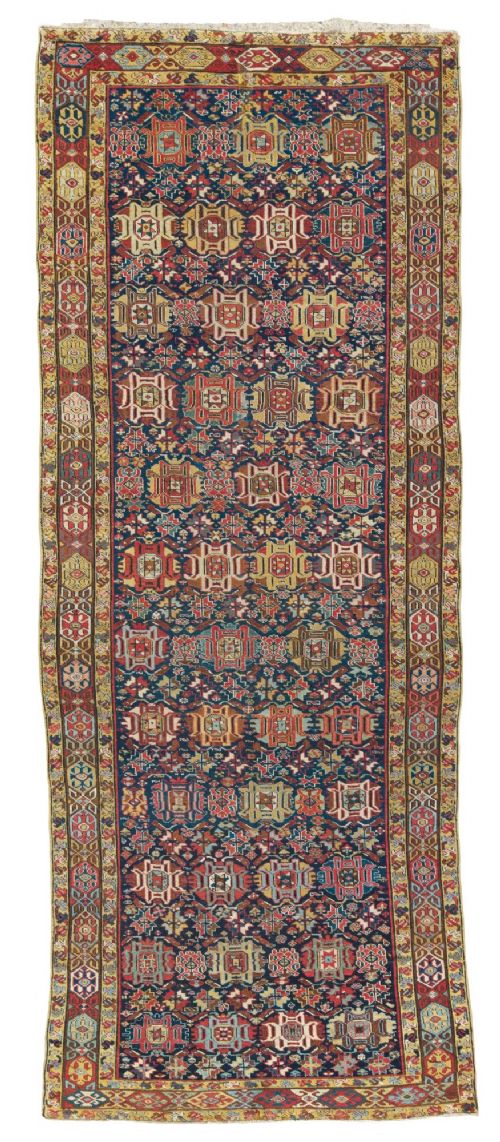
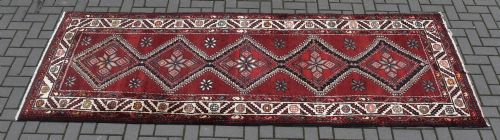
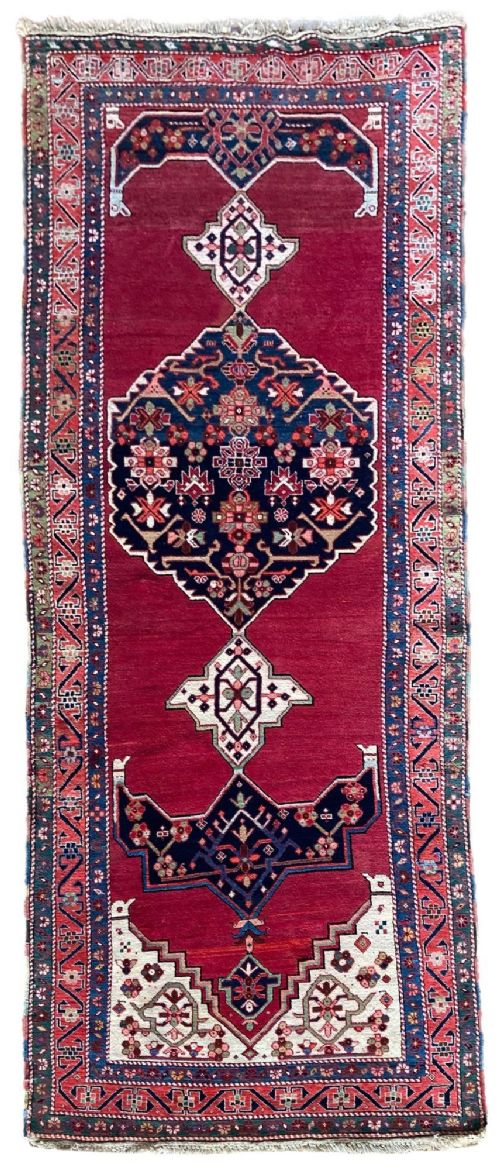
A caucasian long carpet runner brings narrow, elongated floor geometry into a hallway or long space, usually woven in regional workshops and tribal encampments across the Caucasus and neighbouring territories.
The selections on this page span the nineteenth and early twentieth centuries, capturing forms like Talish, Seychour, Kazak, and Karabagh long rugs alongside broader Persian tribal and regional formats.
These carpets provide distinct proportions designed to handle traffic while displaying intricate repeating medallions, lattice patterns, and symbolic motifs.
How they were made
Weavers utilised natural wool for the pile and foundation structures, occasionally incorporating cotton or camel hair for strength and contrast.
The construction relies on hand-knotted techniques executed on vertical looms, building dense structures that secure the geometric and floral designs.
Some nineteenth-century Caucasian runners quietly introduce whimsical peacocks and wandering botanical boteh right into the middle of strict geometric guard stripes.
What varies in quality
The clarity and saturation of natural dyes dictate visual depth, separating standard village weaving from superior artistic execution.
Knot density and structural tightness determine how well the pile resists wear over decades of heavy floor use.
The Caucasian Long Carpet Runner Glossary
- Talish
- A specific regional weaving style from the Caucasus, often characterised by a dominant central field colour and narrow vertical proportions.
- Boteh
- A Paisley-like almond or teardrop motif symbolising life and eternity, frequently repeated across Caucasian and Persian runners.
- Kelleh
- A large format carpet or long rug traditionally utilised as a room-size floor covering rather than a narrow hallway runner.
- Kavkaz
- The geographic region encompassing the Caucasus mountains, home to diverse weaving traditions shared across tribal groups.
- Kazak
- A robust style of Caucasian rug known for bold geometric medallions and saturated primary colours.
Caucasian Long Carpet Runner: Frequently Asked Questions
Where were these long runners made?
These runners originate from the Caucasus region and surrounding areas, including workshops and tribal groups in modern-day Azerbaijan, Armenia, and northwest Persia.
Weavers worked within distinct regional traditions, passing down specific border patterns, medallion layouts, and colour combinations through generations.
How do I place a long runner in a home?
Long runners suit high-traffic corridors, hallways, and narrow spaces where linear geometry draws the eye along the room.
They function best over smooth underlays that protect the antique foundation fibres from friction against hard flooring.
What materials make up these carpets?
The pile and foundations consist primarily of hand-spun wool, sometimes paired with cotton warps and occasional touches of undyed camel hair.
Natural dyes derived from plants and minerals provide the varied field colours that age with a characteristic patina.
How do I identify a Talish or Shirvan runner?
Talish pieces typically feature an open, unadorned central field flanked by intricate geometric borders, often in blue or white.
Shirvan and Kazak runners display denser geometric arrangements, including star medallions, lattice grids, and stylized animal or floral motifs.