


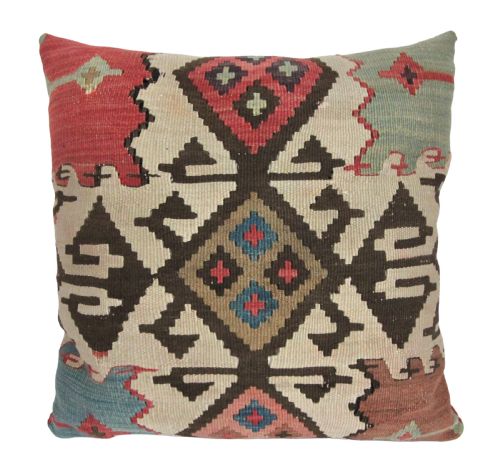


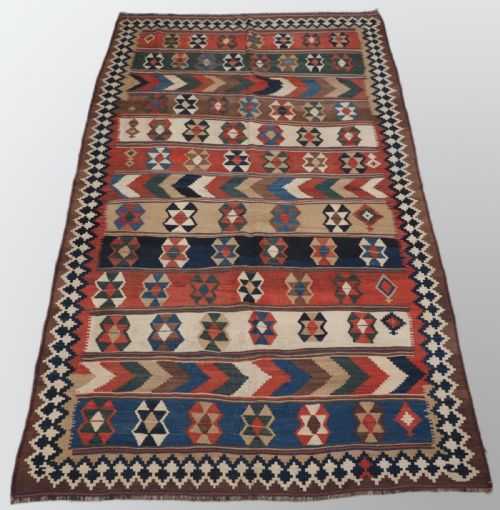

Multicoloured Flatweave Rug
A multicoloured flatweave rug brings vibrant tribal geometry and rich wool texture into a room.
Multicoloured Flatweave Rug
A multicoloured flatweave rug encompasses tribal and nomadic textiles created without a pile, including kilims, runners, storage bags, and wall hangings. These pieces originate from regions such as Anatolia, Persia, the Caucasus, Central Asia, and Morocco, reflecting centuries of weaving traditions.
The version most commonly encountered on this page is the Turkish or Persian tribal kilim, often featuring banded or geometric designs. Alongside carpets and runners, the selection includes utilitarian objects like salt bags, bread sofrehs, and storage bags adapted for modern display.
Materials and construction
These textiles rely primarily on wool and hand-spun wool, sometimes combined with cotton foundations or embellished with cowrie shells. The flatweave technique involves interlocking or wrapping the coloured weft threads tightly over the warp to produce a smooth, durable textile without knotted piles.
Weavers constructed many larger carpets, such as those from the Bergama or Malatya regions, in two separate parts joined down the centre. Smaller pieces, including storage bags and finger kelims, demonstrate localized techniques and specialised regional dye palettes.
Listings feature wool, cotton, and hand-spun wool across periods spanning from eighteen-fifty to nineteen-thirty.
Factors of quality
Quality rests upon the handled integrity of the wool and the vibrancy of the dye work. Pieces originating from specific tribal confederacies display superior control over natural pigment saturation and intricate geometric symmetry.
The finesse of the flatweave tension and the preservation of original edges and plain weave backs distinguish finer examples. Structural wear and purposeful adaptation from utilitarian bags into decorative runners also influence the character of each piece.
The Multicoloured Flatweave Rug Glossary
- Flatweave
- A textile produced by interweaving warp and weft threads without knotted piles. This method creates a thin, reversible rug.
- Kilim
- A pileless carpet or rug woven flat using slit-weave or related techniques. These originate predominantly across Anatolia, Persia, and Central Asia.
- Mafrash
- A large rectangular storage bag designed for animal transport. They are frequently disassembled into individual panels for collectors.
- Warp
- The stationary vertical threads stretched on a loom. The coloured weft is beaten down tightly over these foundational strings.
Multicoloured Flatweave Rug: Frequently Asked Questions
What is a flatweave rug?
A flatweave rug is a textile constructed without a pile by tightly interlacing horizontal weft threads across vertical warp threads. This technique results in a thin, flexible covering that lacks the dense tufts of knotted carpets.
Such pieces include kilims, runners, and repurposed storage bags from tribal regions. They sit flat on floors or hang easily on walls.
How were tribal bags used?
Nomadic groups utilised bags like mafrashen, salt bags, and bread sofrehs for daily storage and transport during seasonal migrations. These containers held household goods, grain, or personal possessions inside tents.
Today, these utilitarian objects are appreciated as compact flatweave textiles. Many survive with their original plain weave backs intact.
Where do these rugs come from?
The pieces originate from traditional weaving centres across Anatolia, Persia, the Caucasus, Morocco, and Central Asia. Specific tribes and confederacies, such as the Qashqai, Afshar, and Shahsavan, developed distinct regional patterns.
Each geographic area employed particular geometric motifs, dye palettes, and weaving structures. These regional traits help identify the provenance of individual textiles.
How do I care for a flatweave?
Maintain flatweave textiles by using a smooth suction vacuum without revolving brush bars. Professional cleaning is recommended for antique wool and cotton pieces to protect the natural dyes.
Prevent uneven wear by rotating the textile periodically. Using a quality underlay keeps the flatweave stable on hard flooring.