


Multi Strand Pearls
Multi strand pearls gather layers of luminous lustre around the neck, offering buyers a rich statement piece rooted in past decades.
Multi Strand Pearls
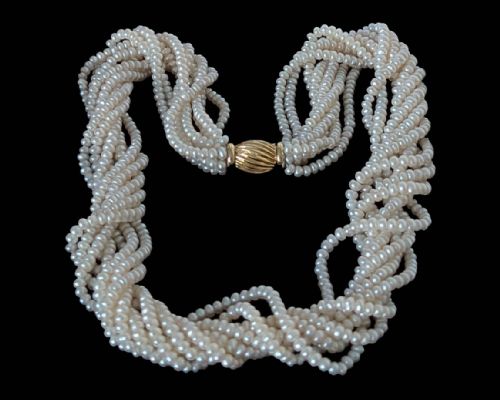
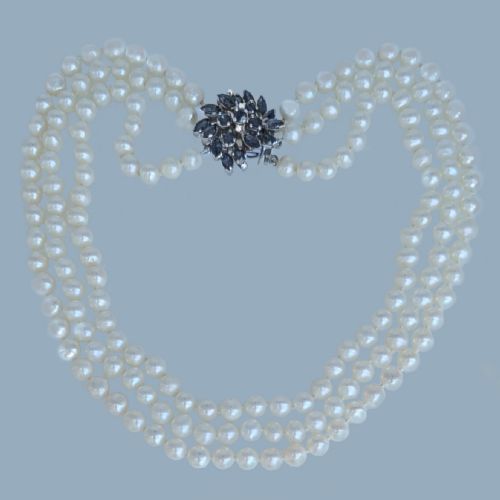
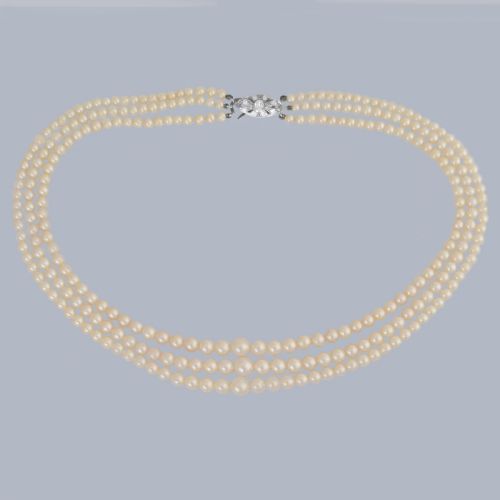
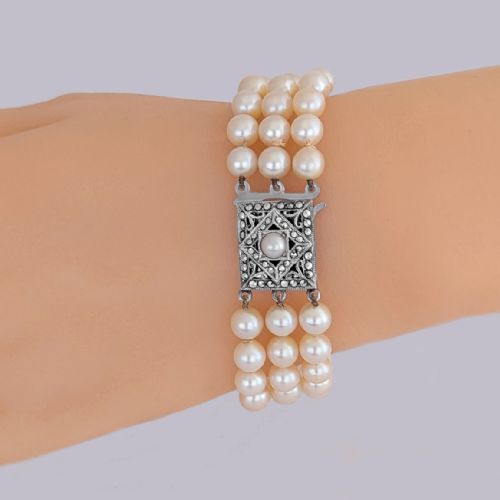
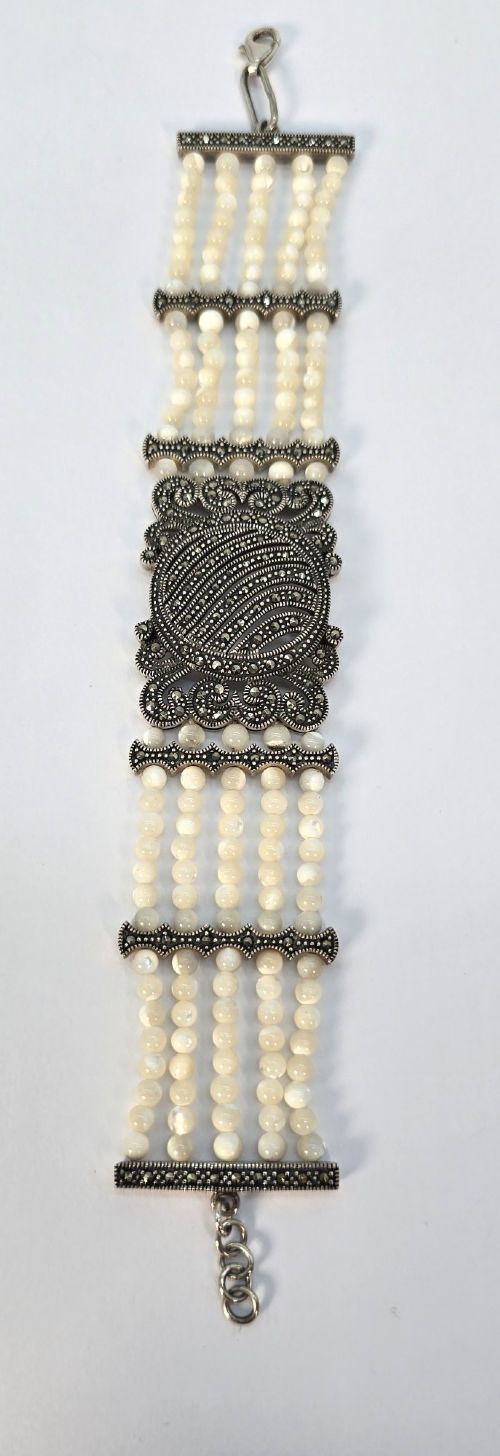
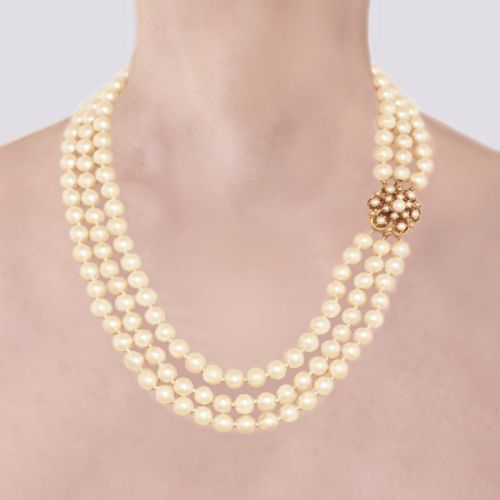
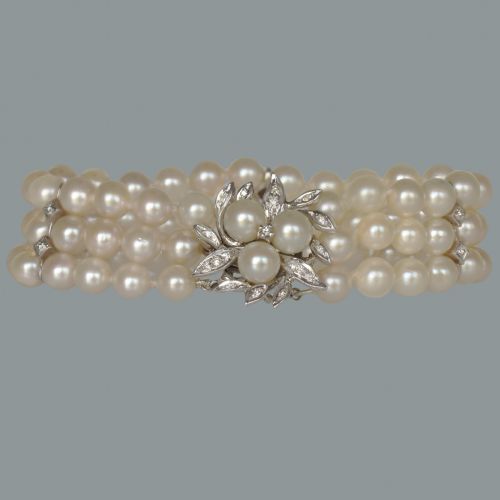
Necklaces dominate the selection, ranging from three-row iterations to substantial six and eight-strand seed pearl pieces. Bracelets and rings also appear, often incorporating precious stones alongside the pearls.
Most items rely on cultured pearls, though natural pearls from the Victorian era and freshwater seed pearls from the 1950s are present. Clasps frequently serve as secondary focal points, set with diamonds, sapphires, emeralds, rubies, or marcasite.
How they were made
Metalwork techniques include rose-cut diamond settings, millegrain edges, and floral cluster arrangements in silver and gold. Accompanying gemstones like sapphires, emeralds, and rubies are integrated directly into the clasp designs.
Periods represented span the 19th century, Victorian era, Edwardian period, 1920s, 1950s, and 1960s.
What varies in quality
The choice of precious metal in the clasp, such as 18ct gold versus 9ct gold or silver, alters the overall execution. Signed pieces and those accompanied by official gemological certificates hold distinct provenance.
Chaumet·Cropp & Farr
The Multi Strand Pearls Glossary
- Seed pearl
- Very small, naturally occurring or cultured pearls often used in multi-row configurations during the Victorian and mid-century periods.
- Cultured pearl
- Pearls farmed using human intervention by inserting a nucleus into an oyster or mollusc.
- Basra pearl
- Natural pearls originating from the Persian Gulf, historically prized for their distinct water and orient.
- Rose-cut diamond
- An antique diamond cut featuring a flat base and a domed crown with triangular facets.
- Marcasite
- Small, polished pieces of pyrite set in silver jewellery, popular during the Art Deco era.
Multi Strand Pearls: Frequently Asked Questions
How do I wear a multi strand necklace?
These necklaces sit close to the collarbone or fall lower depending on the length of the strands. They suit evening wear or elevated day attire where the layered rows can take centre stage.
Because the clasps on these pieces are frequently decorative and set with diamonds or coloured gems, wearers often rotate the clasp to the front as a feature.
What is the difference between cultured and natural pearls?
Natural pearls form organically in molluscs without human prompting, making older examples from periods like the Victorian era particularly scarce. Cultured pearls involve human intervention to start the nacre-coating process.
Both types appear across these decades, though natural saltwater and Basra specimens originate from earlier periods.
Are these pieces certified?
Certain items include independent gem reports or certificates detailing pearl origins and gemstone characteristics. These documents accompany specific mid-century and Art Deco pieces.
Certificates provide verification for natural pearls, saltwater origins, and gemstone grades.