
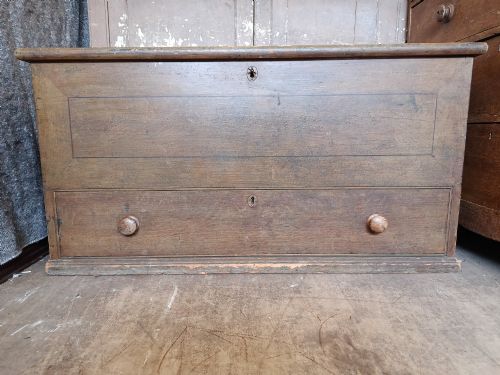
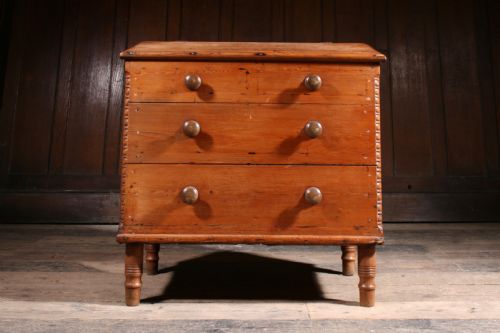


Mule Chest with Drawers
A mule chest with drawers combines the lift-lid storage of a traditional coffer with the lower drawer tier of a chest, offering the ideal practical furniture for linen and blankets.
Mule Chest with Drawers
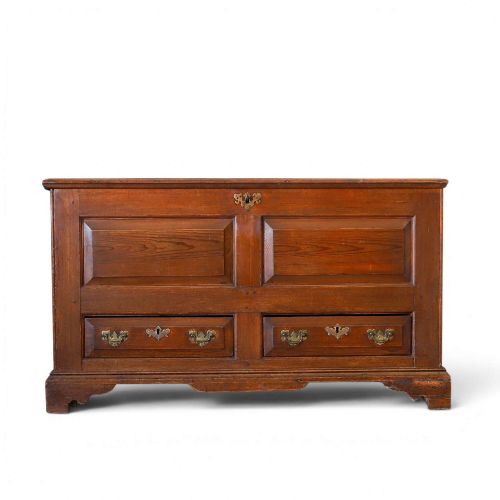
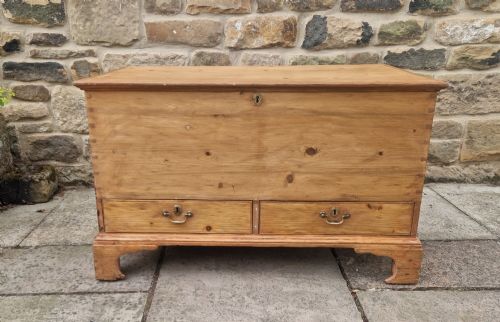
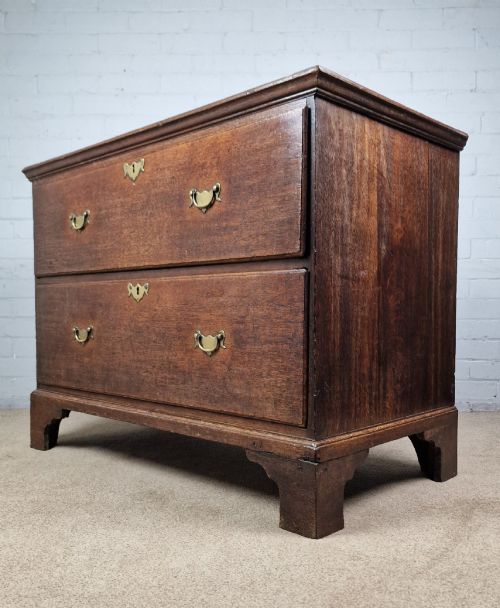
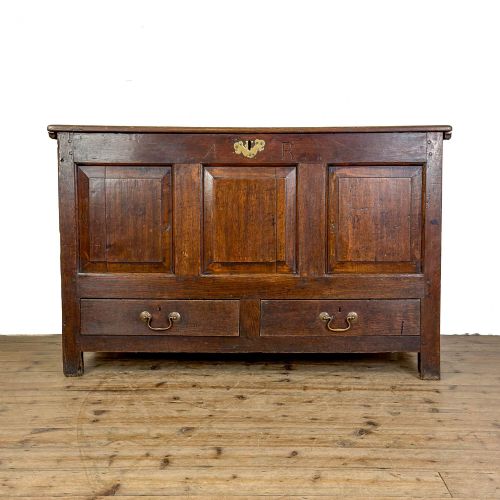
A mule chest with drawers stands as a hybrid storage piece, evolving from simple blanket boxes by the addition of one or more drawers beneath the main lift-up compartment. This design bridges the gap between coffer storage and conventional drawer chests.
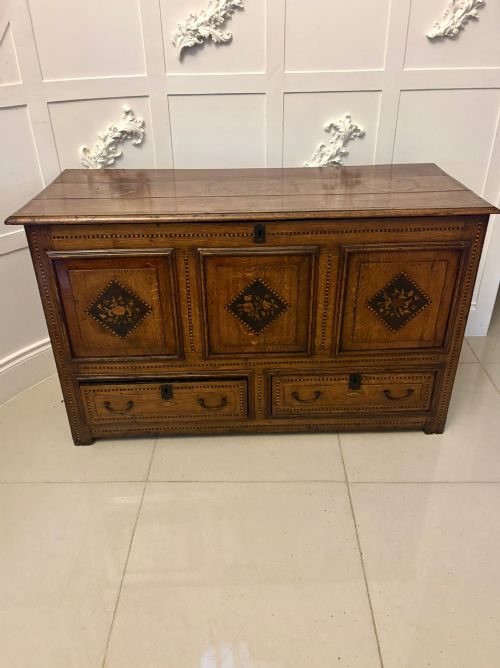
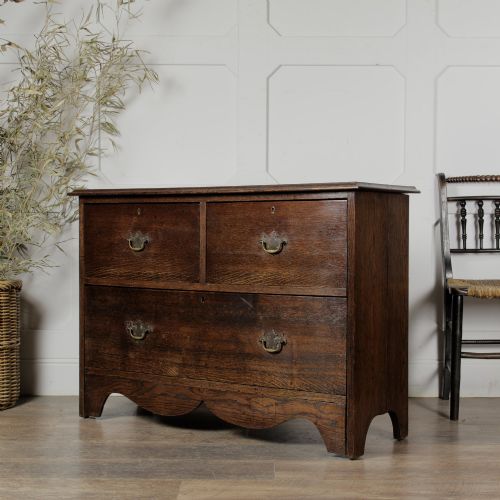
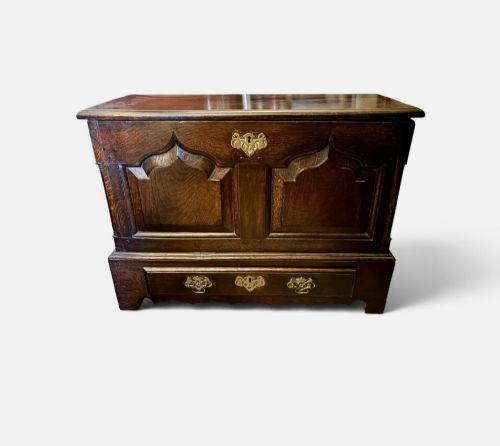
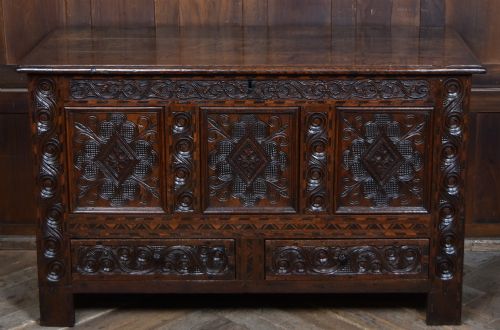
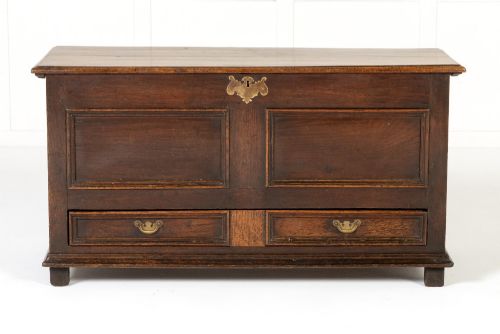
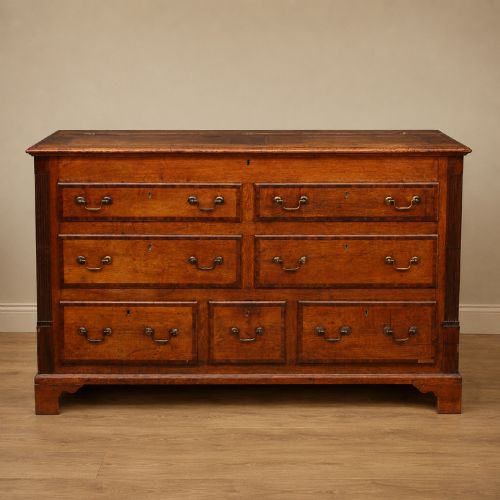
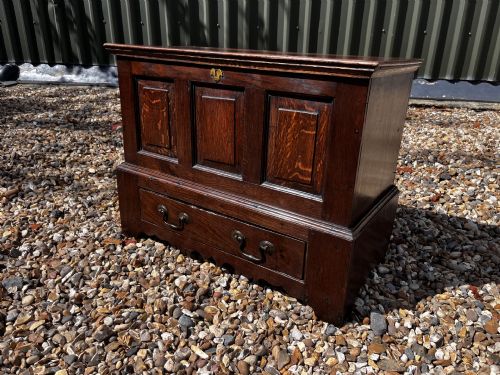
The pieces seen here range extensively in period, stretching from the seventeenth century through the Georgian era and into Victorian examples. Oak remains the predominant timber, though pine and mahogany also appear frequently.
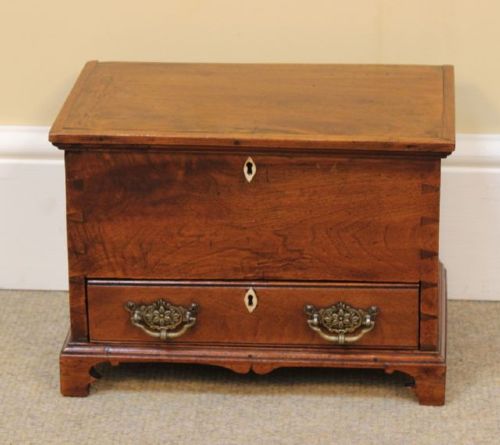
Regional variations emerge clearly across the selection, including smaller Welsh coffer bach versions alongside large English provincial pieces. Buyers find domestic utility married to regional cabinet-making traditions in nearly every specimen.
What varies in quality
The proportion and balance between the upper coffer section and the lower drawer tier dictate much of the visual success of a mule chest with drawers. Earlier seventeenth-century and fine Georgian examples display rigorous attention to timber selection and structural symmetry.
The integrity of the original hardware, drawer linings, and board bottoms marks the distinction between untouched survivals and heavily restored pieces. Subtle details such as carved panel depth, inlay execution, and the quality of dovetailing elevate individual pieces above standard utility items.
Several miniature Welsh coffer bach examples survive, suggesting they served as apprentice pieces or treasured gifts for children.
The Mule Chest with Drawers Glossary
- Coffer bach
- A small Welsh mule chest, translating literally as little chest, traditionally used for household linens or as a marriage gift.
- Scumbled pine
- A painted pine surface technique simulating the grain of more expensive timber using glazes and specialised combs or brushes.
- Marquetry inlay
- Decorative patterns formed by fitting contrasting pieces of wood veneer into prepared recesses within the solid timber surface.
- Panel and frame
- A method of construction where a central floating panel sits within a grooved outer frame to prevent splitting as wood expands and contracts.
- Dovetail
- A joint formed by interlocking wedge-shaped fingers, commonly used to secure drawer sides to drawer fronts.
Mule Chest with Drawers: Frequently Asked Questions
What is a mule chest?
A mule chest is a storage chest featuring a hinged lid at the top and one or more drawers fitted beneath the main compartment.
This hybrid form emerged when makers realised that adding drawers improved access to stored textiles without requiring items at the bottom of the chest to be lifted out first.
How were mule chests used?
Historically, families used these pieces for storing household linens, blankets, woolen garments, and personal valuables.
The lower drawers provided organised space for smaller items, while the deep upper well held bulkier textiles and bedding.
Where were mule chests placed?
In period homes, mule chests typically stood in bedchambers, hallways, or living parlors where household textiles required safe storage.
Their robust construction also allowed them to serve as impromptu seating benches when closed.
How do I date a mule chest?
Dating relies on examining construction methods, timber species, hardware, and stylistic carving details present on the panels and rails.
Earlier seventeenth-century examples show heavy pegged oak framing, whereas Georgian and Victorian pieces introduce mahogany, pine, and machine-cut elements.