






Mounted Stag Antlers
Mounted stag antlers bring the dramatic presence of the Victorian hunting lodge and country house straight into a room.
Mounted Stag Antlers
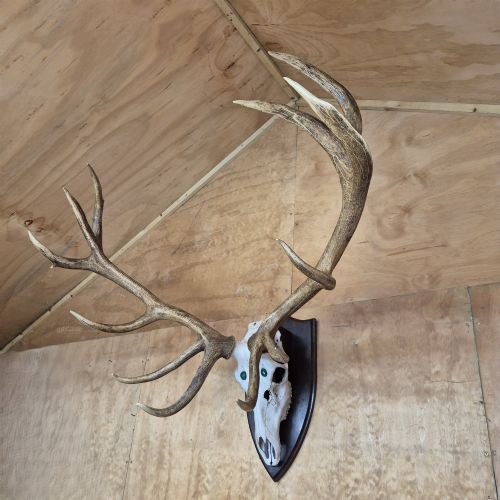
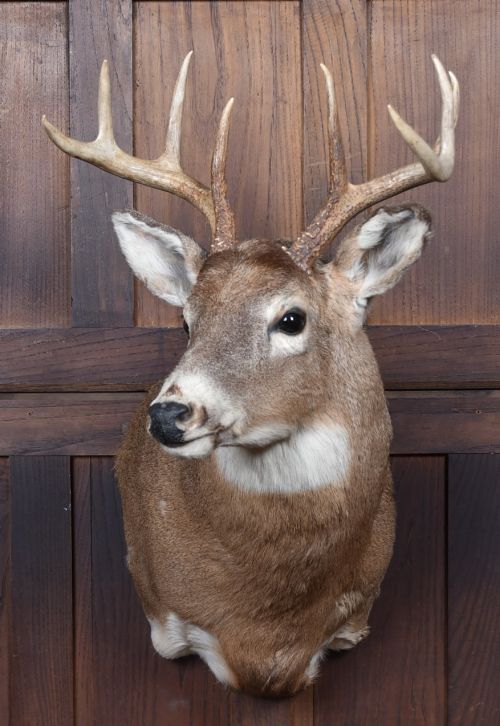
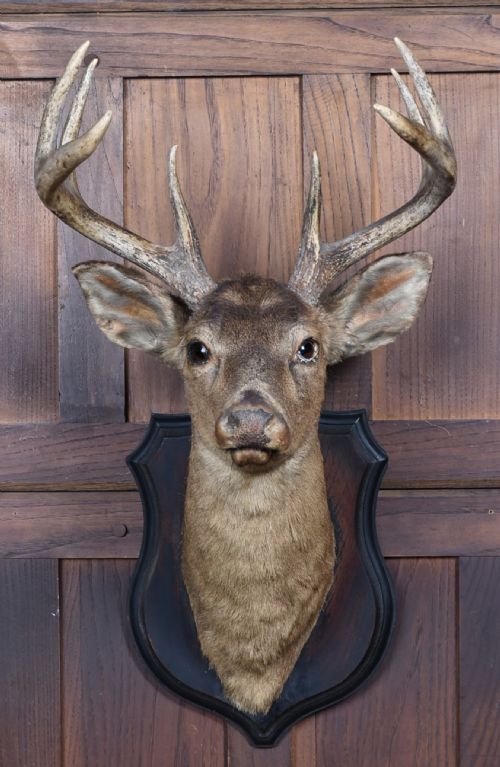
Mounted stag antlers form a distinct category of taxidermy and wall sculpture spanning the nineteenth and twentieth centuries. These pieces range from natural trophy mounts on wooden shields to functional hallway furniture and folk art carvings.
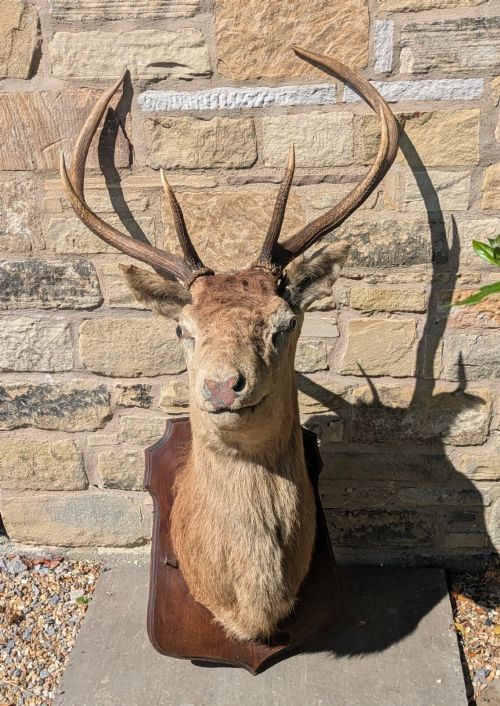
The most frequent examples encountered here are nineteenth-century and Victorian taxidermy mounts, including complete stags' heads and simple antler racks secured to carved wooden backings. Highland traditional and country house styles dominate the selection.
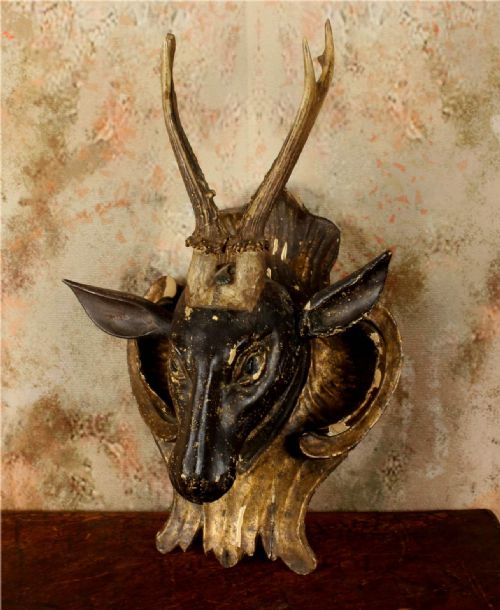
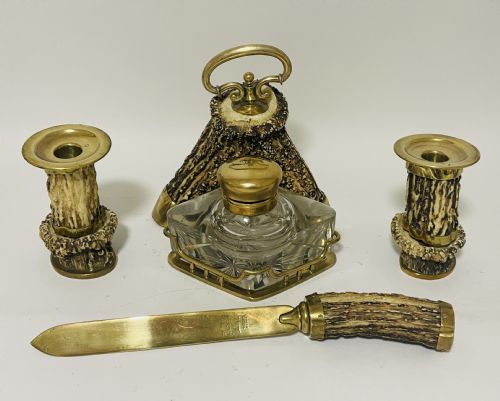
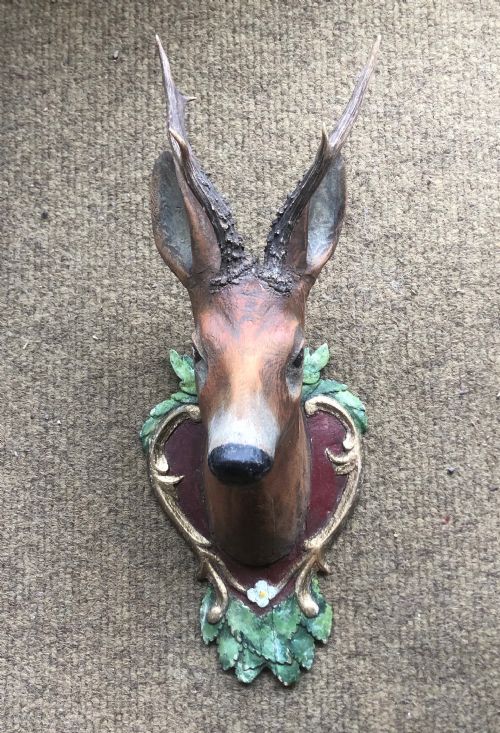
Beyond traditional taxidermy, the selection encompasses related items incorporating deer parts, such as carved wood deer heads, brass-mounted desk sets, and equestrian accessories with antler components.
How they were made
Taxidermists and artisans worked primarily with natural antler, bone, hide, and wood, mounting animal skulls and horns onto carved oak or pine shields. These wooden backings often featured detailed relief carving or simple geometric shapes to support the weight of the trophy.
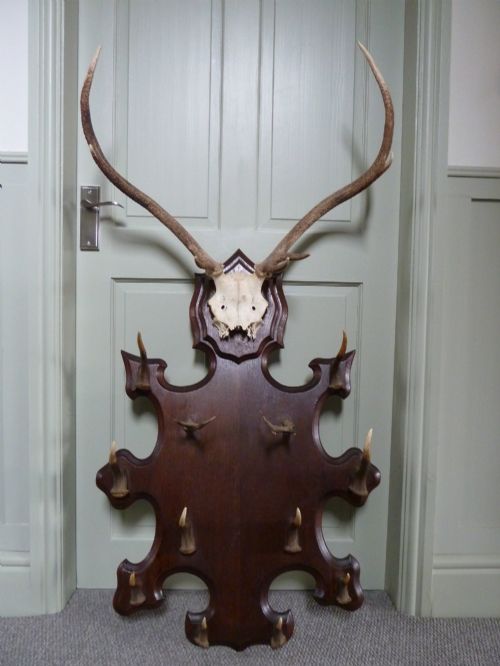
Utility pieces integrated natural materials into everyday objects, combining antlers with brass fittings, silver collars, and glass elements to create hallstands, coat racks, and desk accessories.
Some nineteenth-century stags come accessorized with silver-collared whips and brass-mounted desk sets, proving that Victorian deer had very proper paperwork.
What varies in quality
Quality rests in the symmetry and point count of the antlers, alongside the skill of the taxidermist in preserving the natural posture and expression of the animal. Older nineteenth-century specimens with robust skulls and well-carved wooden shields command particular attention.
The execution of the backing board also dictates worth, as hand-carved oak shields or folk art details elevate a piece above standard commercial taxidermy mounts.
The Mounted Stag Antlers Glossary
- Taxidermy
- The art of preserving, stuffing, and mounting the skins of animals for display. In this context, it refers specifically to the preparation of deer heads and antlers.
- Shield
- A wooden backing board, frequently carved from oak, upon which a set of antlers or a stag's head is mounted for wall hanging.
- Point
- An individual tine on a deer's antler. Higher point counts, such as ten or twelve points, indicate larger and more mature stags.
- Folk Art
- Objects created by self-taught artists using traditional methods, often resulting in unique hand-carved wooden interpretations of deer heads rather than preserved specimens.
- Hallstand
- A piece of hallway furniture designed for coats, whips, and hats, constructed here using deer horns and stags' antlers.
Mounted Stag Antlers: Frequently Asked Questions
How do I hang mounted stag antlers safely?
These pieces carry significant weight, particularly full stags' heads mounted on wooden shields. Secure the fixture directly into wall studs using heavy-duty picture hooks or masonry screws.
Check the stability of the antler attachment to the wooden backing before hanging the piece at eye level to ensure safe display.
What periods do these pieces come from?
The selection spans from the nineteenth century through the Edwardian era and into the early twentieth century. Victorian and nineteenth-century examples are especially common.
Craftsmanship and materials typically reflect the period of origin, ranging from traditional Victorian taxidermy to folk art carvings from around eighteen-eighty.
How should I clean mounted antlers?
Dust the antlers and wooden shields regularly using a soft, dry brush or a feather duster. Avoid using water, liquid cleaners, or harsh chemicals on taxidermy or painted wooden surfaces.
Keep pieces away from direct sunlight and damp environments to protect the natural bone, hide, and wood from fading or deterioration.
What is the difference between a taxidermy mount and a folk art deer?
Taxidermy mounts utilise the actual preserved skin, skull, and antlers of a real animal, prepared to look lifelike. These pieces originate mainly from nineteenth-century sporting and country house contexts.
Folk art deer are entirely hand-carved from wood by artisans, sometimes incorporating real antlers, offering an artistic interpretation rather than a preserved specimen.