
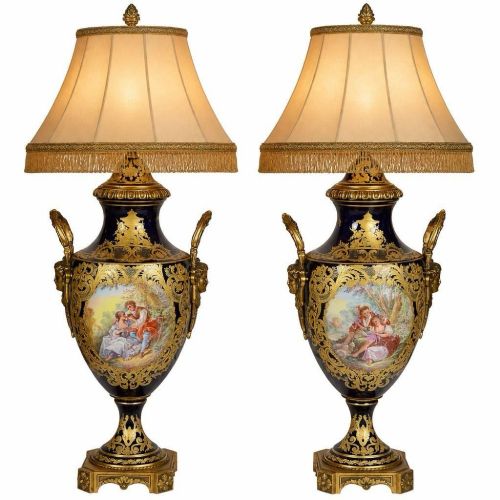
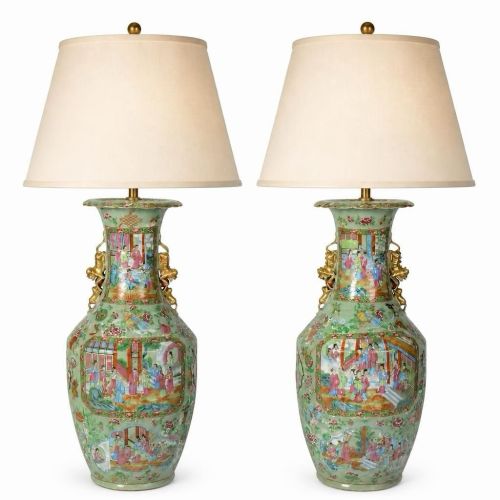
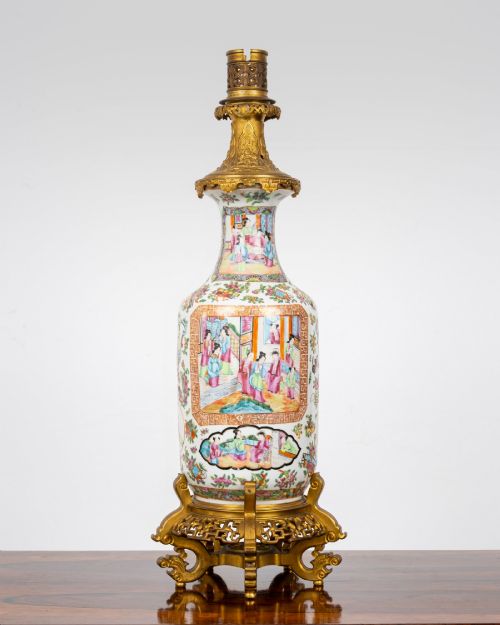
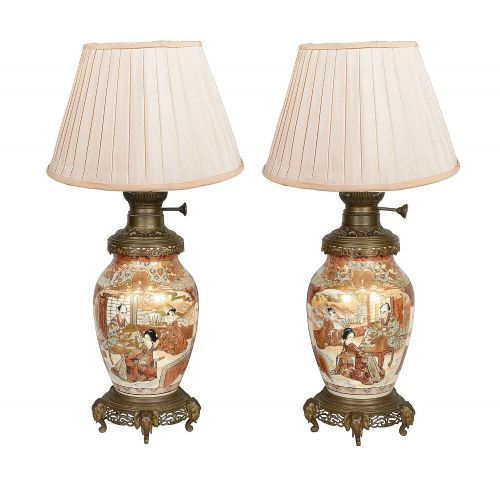
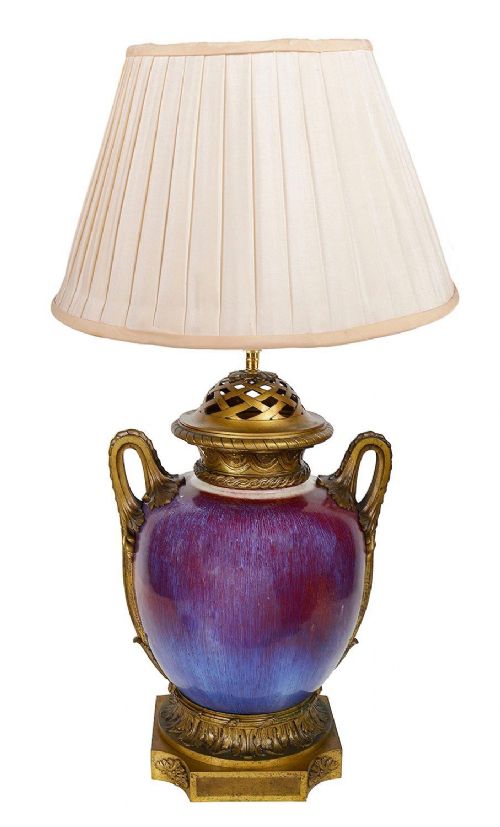


Mounted Porcelain Vase Lamp
A mounted porcelain vase lamp combines imported or European ceramics with cast metal mounts to illuminate a room.
Mounted Porcelain Vase Lamp
A mounted porcelain vase lamp takes a ceramic vessel from Chinese or European kilns and adapts it into a table lamp. These pieces range from export ceramics and Japanese wares to French porcelain styled after Sevres.
The form relies on a central vase body combined with metal mounts in brass, gilt bronze, or ormolu. Table lamps of this type appear frequently in pairs or as monumental single pieces.
Origins stretch across the eighteenth, nineteenth, and early twentieth centuries, drawing on styles such as Chinoiserie, Meiji period Japanese work, and French nineteenth-century design.
Materials and Construction
Makers utilised porcelain bodies decorated with enamel, underglaze blue, celadon glazes, or pâte-sur-pâte, paired with cast metal mounts secured to the base and neck. Ormolu and gilt bronze components were shaped and applied to frame the ceramic vessel.
Lamps often incorporate fabric or silk shades to complement the mounted base, while wood elements may appear in the internal structure or base support.
Some nineteenth-century makers converted antique ginger jars into lighting simply by drilling through a dragon's belly.
Distinctions in Quality
Quality rests upon the crispness of the metal chasing on the ormolu or gilt bronze mounts and the finesse of the porcelain painting. Heavier, more detailed cast metalwork distinguishes finer examples from simpler brass fittings.
The harmony between the ceramic vessel and its metal mounts dictates the overall success of the piece, as well-integrated mounts complement the contours of the vase without obscuring the glaze or enamel work.
The Mounted Porcelain Vase Lamp Glossary
- Ormolu
- Gilded bronze mounts applied to furniture, porcelain, and clocks. This technique was widely used in France to embellish imported porcelain.
- Celadon
- A pale green jade-like glaze originating in China. It appears on numerous nineteenth-century vase lamps.
- Famille Rose
- A palette of Chinese porcelain enamels dominated by opaque pink. The style gained popularity during the Qing dynasty and later European revivals.
- Satsuma
- Japanese pottery characterised by an ivory crackle-glaze and polychrome enamel decoration. Pieces from the Meiji period frequently reached European markets.
Mounted Porcelain Vase Lamp: Frequently Asked Questions
What is a mounted porcelain vase lamp?
A mounted porcelain vase lamp is a decorative ceramic vessel converted into a table lamp by adding metal fittings and electrical wiring.
These pieces combine antique vases from Chinese, Japanese, or European kilns with French or English metal mounts.
How do you date a mounted porcelain vase lamp?
Dating relies on examining the style of the ceramic body, the manufacturing marks, and the casting technique of the metal mounts.
Nineteenth-century examples often feature ormolu mounts paired with Chinese export porcelain or Japanese Meiji period wares.
Where were these lamps made?
Many ceramic bodies originated in China or Japan before being mounted and wired in European workshops, particularly in France.
European factories such as Sevres also produced porcelain specifically for these decorative lighting formats.
How do you clean mounted porcelain vase lamps?
Cleaning requires dusting the ceramic body and fabric shade gently with a soft dry cloth.
Metal mounts should be kept away from harsh polishing compounds to preserve the original gilt or ormolu surface.