
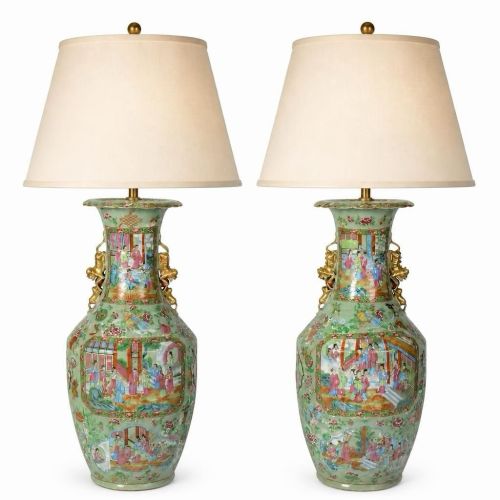
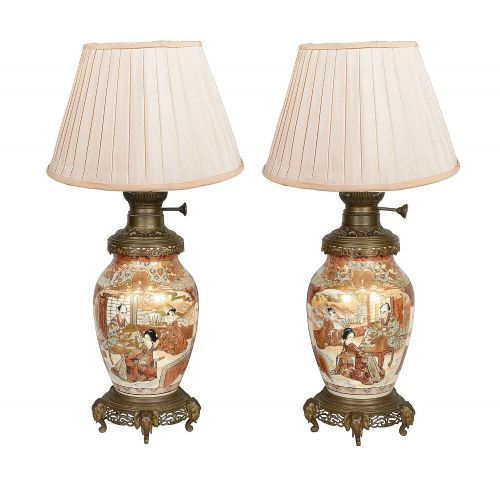


Mounted Oriental Vase Lamp
A mounted oriental vase lamp brings historical ceramic form and European metalwork together to illuminate a room with distinct presence.
Mounted Oriental Vase Lamp
A mounted oriental vase lamp transforms historical ceramic vessels into functional lighting by attaching metal fittings to the body. These pieces combine imported porcelain, stoneware, or enamel with domestic hardware such as bases and collars.
Most examples found here date from the nineteenth century, drawing upon Chinese and Japanese ceramic traditions including Satsuma, Imari, and Famille Rose. Makers often adapted these vessels for European interiors by securing them with brass, ormolu, or gilt bronze mounts.
Forms range from celadon celadon-glazed balusters and powder blue jars to large monumental pairs intended for prominent placement. The ceramic bodies themselves retain their original painted, glazed, or enamelled decoration beneath the electrical fittings.
Distinctions in quality
Quality rests primarily upon the artistic merit and preservation of the ceramic vessel itself, alongside the integration of the metalwork. Finer vases display crisp hand-painted detail, balanced glazing, and harmonious proportions.
The execution of the ormolu or brass mounts also dictates the standard of the piece, with heavier, finely chased metalwork demonstrating superior craftsmanship. The harmony between the eastern ceramic and the western metal mounts determines the overall coherence of the lamp.
Listings feature ceramics from the eighteenth and nineteenth centuries, alongside later twentieth-century styles influenced by earlier dynasties.
The Mounted Oriental Vase Lamp Glossary
- Ormolu
- Gilt bronze mounted on decorative objects and furniture, created by applying finely ground high-carat gold to a bronze base. This technique gives the metal a rich, warm lustre that complements porcelain.
- Famille Rose
- A palette of Chinese porcelain enamels dominated by opaque pink or rose colours, introduced during the Qing dynasty. These pigments allowed for nuanced shading in floral and figural scenes.
- Celadon
- A pale green or grey-green glaze resembling jade, achieved through iron oxide in the reduction firing of high-fired stoneware or porcelain. It remains one of the most enduring finishes in East Asian ceramics.
- Satsuma
- Japanese earthenware pottery featuring a crackle-paste glaze and elaborate polychrome and gilt decoration. Originating in Kagoshima Prefecture, these wares became widely exported during the Meiji period.
Mounted Oriental Vase Lamp: Frequently Asked Questions
How do I choose the right shade?
Selecting a shade depends on the scale and visual weight of the ceramic body beneath. Fabric and silk shades are common choices that soften the light and balance the rich textures of the porcelain and metal mounts.
Proportion is essential, ensuring the width of the shade matches or slightly exceeds the widest part of the vase. Neutral tones allow the detailed painting or glaze of the oriental vase to remain the focal point.
Were these lamps made originally?
Many vases were originally created as decorative vessels or storage jars and were converted into lamps at a later date. This adaptation often occurred in the nineteenth century as European demand for exotic ceramics grew.
Mounts were custom-fitted by artisans who drilled the base or secured collars around the neck to hold electrical components. This practice preserved the decorative integrity of the ceramic while serving a new domestic purpose.
How do I date these lamps?
Dating relies on examining the characteristics of the ceramic body, the style of the hand-painted decoration, and the manufacturing techniques of the metal mounts. Nineteenth-century examples frequently feature period ormolu mounts and specific regional palettes like Rose Medallion or Satsuma.
Reference marks, glaze types, and potting styles help distinguish nineteenth-century productions from eighteenth-century originals or later revival styles.
How should I clean the mounts?
Cleaning brass and ormolu mounts requires gentle dusting with a soft, dry cloth to prevent the accumulation of grime. Avoid harsh chemical cleaners or abrasive polishes that can strip the gilding or damage the adjacent ceramic glaze.
If deeper cleaning is necessary, a damp cloth with mild soap should be used sparingly, ensuring moisture does not seep into the electrical components or unglazed ceramic areas.