
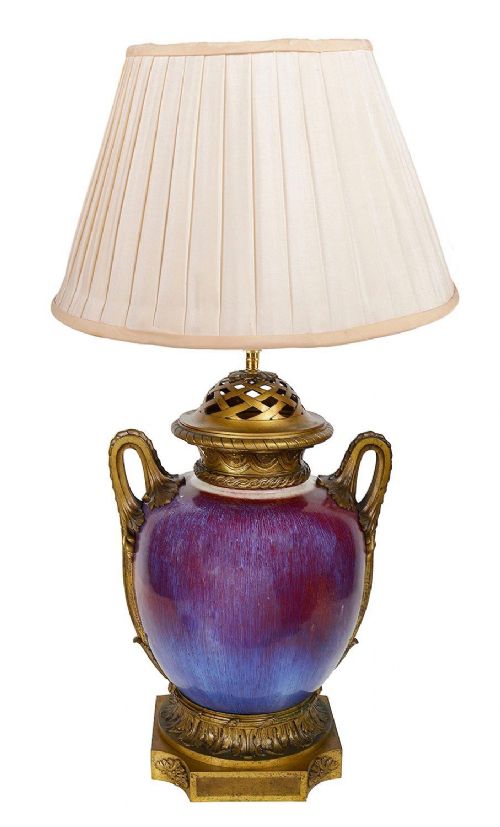


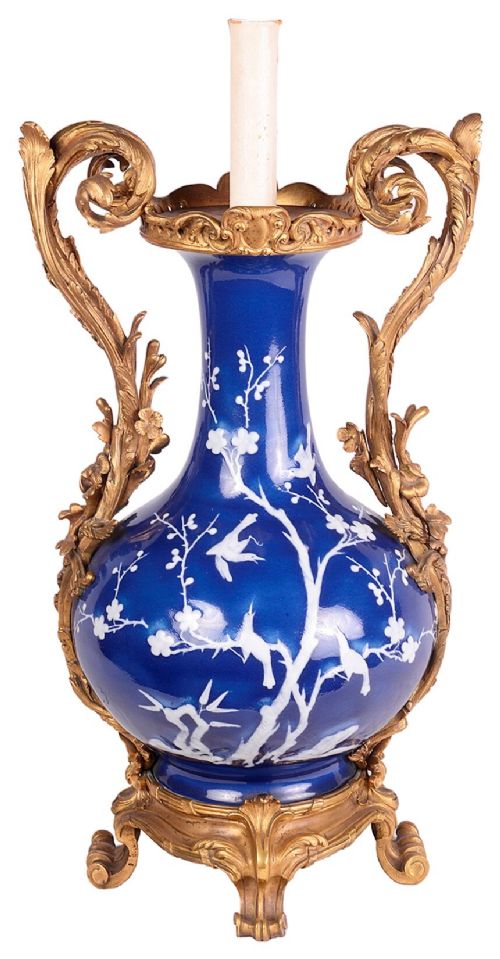
French Mounted Chinese Lamps
French mounted chinese lamps bring together Eastern porcelain and Western gilt metalwork to create striking statement pieces for any interior.
French Mounted Chinese Lamps
When you search for french mounted chinese lamps, you are looking at Asian ceramic vessels adapted into table lamps through the addition of European metal fittings. These pieces combine antique vases with decorative metalwork to create grand lighting for domestic spaces.
The objects on this page most commonly take the form of table lamps built from nineteenth century or earlier vases. You will frequently find forms such as lidded vases and amphora shapes fitted for modern electricity.
Origins span several distinct periods, notably the eighteenth and nineteenth centuries, featuring styles such as Chinese Export, Chinoiserie, and French Chinoiserie. Makers often utilised blue and white porcelain, powder blue glazes, celadon, and famille rose enamels.
How they were made
The primary materials recorded in these pieces are porcelain and ceramic bodies combined with gilt bronze, ormolu, and brass mounts. Artisans secured these metal mounts around the rims, necks, and bases of imported Eastern vessels to stabilise and embellish them.
Surface decoration frequently involves hand painted enamel work, gold leaf application, and cloisonne enamel techniques. Fabric shades in silk or other textiles are often paired with the completed ceramic and metal bodies.
Some vases live a double life, starting out as fine imperial vessels before acquiring heavy French bronze shoes.
What varies in quality
The calibre of the porcelain body largely dictates the standing of the piece, with fine eighteenth century vessels commanding greater regard than later nineteenth century interpretations. Hand painted detail and depth of glaze colour also separate standard production from superior examples.
The execution and finish of the metal mounts contribute heavily to the overall character. Heavy, finely chased ormolu mounts demonstrate a higher level of European craftsmanship than plain brass alternatives.
Samson Porcelain
The French Mounted Chinese Lamps Glossary
- Ormolu
- Gilded bronze used for decorative mounts on furniture and ceramics. This technique involves applying a mercury and gold amalgam to a bronze base and heating it.
- Famille Rose
- A palette of opaque enamels introduced in Chinese porcelain decoration during the eighteenth century. Pink enamel derived from gold is the defining characteristic of this style.
- Cloisonne
- Enamelling technique where thin metal wires form raised barriers on a surface to contain different coloured pastes. These compartments are then fired and polished smooth.
- Chinoiserie
- European artistic style reflecting Chinese motifs and techniques. Artisans in France and across Europe reinterpreted Asian aesthetics through their own decorative traditions.
- Celadon
- Pale green glazed ceramic originating in China. The subtle jade like tint results from iron oxide reacting within a reducing kiln atmosphere.
French Mounted Chinese Lamps: Frequently Asked Questions
What are french mounted chinese lamps?
These pieces consist of historical Chinese porcelain vessels, such as vases, fitted with European metal mounts and wired for electricity. They blend Eastern ceramic traditions with Western decorative metalwork.
Such items serve primarily as decorative table lamps that bring colour and texture into grand rooms. The fusion of styles makes them distinct focal points in interior design.
How were they used historically?
Originally, many of these Asian ceramic vessels were imported into Europe as luxury ornaments for display in cabinets or on mantelpieces. European craftsmen later added metal mounts to enhance their status and utility.
In subsequent decades, workshops converted these mounted vases into lighting fixtures as domestic gas and electric illumination became common. This repurposing gave fragile antique ceramics a functional second life in Western homes.
How do you live with them?
Placing these lamps on sturdy side tables or console units allows their detailed porcelain glazes and metal mounts to catch the light. They suit traditional and eclectic interiors where rich textures and colours take centre stage.
Because many feature delicate hand painted surfaces or silk shades, keeping them away from direct sunlight preserves their colours. Regular dusting with a soft cloth helps maintain the gilt bronze and ceramic finishes.
How do you tell periods apart?
Identifying the age involves examining the characteristics of the porcelain body, the depth of the glaze, and the style of the metal mounts. Eighteenth century pieces often display different potting techniques and softer enamel palettes compared to later nineteenth century iterations.
The metalwork itself offers clues, as nineteenth century ormolu mounts frequently exhibit different casting methods than earlier French works. Comparing the stylistic cues of the Chinoiserie decoration helps narrow down the decade of production.