





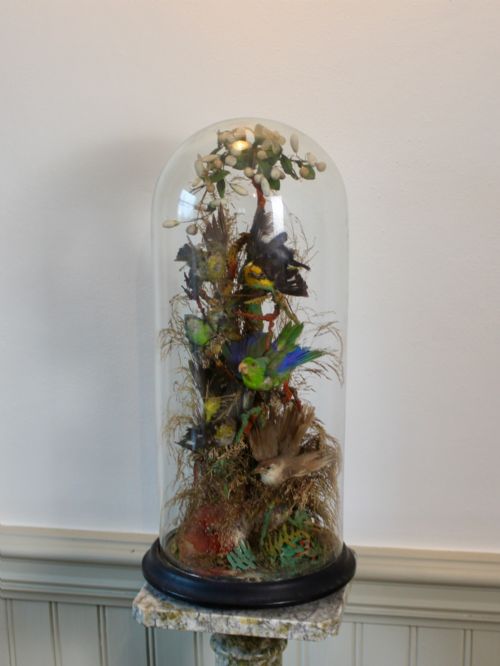



Mounted Bird Display Case
A mounted bird display case holds preserved avian specimens behind glass, bringing Victorian natural history directly into domestic interiors.
Mounted Bird Display Case
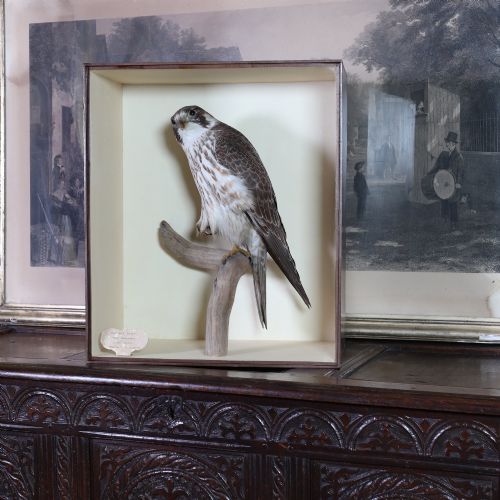
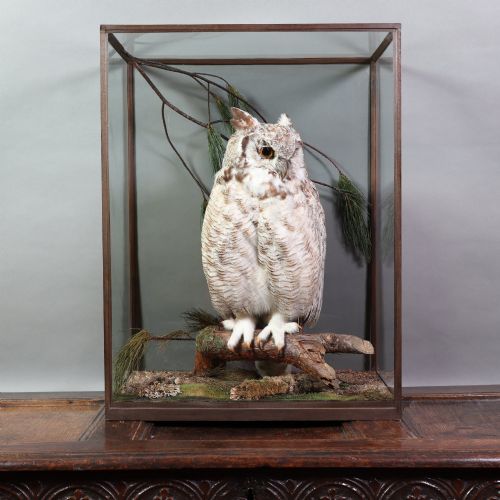
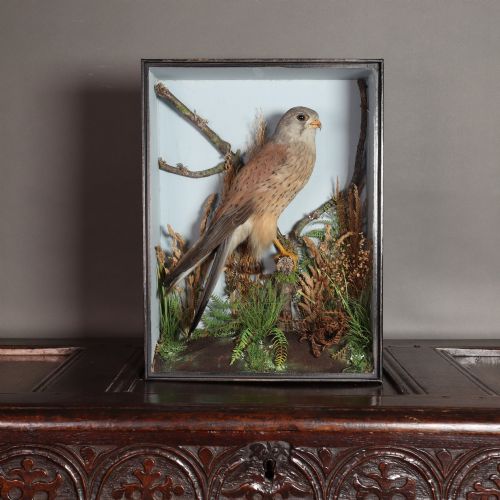
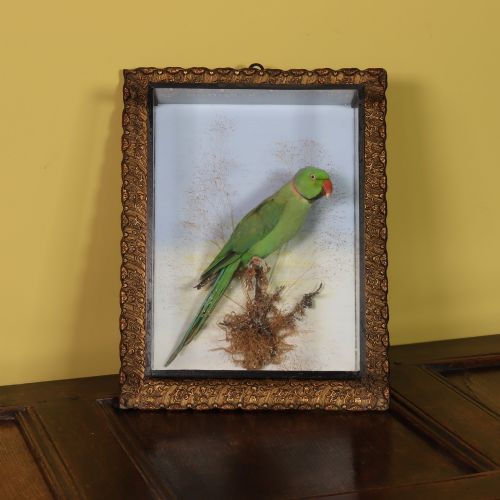
When you search for a mounted bird display case, you encounter preserved specimens arranged within wooden boxes, picture frames, and glass domes. These pieces originate primarily from the Victorian and Edwardian periods, showcasing birds from British woodlands as well as exotic species from South America, Australia, and New Guinea. The selection on this page ranges from single subjects like kestrels and owls to complex multi-bird dioramas.
The most common formats you will meet here are rectangular wooden cases and glazed frames designed for wall hanging or tabletop placement. Many incorporate painted backgrounds, dried vegetation, moss, and paper elements to simulate natural habitats. Whether housing a pair of kingfishers in a snow scene or a composition of colourful tropical birds, each piece reflects nineteenth-century natural history collecting habits.
How they were made
Makers constructed these enclosures using timber frames fitted with large glass panels to protect the delicate plumage from dust and handling. Inside the case, taxidermists arranged preserved specimens over a base of dried vegetation, moss, and paper, often supported by wire frameworks. Painted backdrops added depth behind the birds, creating miniature theatrical environments.
Glazing techniques varied between standard rectangular wooden enclosures and curved glass domes that offered panoramic views of the interior. Joinery methods relied on solid woods such as oak, with paper linings sealing the backs of the cases to maintain internal environments. These materials combined to preserve biological specimens over decades.
Mounted Bird Display Case Retail Price Guide 2026
Typical asking prices for mounted bird display case among the pieces listed under this phrase on Sellingantiques today, from the lower quarter to the upper quarter. They describe what is for sale here now, not the wider market.
Listings feature wooden, glass, and paper materials applied across Victorian and Edwardian taxidermy cases.
What varies in quality
Quality in a mounted bird display case depends upon the taxidermist's anatomical accuracy and the compositional skill shown in the arrangement. Pieces by documented makers exhibit superior feather preservation and lifelike postures that distinguish them from anonymous workshop productions. The complexity of the habitat, such as painted snow scenes or multi-species displays, further separates standard examples from exceptional ones.
The condition of the original wooden case and the clarity of the glass influence the overall visual impact of the piece. Intact paper backdrops and secure internal mountings indicate careful historical maintenance, whereas faded plumage or damaged enclosures alter the character of the artefact. Superior examples maintain balanced proportions between the specimens and their surrounding decorative elements.
J Griffiths of Burford·Rowland Ward Ltd·T. E. Gunn·William Bazeley & Sons·James Gardner·W.F. Homer London
The Mounted Bird Display Case Glossary
- Taxidermy
- The art of preparing, stuffing, and mounting the skins of animals for display. This practice reached a peak of popularity during the Victorian era for scientific study and home decoration.
- Diorama
- A three-dimensional scene featuring preserved specimens set against a painted background and natural materials. These settings simulate the bird's natural habitat.
- Dome
- A curved glass cover set upon a wooden base to protect delicate bird specimens from dust. This form allows unobstructed viewing from all angles.
- Specimen
- An individual animal or plant used as an example of its species for scientific or decorative display. These form the central focus of every enclosure.
- Diorama base
- The bottom interior surface of a case decorated with dried vegetation, moss, and paper. It anchors the mounted birds within a simulated environment.
Mounted Bird Display Case: Frequently Asked Questions
What periods do these cases come from?
The pieces listed span the Victorian era, the Edwardian period, and the early twentieth century. Most examples date from roughly eighteen-seventy to nineteen-thirty.
Makers working during these decades produced diverse enclosures ranging from simple wooden boxes to elaborate glass domes housing multiple specimens.
How should I display my case at home?
Place your mounted bird display case away from direct sunlight and damp environments to protect the fragile feathers and paper backdrops. Many Victorian examples feature hanging brackets or flat bases suited for tabletops and shelves.
Ensure the enclosure rests on a stable surface where temperature fluctuations remain minimal to preserve the historical materials inside.
Are these specimens single birds or groups?
You will find both single specimens and complex multi-bird compositions on this page. Some cases contain solitary owls or kestrels, while others present pairs of kingfishers or mixed tropical birds from regions like South America and Australia.
Complex dioramas often incorporate natural elements such as moss, branches, and painted snow scenes to contextualise the group.
How do I identify the taxidermist?
Many professional taxidermists placed paper trade labels on the backboards or interior bases of their wooden cases. Prominent firms and regional makers sometimes signed their work directly onto the framing or background.
Examining the construction style, species selection, and habitat details can also point toward specific nineteenth-century workshops.