




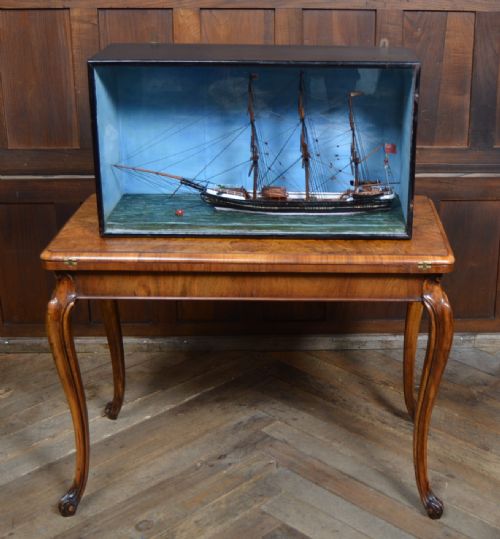


Antique Diorama Display Box
An antique diorama display box brings miniature worlds into sharp focus, offering miniature maritime scenes, natural history subjects and folk art within glazed timber frames.
Antique Diorama Display Box
An antique diorama display box presents a three-dimensional scene enclosed within a glazed shadow box or case, designed to be hung on a wall or placed upon a surface. The examples found here span the eighteenth, nineteenth, and early twentieth centuries, encompassing diverse traditions from English and French workshops.
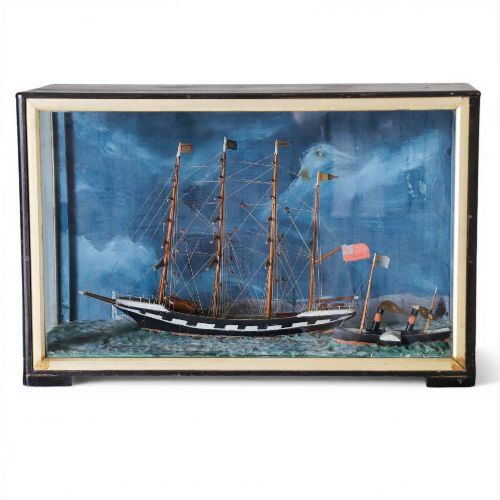
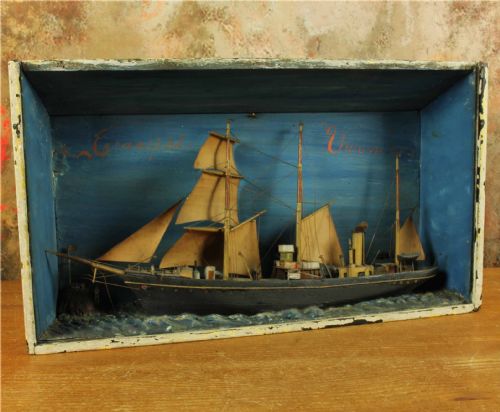
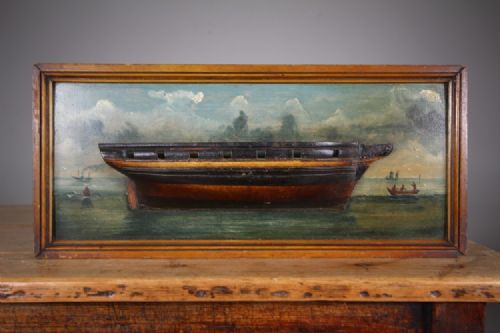
The most common subjects encountered in this selection are maritime dioramas depicting sailing ships, racing vessels, and steam barges against painted backdrops. Alongside these nautical pieces, the selection includes natural history taxidermy displays, shell work, and folk art interiors.
Makers ranged from sailors and prisoner-of-war artisans to professional taxidermists and folk artists working in England, France, Wales, and America. These makers utilised readily available materials to construct elaborate miniature environments that survive in cased enclosures.
How they were made
Construction relies upon timber boxes fitted with glass fronts to protect the fragile contents within. Artisans built miniature models of wood, paper, canvas, and straw, painting the interior backgrounds to create depth and perspective behind the central subjects.
Taxidermy specimens such as birds and ducks were mounted within naturalistic snow scenes or woodland settings utilising plaster and painted elements. Maritime models incorporate detailed rigging, fabric sails, and carved hulls positioned over painted canvas or plaster seas.
Antique Diorama Display Box Retail Price Guide 2026
Typical asking prices for diorama display box among the pieces listed under this phrase on Sellingantiques today, from the lower quarter to the upper quarter. They describe what is for sale here now, not the wider market.
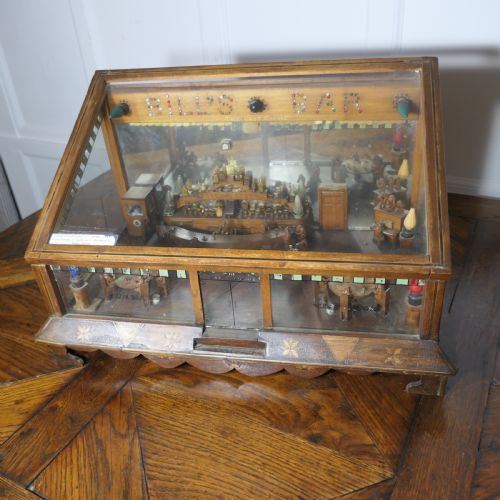
A monkey running a saloon bar in an American prisoner art diorama proves that historic artisans possessed wonderfully eccentric imaginations.
What varies in quality
Quality rests upon the intricacy of the miniature modelling and the artistic execution of the painted backdrop. Finer examples display meticulous detail in ship rigging, straw work, or taxidermy preparation, creating a convincing sense of space and realism within the limited depth of the case.
The architectural integrity of the timber frame and the clarity of the original glass pane also distinguish superior pieces. Well-preserved boxes retain their original sealed environments, protecting the delicate internal elements from dust and atmospheric degradation over the centuries.
The Antique Diorama Display Box Glossary
- Shadow box
- A deep, glass-fronted frame designed to enclose and display three-dimensional objects or scenes. This construction protects delicate components like paper models and taxidermy from dust.
- Maritime folk art
- Creative works produced by sailors and self-taught artisans depicting ships and maritime scenes. These items utilise materials found at sea or in port.
- Taxidermy display
- The art of preparing, stuffing, and mounting animal skins in lifelike positions. Victorian examples frequently place specimens inside glazed curiosity cabinets with painted backgrounds.
- Straw work
- A decorative technique utilising flattened straw stuck to a surface to form geometric or pictorial designs. Maritime dioramas occasionally employ this method for intricate ship detailing.
- Devotional shadow box
- A religious display case housing sacred figures or relics behind glass. French eighteenth-century examples often feature Nevers glass figures within elaborate enclosed shrines.
Antique Diorama Display Box: Frequently Asked Questions
How do I hang a diorama box?
Most antique diorama display boxes feature sturdy hanging loops or brackets fixed directly to the timber frame. Ensure the chosen wall fixing can support the combined weight of the wood, glass, and internal models safely.
Position the box away from direct sunlight and damp environments to protect fragile materials like paper, paint, and fabric sails from fading or moisture damage.
What periods do these boxes cover?
The pieces listed here date primarily from the nineteenth century, with additional examples from the eighteenth century and the Edwardian era up to the nineteen-twenties. Victorian maritime and folk art pieces form a large portion of the selection.
Earlier eighteenth-century French devotional boxes and later twentieth-century clockwork or shell dioramas also appear, demonstrating how the craft evolved across different regions and decades.
Are the glass panes original?
Many boxes retain their early or original glass panes, which often display subtle imperfections, waviness, or small bubbles characteristic of historic manufacturing methods. Examining the glass closely helps determine the age and authenticity of the casing.
Care should be taken when cleaning historic glass to avoid damaging fragile wooden seals or painted surfaces on the interior framework.