




Moulded Opalescent Art Glass
Moulded opalescent art glass captures light with a milky blue shift, offering collectors tactile relief designs from the early twentieth century.
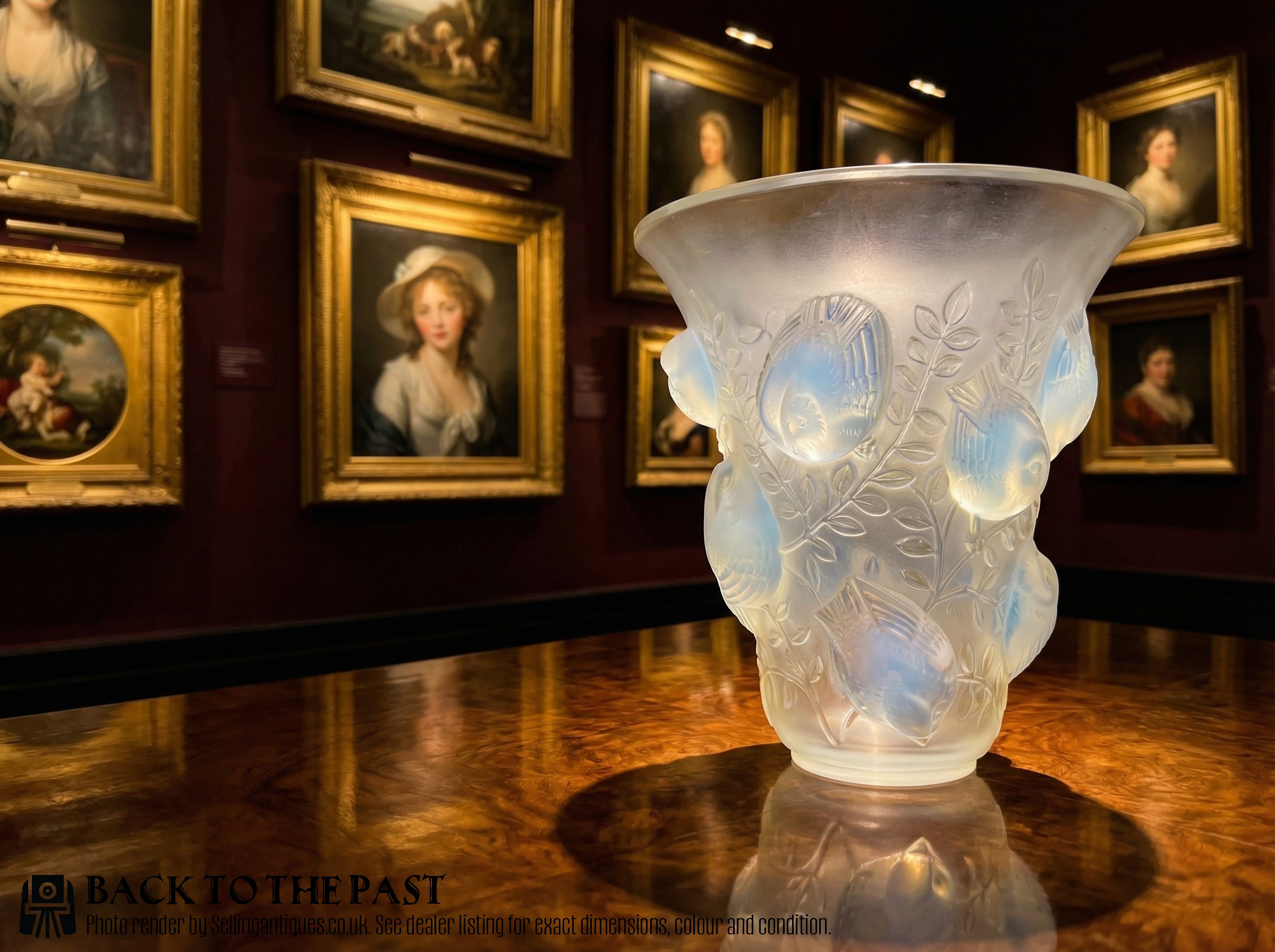
Moulded Opalescent Art Glass
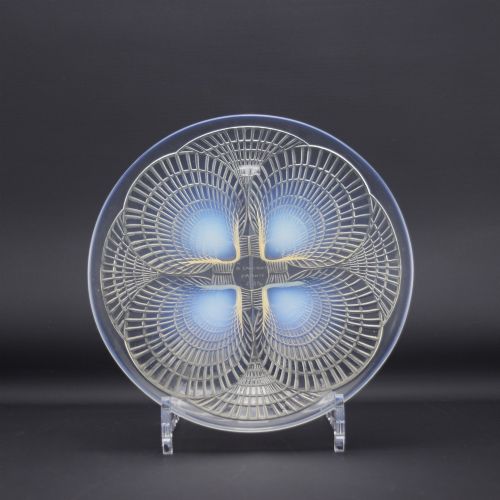
Moulded opalescent art glass comprises decorative objects shaped in metal or glass moulds during the Edwardian period, 1910, 1920, and 1930. The pieces you encounter most frequently on this page are French vases, decorative bowls, and plates designed during the Art Deco and Art Nouveau movements.
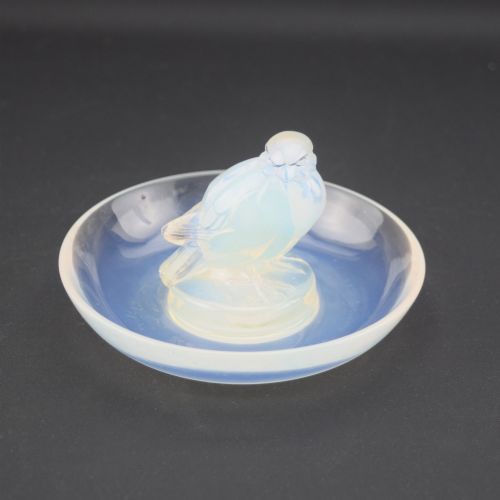
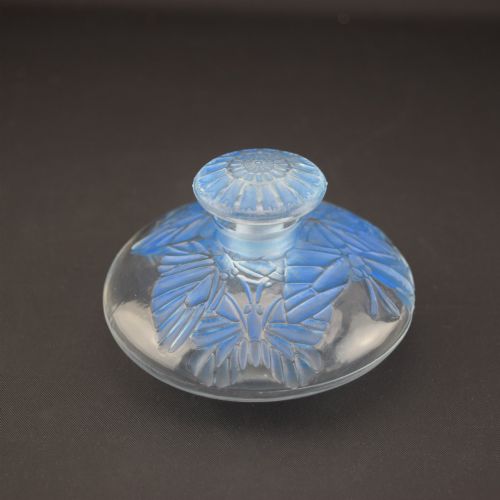
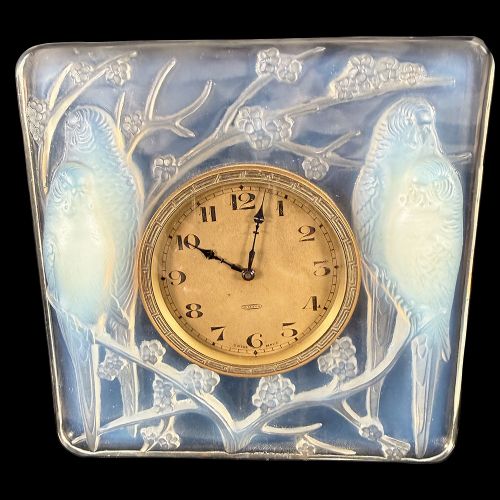
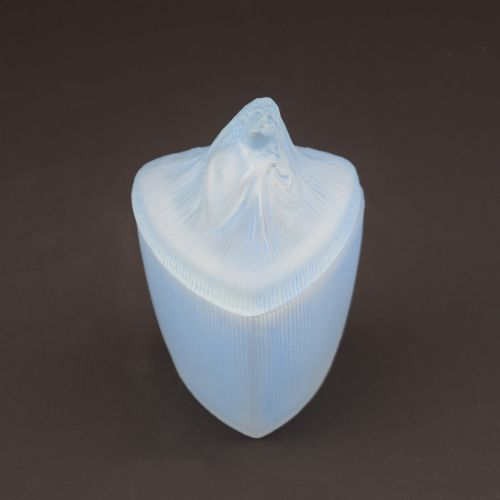
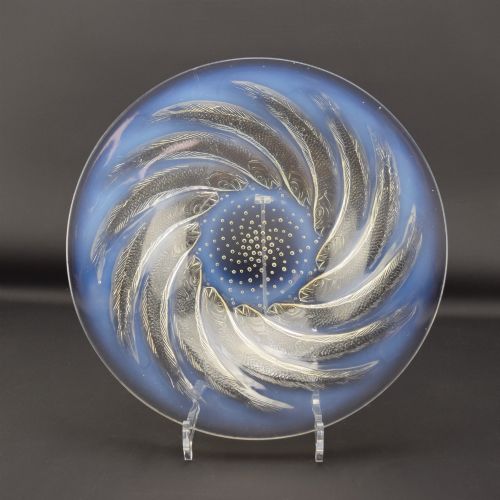
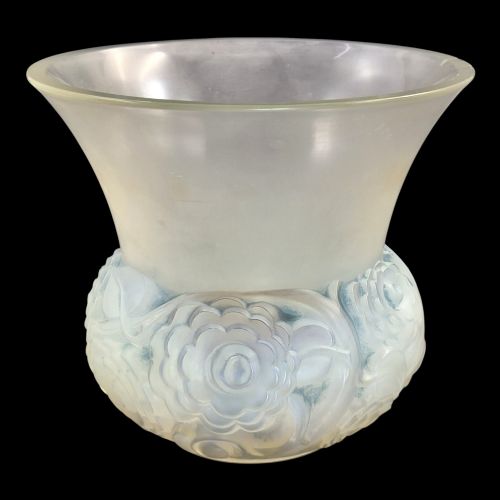
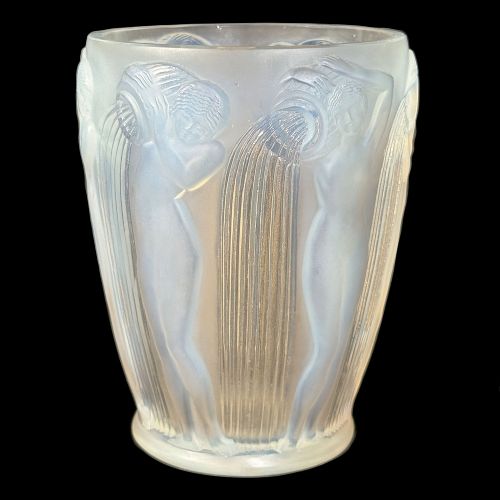
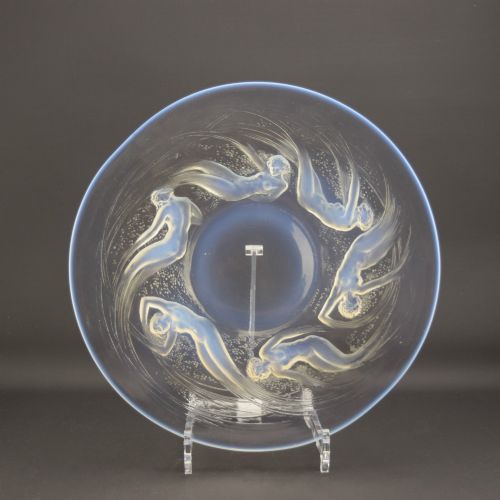
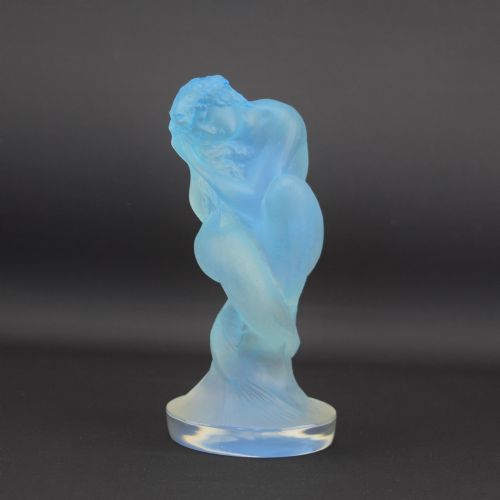
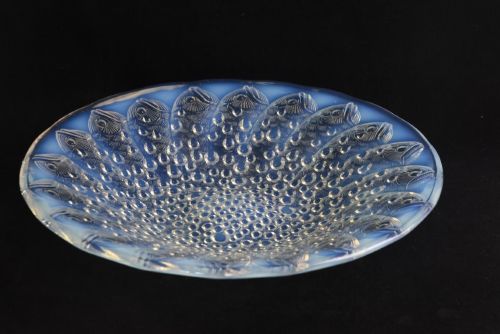
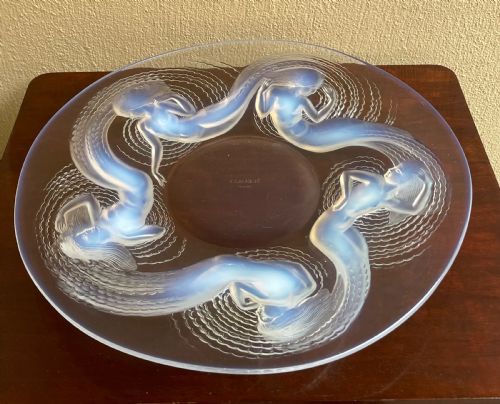
The selection ranges from small perfume bottles and ashtrays to large chargers, car mascots, and figurative clocks. Many items feature raised motifs of flora, fauna, and classical figures that catch the milky fire inherent to the material.
Makers such as Rene Lalique, Etling, G Vallon, Jobling, and Marius Ernest Sabino dominate the forms seen here. Buyers seek these items for their sculptural presence and the optical shift between transparent glass and milky blue opalescence.
Materials and production techniques
Makers utilised opalescent glass, frosted glass, pressed glass, and moulded glass, occasionally combining these with metal mounts or blue stained glass. The milky optical effect arises from chemical additions to the molten batch that scatter light differentially, turning blue when viewed against light and amber or warm white against dark backgrounds.
Techniques relied heavily on metal moulds to shape the heavy vessels and press complex low-relief designs into the surface. Artisans then frequently applied patination or staining to highlight the raised details of flowers, birds, or figures against the translucent body.
Materials documented in the evidence include opalescent glass, frosted glass, pressed glass, metal, blue stained glass, and crystal.
Distinctions in quality
Quality rests upon the crispness of the moulded relief and the depth of the opalescent fire within the glass. Superior examples exhibit sharp detailing in feathers, petals, and human forms where the mould seams integrate cleanly into the design.
The strength of the opalescent effect also distinguishes the work, with better pieces showing a distinct milky blue glow that activates the sculptural contours. Additionally, the presence of original signatures or registry marks adds definition to the piece's origin.
Rene Lalique·G Vallon·Etling·Jobling·Marius Ernest Sabino
The Moulded Opalescent Art Glass Glossary
- Opalescent glass
- Glass that diffuses light to display a milky blue or white appearance in transmitted light and a warm amber or yellowish tone in reflected light. This optical property defines the primary aesthetic of the pieces listed.
- Coupe ouverte
- An open bowl or shallow vessel often featuring moulded exterior decoration. These forms frequently showcase repeating botanical or animal motifs.
- Car mascot
- A sculptural ornament mounted on the radiator cap of a motor car. Several famous glass versions were produced as illuminated or solid bonnet ornaments.
- Frosted glass
- Glass treated to achieve a matte, non-reflective surface texture by acid-etching or sandblasting. This finish contrasts sharply with polished highlights on moulded designs.
- Pressed glass
- Glass shaped by pressing molten metal into a metal or wooden mould using a plunger. It allowed intricate decorative patterns to be produced with consistency.
Moulded Opalescent Art Glass: Frequently Asked Questions
What is moulded opalescent art glass?
Moulded opalescent art glass consists of decorative vessels and figures shaped in metal moulds during the early twentieth century. The glass contains agents that create a characteristic milky blue shift when light passes through the object.
Items span vases, bowls, plates, clocks, and perfume bottles created primarily in France and England. The style bridges Art Nouveau and Art Deco aesthetics.
How do I identify the period of these pieces?
Pieces originate from the Edwardian era through the 1910s, 1920s, and 1930s. Stylistic cues separate them, with flowing natural lines pointing to early work and geometric or stylised relief work indicating the 1920s and 1930s Art Deco period.
Signatures, registry marks, and moulded stamps also assist in narrowing down the date of production. Many items carry specific model names recorded by the original workshops.
How were these glass objects used originally?
Many items served domestic decorative and functional roles as flower vases, fruit bowls, dressing table boxes, and ashtrays. Some specialised pieces functioned as perfume bottles or architectural car mascots.
Their design combined utilitarian purpose with sculptural artistry meant to be displayed in prominent interior spaces.
How should I display moulded glass at home?
Display these pieces where light can pass through them from behind or above to activate the opalescent blue effect. Placing them near windows or on illuminated shelves reveals the full optical shift of the material.
Keep them on stable surfaces away from heavy foot traffic due to the heavy and substantial nature of moulded glass and crystal.