
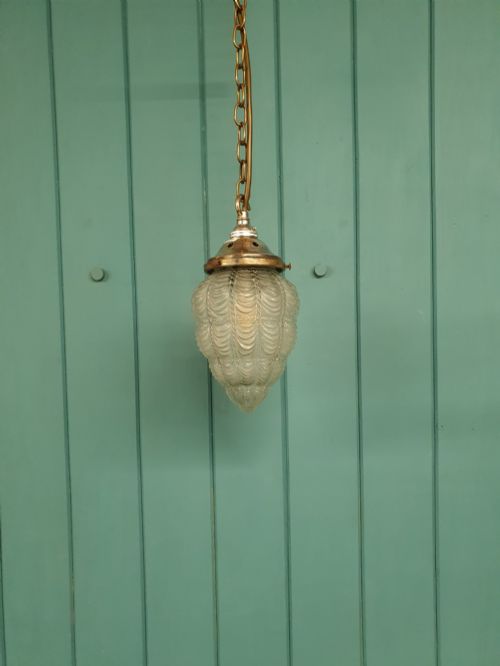


Moulded Glass Pendant Light
These moulded glass pendant light options bring genuine period illumination to your rooms, spanning Edwardian elegance through to striking Art Deco design.
Moulded Glass Pendant Light
A moulded glass pendant light brings together historical lighting forms, spanning ceiling lights, chandeliers, and specific pendant fittings. You encounter diverse styles on this page, ranging from Edwardian pieces to French Neoclassical designs and bold Art Deco creations.
Originating predominantly from the 1910s, 1920s, and 1930s periods, these fixtures utilise glass bodies paired with various hanging hardware. You find them described across the listings as pendant lighting, ceiling lighting, light fittings, and chandeliers.
How they were made
Makers shaped these fixtures utilising glass, frosted glass, opaline glass, pressed glass, and moulded glass elements combined with metal frameworks. Brass, chrome, copper, bronze, and gilt metal form the structural components that suspend and frame the glass shades.
Techniques range from press-moulding decorative glass panels and shades to enamelling metal surfaces and fashioning intricate metalwork. Pieces like the Ezanville chandelier by Jean Gauthier demonstrate the integration of specialised copper frames with moulded French glass.
Listings feature pieces from the 1910s, 1920s, and 1930s utilising glass, brass, bronze, and opaline materials.
What varies in quality
The distinction between standard examples and top tier items rests upon the refinement of the glass moulding and the sophistication of the metal mountings. Pieces designated as super quality or fine quality exhibit superior clarity in the glass and more intricate detailing in the brass, bronze, or gilt metal components.
Design attribution and stylistic purity also separate the inventory, with iconic Art Deco forms and named works by makers holding higher distinction than anonymous production pieces. The integrity of matching suites and complete sets of shades further elevates the standing of specific fixtures.
Jean Gauthier
The Moulded Glass Pendant Light Glossary
- Moulded glass
- Glass shaped by being pressed into a mould while hot to create specific patterns or three-dimensional forms. This technique allowed makers to produce consistent decorative designs across various ceiling lights.
- Frosted glass
- Glass treated to scatter light and reduce glare, creating a soft illumination. It appears frequently in Art Deco fixtures to highlight geometric patterns and smooth surfaces.
- Opaline glass
- A milky, semi-translucent glass that diffuses light evenly across the surface. This material often takes specific forms like fish scale shades in 1930s pendants.
- Slip shade
- A type of glass shade designed to slip into a dedicated metal frame or basket on a ceiling light. These shades are characteristic of Art Deco lighting fixtures.
- Chandelier
- A branched ornamental light fixture suspended from the ceiling. These pieces hold multiple bulbs and feature elaborate brass, copper, or gilt metal structures.
Moulded Glass Pendant Light: Frequently Asked Questions
What periods do these lights cover?
The lighting selections originate from the early twentieth century, specifically spanning the 1910s, 1920s, and 1930s. This timeframe captures both Edwardian refinement and the rise of Art Deco design.
Pieces from these decades showcase distinct material combinations and manufacturing techniques that define each distinct era of historical lighting.
How do I identify Art Deco lighting?
Art Deco lighting fixtures typically feature geometric motifs, frosted or moulded glass, and metals such as chrome, bronze, or copper. You notice strong stylistic forms like slip shades and Odeon styles.
These designs emphasise clean lines and industrial modernity while maintaining decorative appeal through specialised glasswork.
What materials make up these fixtures?
The construction relies on various forms of glass paired with structural metals. Listings feature standard glass, frosted glass, opaline glass, pressed glass, and moulded glass.
Supporting frames and hanging hardware utilise brass, chrome, copper, bronze, gilt metal, and general metalwork to secure the shades.
Where were these glass pieces manufactured?
Origin points include French workshops and studios, exemplified by makers such as Jean Gauthier in Ezanville, France. These pieces often feature French brass and specialised moulded glass.
Other items reflect broader European and British manufacturing standards typical of the early twentieth century.