

Moulded Drawer Dresser
A moulded drawer dresser brings architectural timber and early joinery straight into a room.
Moulded Drawer Dresser
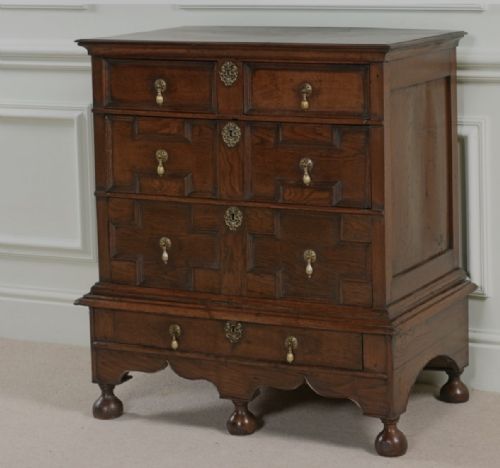
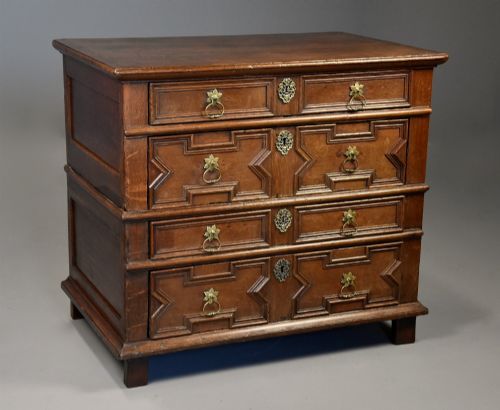
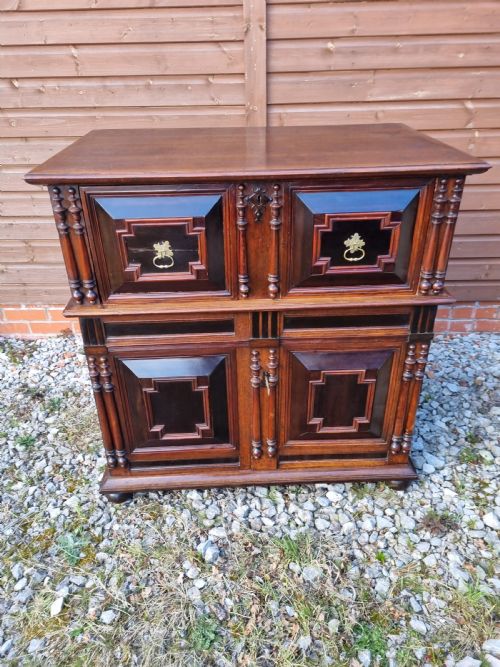
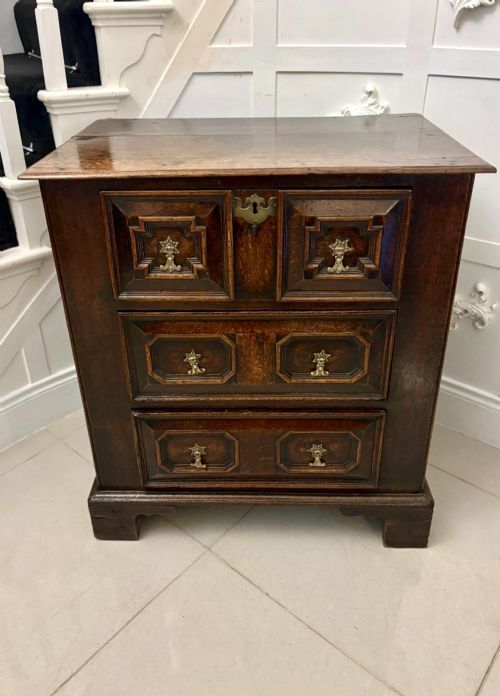
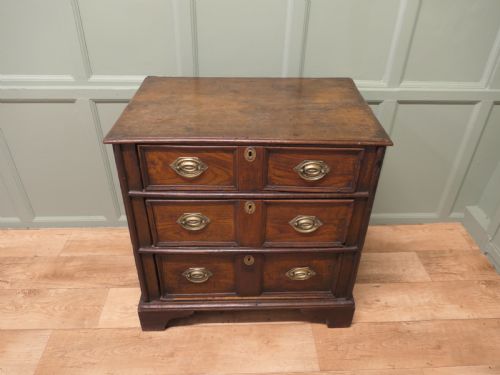
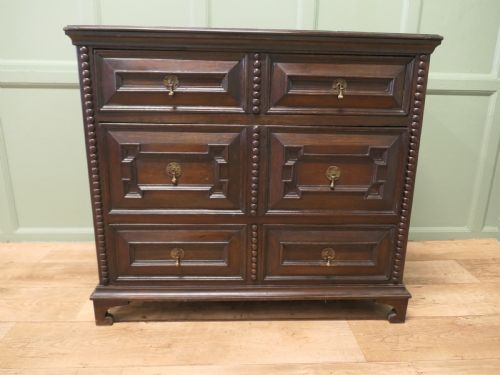
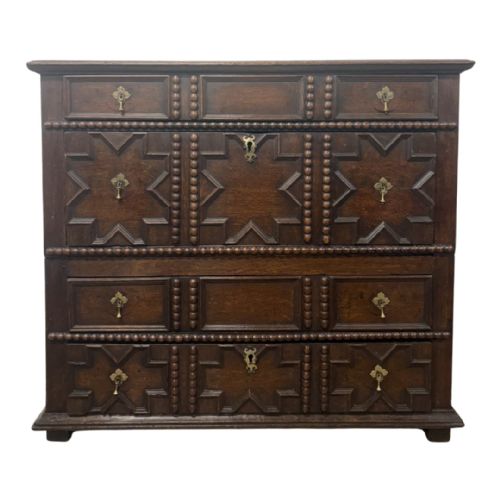
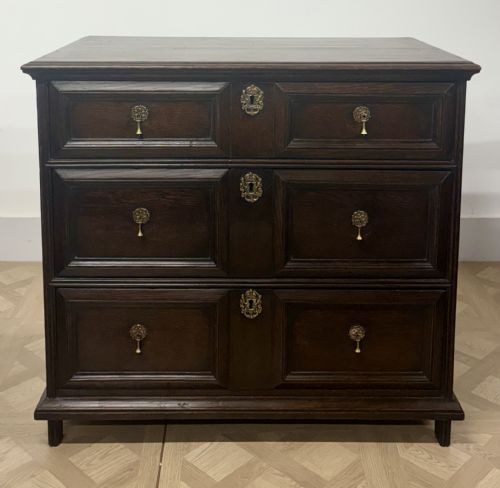
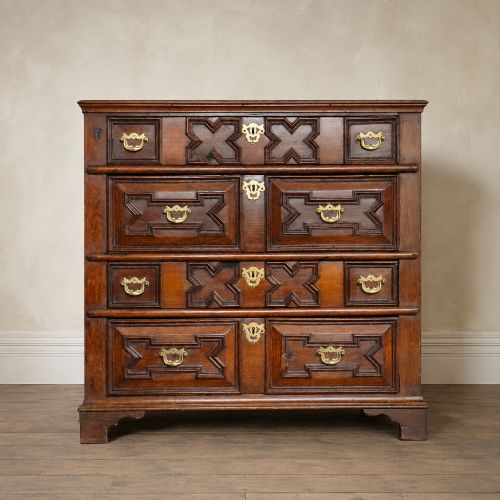
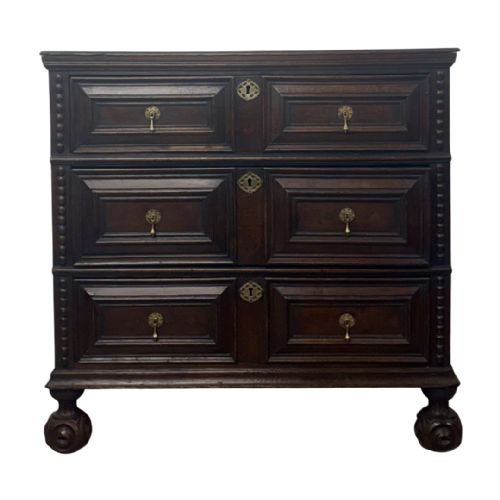
A moulded drawer dresser encompasses early timber storage furniture, most frequently encountered as seventeenth-century and eighteenth-century oak chests of drawers and dresser bases. These forms carry the defining raised mouldings on the drawer fronts that catch the eye and the light.
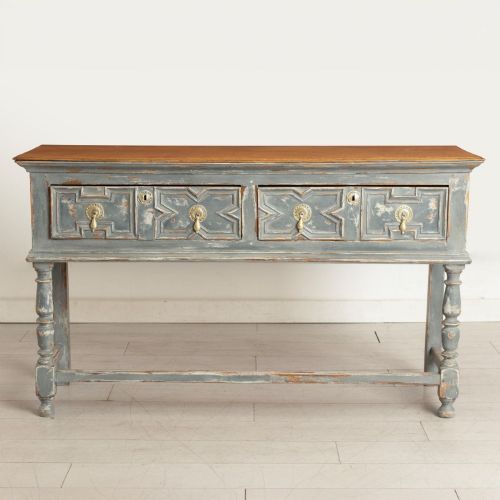
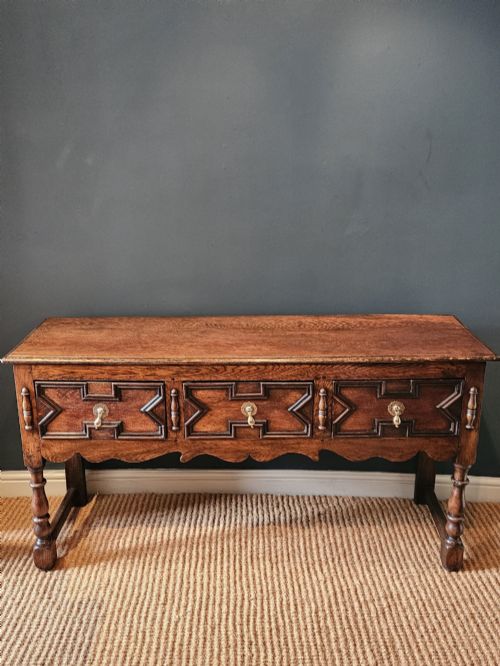
The material palette centres on solid oak, walnut, and occasional fruitwood or elm, reflecting the domestic workshops of the seventeenth century and the Georgian period. Pieces range from two-part chests to low server dressers.
Jacobean, Charles II, and Early Georgian styles dominate the selection, linking the furniture directly to the period of their original commission.
How they were made
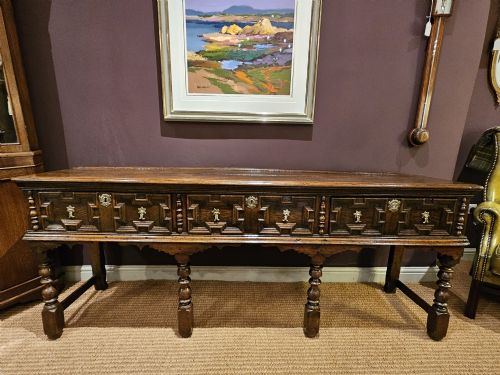
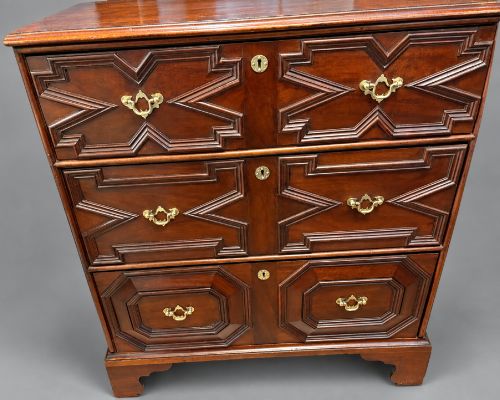
Joiners constructed these pieces using solid oak and walnut, often applying geometric mouldings across the drawer fronts in applied cross-grain or mitred patterns. Timber was cut and seasoned by hand, resulting in robust board construction for carcases and drawer linings.
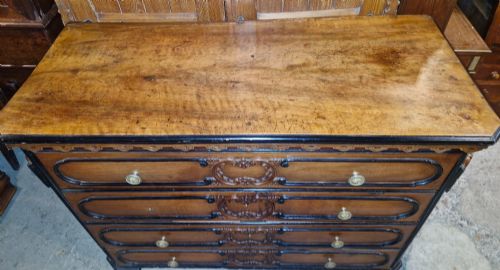
Brass drop handles and escutcheons were fitted to drawer faces, while oyster veneering appeared on select walnut examples to create circular patterns in the timber grain.
Moulded Drawer Dresser Retail Price Guide 2026
Typical asking prices for moulded drawer dresser among the pieces listed under this phrase on Sellingantiques today, from the lower quarter to the upper quarter. They describe what is for sale here now, not the wider market.
Seventeenth-century joiners spent hours slicing walnut branches just to make those swirling oyster patterns.
What varies in quality
Quality rests in the precision of the geometric mouldings and the integrity of the timber panels across the drawer fronts. Crisp mitres and well-matched grain patterns separate standard utilitarian pieces from finer urban workshop commissions.
The survival of original surface patination, timber boards, and period brass hardware dictates the standing of an individual dresser or chest within the broader historical record.
The Moulded Drawer Dresser Glossary
- Geometric moulding
- Raised wooden strips applied to drawer fronts in repeating angular patterns. This technique defines the visual language of seventeenth-century case furniture.
- Oyster veneer
- Thin slices cut transversely from small branches or roots to produce circular oyster-like patterns in walnut surfaces. This decorative method is typical of late seventeenth-century cabinet work.
- Dresser base
- A low freestanding table frame fitted with drawers beneath the top board, serving as a sideboard or server. These pieces anchor dining rooms and halls.
- Two-part chest
- A cabinet constructed in separate upper and lower sections to ease transport through domestic doorways. This format appears frequently in seventeenth-century joinery.
- Fruitwood
- Dense timber harvested from fruit-bearing trees such as pear or apple, utilised for contrasting inlay work and smaller decorative components.
Moulded Drawer Dresser: Frequently Asked Questions
How do I date a moulded oak chest?
Dating relies on examining the construction methods, timber choice, and specific moulding profiles used on the drawer fronts. Charles II and Jacobean pieces often display intricate geometric layouts.
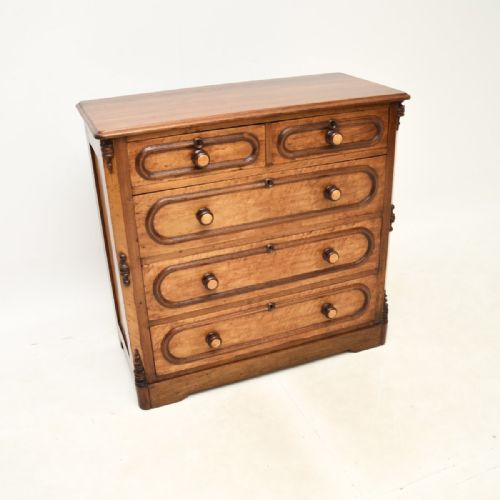
Later nineteenth-century revival pieces mimic these early patterns but generally lack the tool marks and timber shrinkage associated with seventeenth-century work.
Where were these dressers used?
These pieces served practical storage functions in domestic rooms, halls, and dining spaces across seventeenth and eighteenth-century households. Dresser bases held household textiles and table wares.
Today, their proportions allow them to function effectively as sideboards or storage chests in modern living environments.
What woods were used?
Oak forms the primary structural timber for the majority of these pieces, complemented by walnut, elm, and fruitwood. Selected examples incorporate oyster veneers.
These domestic hardwoods provided the structural strength required for heavy panel construction and detailed moulding work.