




Moulded Ceramic Water Jug
A moulded ceramic water jug brings sculptural form and utility to the table, combining functional pouring with detailed relief work across various periods.
Moulded Ceramic Water Jug
A moulded ceramic water jug is a pouring vessel shaped by pressing clay into a mould to create raised surface decoration rather than relying purely on painted designs. The examples found here span from the Georgian period through the Victorian era and into Edwardian times, showing considerable variety in scale and design.
Most pieces on this page take the form of jugs and pitchers designed for everyday utility or commemorative display. These vessels range from utilitarian stoneware to refined porcelain and pearlware, reflecting the shifting domestic tastes of the nineteenth century.
Materials and Making
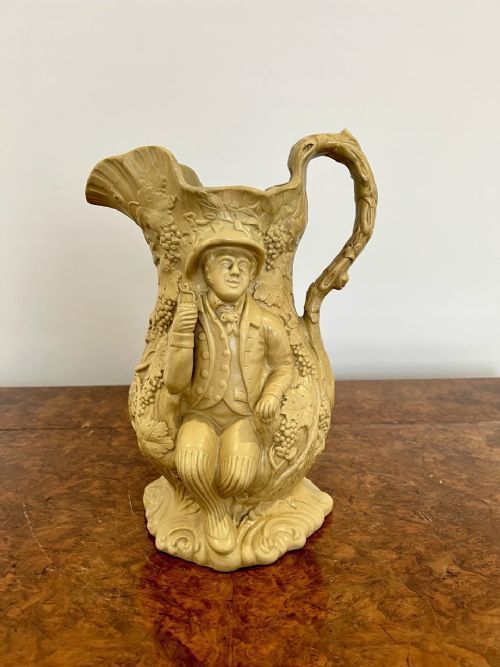
Potters utilised earthenware, pearlware, stoneware, and porcelain to form these jugs, shaping the body either by press-moulding or casting in clay slips. Relief decoration was achieved directly through the mould or by applying sprigged ornaments onto the surface before firing.
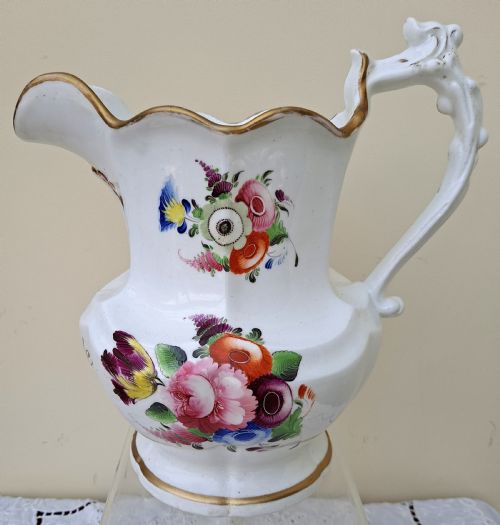
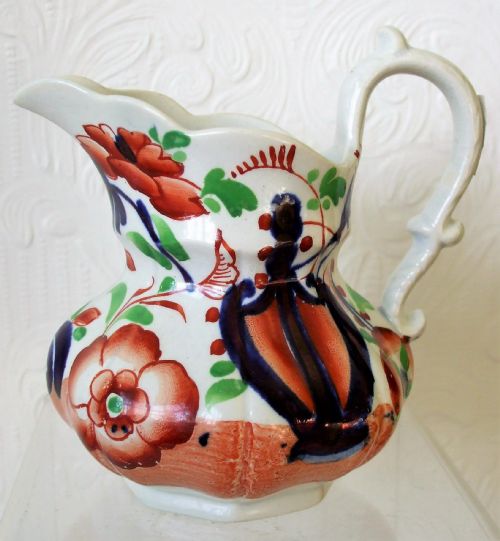
Glazes varied from simple salt glazes to bright enamel colours, majolica lead glazes, and occasional touches of gold leaf. Parian ware and buff-coloured stoneware also appear, offering a matte finish that highlights the intricate moulded details.
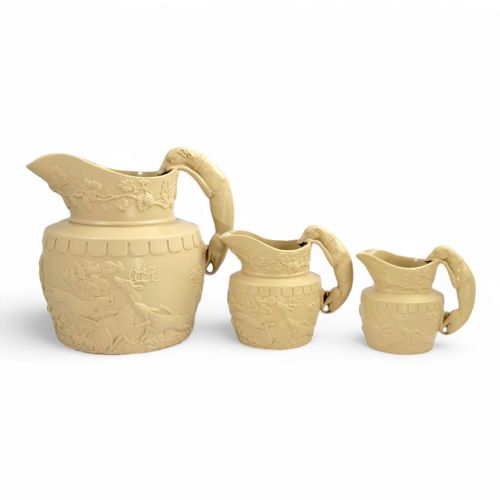
Victorian hounds frozen in mid-leap serve as handles for thirsty stags across several nineteenth-century pitchers.
Assessing Quality
Quality in a moulded ceramic water jug rests upon the crispness of the relief work and the subtlety of the glaze application. Finer pieces retain sharp definition in intricate scenes, such as bacchanalian revels or botanical motifs, without blurring from worn moulds.
The weight of the material, the balance of the handle - such as hound handles - and the evenness of the glaze separate standard utility vessels from exhibition-standard pieces. Makers known for superior relief modelling achieve a sculptural depth that lesser pieces lack.
John Baley·Charles Meigh·Ridgway and Sons·Jones and Walley·Phillips and Bagster·George Jones
The Moulded Ceramic Water Jug Glossary
- Pearlware
- A refined earthenware developed in the late eighteenth century with a bluish-white glaze that pooled in crevices. It bridged the gap between salt-glazed stoneware and later whitewares.
- Parian ware
- A fine-grained bisquit porcelain resembling marble, developed in the Victorian era. It was frequently utilised for unglazed figures and moulded jugs.
- Sprigged
- A method of decoration where separately moulded clay motifs are applied to the damp body of a vessel before firing. These sprigs create a sharp, contrasting relief.
- Majolica
- A colourful, lead-glazed earthenware introduced in the mid-nineteenth century, known for vibrant botanical and animal forms. It provides a glossy, textured surface.
- Stoneware
- A dense, impermeable ceramic fired at high temperatures, often salt-glazed. It offers high durability for large utilitarian and commemorative vessels.
Moulded Ceramic Water Jug: Frequently Asked Questions
Can I use these jugs for serving water?
While these jugs were originally designed for holding liquids, many nineteenth-century pieces are best reserved for display due to age and historic repairs. Stoneware and sturdy earthenware jugs can generally handle liquids, but delicate porcelain or majolica items are safer kept off the dining table.
Check the interior for any hairline cracks or historic damage before attempting to pour liquids. Purely decorative or exhibition pieces should remain dry to preserve their structural integrity.
How do I distinguish Georgian from Victorian jugs?
Georgian pieces on this page tend to feature pearlware bodies, cabbage leaf moulding, and simpler neoclassical or naturalistic forms from around the turn of the nineteenth century. The palette is often softer, relying on underglaze blues or subtle enamels.
Victorian jugs embrace heavier relief-moulded scenes, such as bacchanalian dances or hound handles, utilising stoneware, parian, and majolica. The scale is frequently larger, and the manufacturing marks become more standardised as the century progresses.
What is a hound handle?
A hound handle is a sculptural handle shaped like a hunting dog, typically leaping down the side of the pitcher. It is commonly found on nineteenth-century yellow ware and stoneware jugs associated with sporting themes.
The handle is integrated into the moulded body design, often complementing hunting scenes depicted in relief around the exterior of the vessel.