


Mother of Pearl Jewellery
Mother of pearl jewellery brings together iridescent nacre, precious metals, and rich woods to create wearable ornaments and decorative storage pieces that collectors prize for their subtle lustre.
Mother of Pearl Jewellery
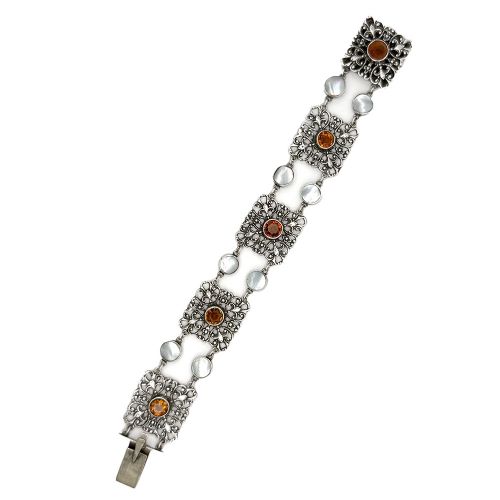
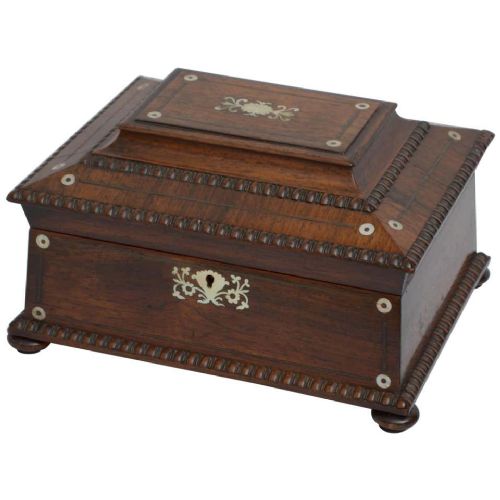
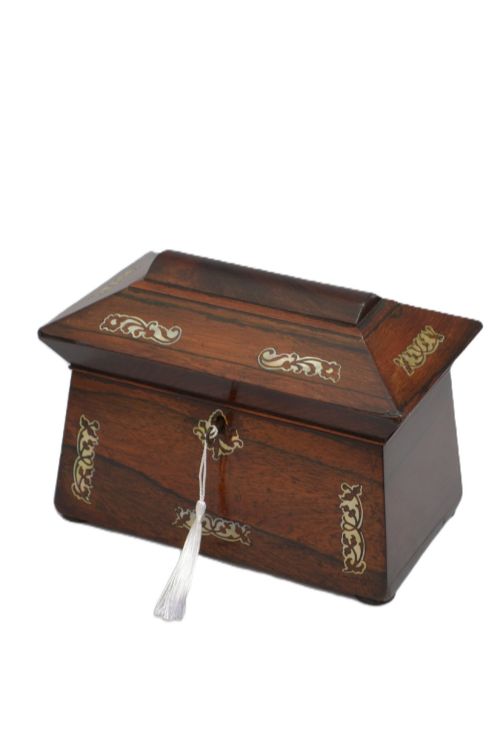
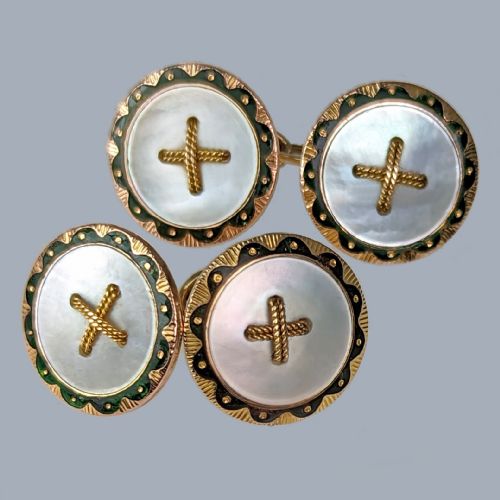
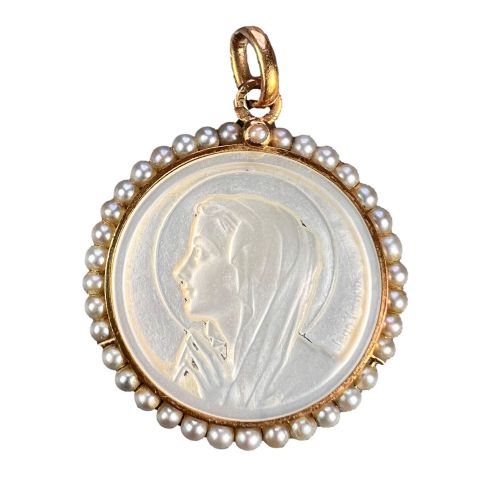
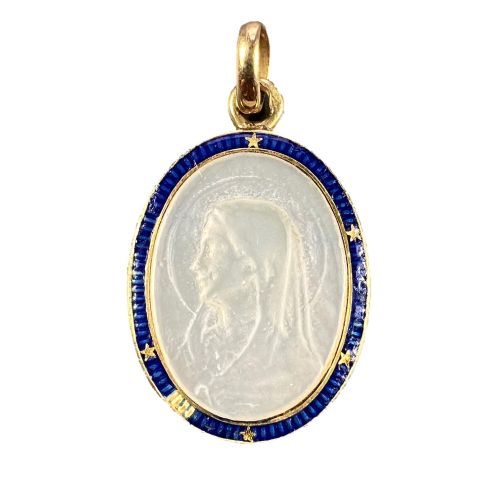
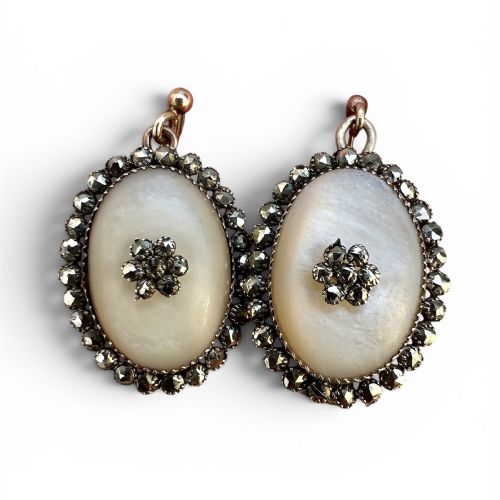
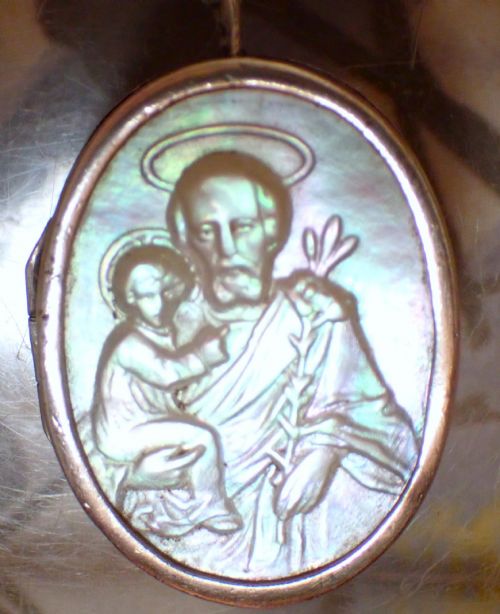
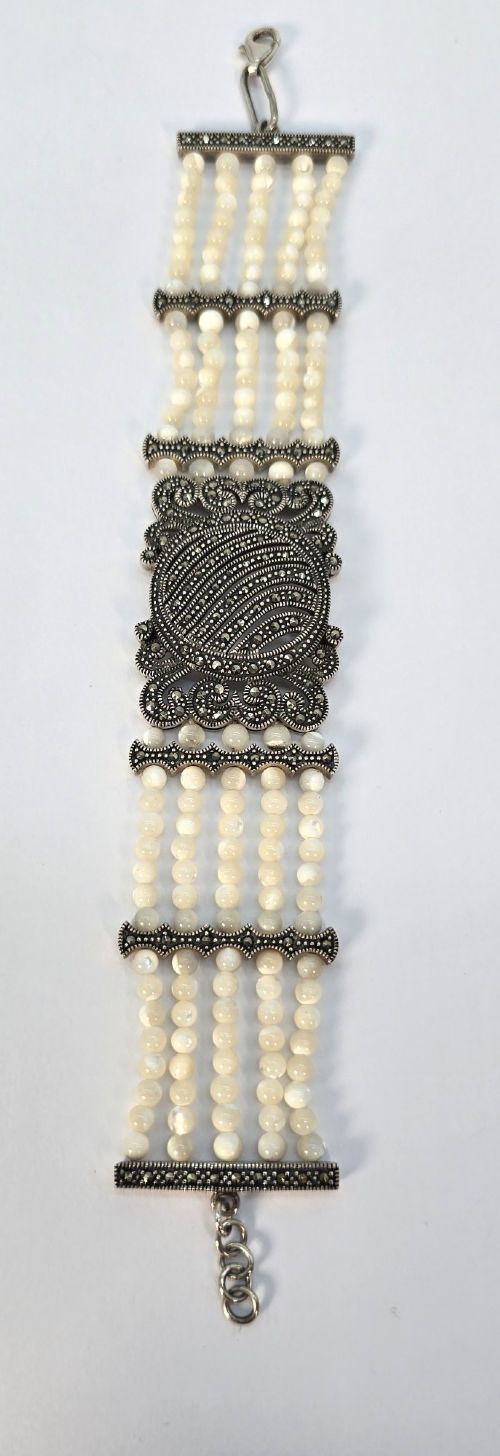
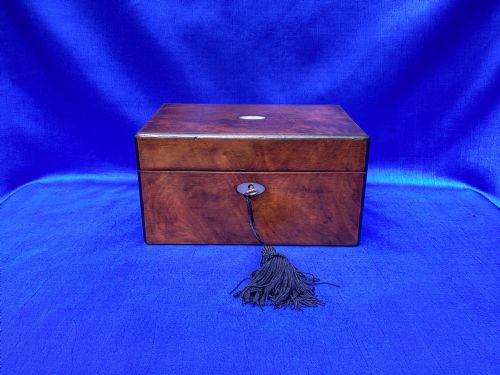
Mother of pearl jewellery encompasses small personal adornments and fitted receptacles designed to hold them, spanning eras from the Regency period through the Art Deco epoch. Buyers browsing this selection encounter wearable pieces like pendants, earrings, cufflinks, and bracelets alongside larger receptacles such as rosewood work boxes and papier-mâché caskets.
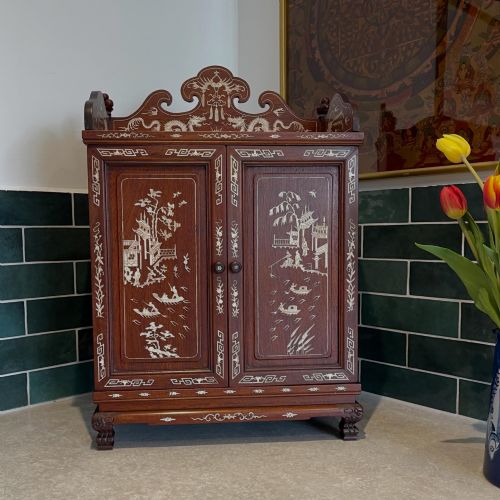
The objects originate from diverse workshops in England, France, China, and India, reflecting widespread Victorian and Edwardian domestic tastes for inlaid luxury goods. Smaller wearable items frequently incorporate gold or silver mounts, while larger decorative boxes utilise contrasting timbers like mahogany, coromandel, and burr walnut.
Most specimens date from the nineteenth and early twentieth centuries, capturing shifts in design from Georgian formality to the geometric patterns of the 1920s and 1930s. This mix allows collectors to choose between intimate personal accessories and substantial centrepieces for a dressing table.
Materials and Techniques
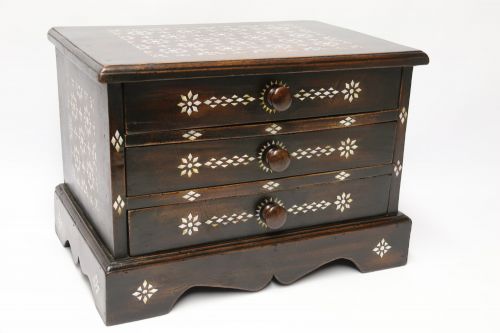
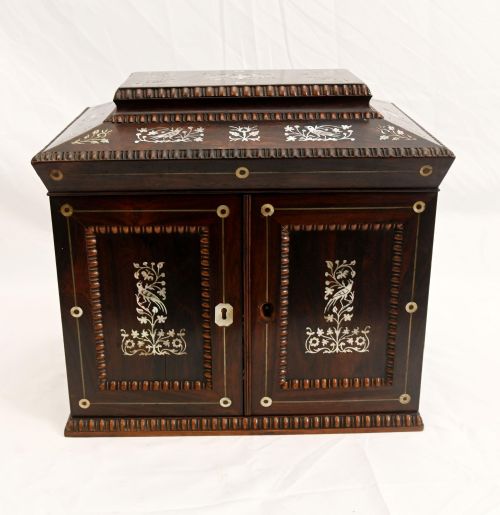
Craftsmen built wooden carcasses from dense hardwoods like rosewood, coromandel, and mahogany, often shaping them into sarcophagus forms or rectangular caskets. They channelled the timber surfaces to receive thin plates of iridescent nacre, securing the segments with adhesive before smoothing the exterior.
Metals such as 18-carat gold, 9-carat gold, and silver provided structural settings for pendants, earrings, and cufflinks, frequently augmented by enamel, marcasite, or precious gemstones. Papier-mâché articles utilised layered paper pulp subjected to pressure and heat, finished with dark lacquer and detailed shell inlays.
Victorian ladies once used delicate mother-of-pearl tussie-mussies to carry fragrant nosegays through unhygienic city streets.
Assessing Quality and Execution
Superior examples display precise, tight-fitting geometric or foliate inlays where individual pieces of nacre align without excessive filler material between joints. The underlying mother of pearl itself exhibits deep, shifting play of colour rather than flat, chalky opacity.
Interior fittings dictate overall standard in larger boxes, where velvet linings, fitted mirrors, and functional compartments remain intact and original. Metal components such as hinges, clasps, and gold mounts demonstrate crisp chasing and secure stone settings rather than hasty assembly.
Solomon Blanckensee Son·George Hunt·Becker
The Mother of Pearl Jewellery Glossary
- Nacre
- The iridescent internal layer of mollusc shells, forming the primary material for mother of pearl ornaments and box inlays. This substance produces shimmering pastel tones when viewed in changing light.
- Papier-mâché
- A composite material made from paper pulp mixed with binding agents, moulded and baked to form rigid boxes and trays. Manufacturers frequently decorated these dark surfaces with inlaid pearl and gilt painting.
- Marcasite
- Small faceted pyrite stones set into silver mounts to resemble cut steel or diamonds. Jewellers frequently paired marcasite with nacre elements in Georgian and Art Deco earrings and brooches.
- Workbox
- A portable container outfitted with internal trays and compartments for sewing implements, threads, and personal keepsakes. Many nineteenth-century specimens incorporate extensive exterior shell inlay.
- Plique-à-jour
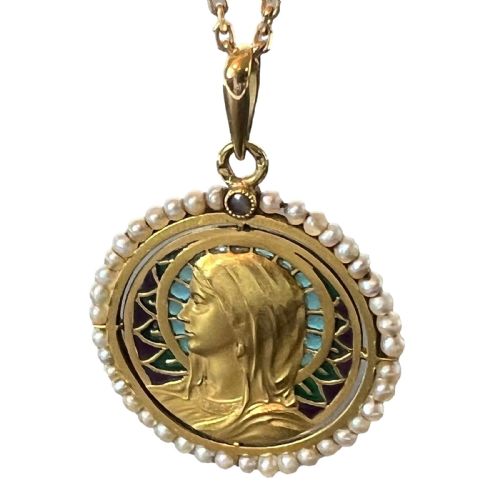
- An enamelling technique where the pigment is fired without a backing metal, creating a translucent stained-glass effect. This method appears on gold pendants alongside pearl elements.
Mother of Pearl Jewellery: Frequently Asked Questions
How do I clean mother of pearl jewellery?
Wipe the surface gently with a soft, damp cloth to remove dust and body oils, avoiding harsh chemical cleaners or prolonged soaking in water. Dry the piece immediately with a clean lint-free cloth to protect delicate metal mounts and wooden housings.
Harsh abrasives scratch the soft organic surface of nacre and dull its natural lustre. Store pieces away from direct sunlight and extreme humidity to prevent the adhesive binding the shell to warp or dry out.
Are these boxes meant for travel?
Most nineteenth-century caskets and lap desks functioned as stationary dressing-table accessories rather than portable luggage. Their heavy hardwood carcasses and fitted internal mirrors were designed for static home use.
Smaller travelling variants exist, but larger rosewood and coromandel boxes remain vulnerable to temperature shifts and impact. Owners generally keep them on stable surfaces rather than carrying them on journeys.
How can I tell a Victorian box from a Regency one?
Regency pieces often display classical architectural proportions, brass stringing, and restrained geometric shell motifs on dark rosewood. Victorian examples tend towards more exuberant ornamentation, including elaborate mother-of-pearl floral inlays and fitted papier-mâché compendiums.
Examining the interior paper linings, lock mechanisms, and wood types helps narrow the manufacturing window. Regency boxes lean toward simple elegance, whereas Victorian variants frequently prioritise complex internal storage.