


Vintage Celtic Jewellery
Vintage celtic jewellery brings together intricate knotwork and traditional motifs in silver and gold, offering a tangible link to ancient craftsmanship.
Vintage Celtic Jewellery
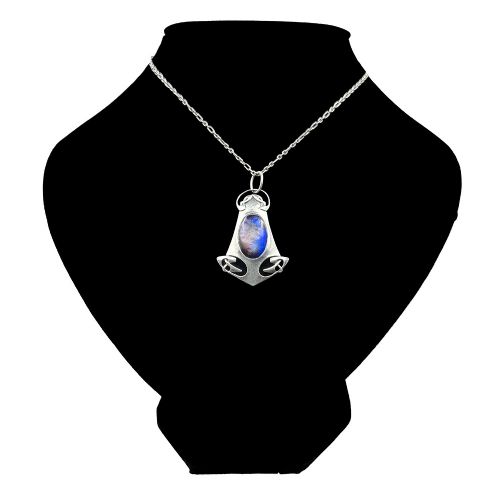
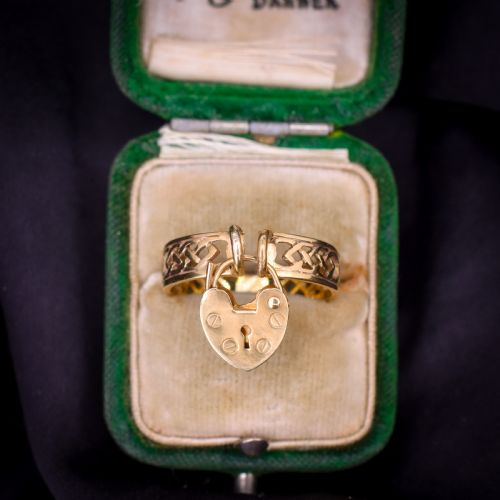
Vintage celtic jewellery encompasses wearable items designed with traditional motifs such as knotwork, shields, and heart padlocks. When searching for vintage celtic jewellery, collectors encounter pieces spanning from the nineteenth century through the mid-twentieth century.
Forms range from silver drop earrings and kilt pins to gold band rings and elaborate necklaces. Buyers frequently discover silver shield brooches and enamel pendants alongside peridot and pearl settings.
How they were made
Makers utilised sterling silver, nine-carat yellow gold, and fifteen-carat yellow gold as the primary base metals for these ornaments. Artisans shaped these metals into complex interlaced patterns and structural forms like swords and shields.
Techniques often incorporated vibrant blue enamel work to contrast against the polished silver surfaces. Workshops also set gemstones such as peridot, citrine, opal doublets, blister pearls, amber, and mother of pearl into the metal frameworks.
What varies in quality
The standard of execution in metalwork and stone setting marks the distinction between ordinary production and superior craftsmanship. Finer examples display crisp casting and precise hand-finishing in the interlaced ribbon patterns.
Material selection similarly divides the range, with higher-tier pieces featuring substantial weights of fifteen-carat gold or high-grade gemstones alongside expert enamel application. Simpler silver items rely entirely on the clarity of the design and the preservation of the original surface finish.
Archibald Knox·Liberty and Co·Murrle Bennett·John Hart of Iona·Celtic Art Industries
The Vintage Celtic Jewellery Glossary
- Celtic Revival
- A nineteenth and twentieth-century artistic movement that drew inspiration from ancient insular art, incorporating traditional interlace and zoomorphic patterns into modern decorative objects.
- Arts and Crafts
- An international design movement championing handcraftsmanship, traditional materials, and reform in response to mass production.
- Kilt Pin
- A traditional fastening pin used in Scottish Highland dress, often adapted into decorative brooches featuring swords, shields, and regional motifs.
- Opal Doublet
- A composite gemstone consisting of a thin slice of natural opal glued to a darker backing material to enhance colour play and stability.
- Blister Pearl
- A pearl that forms attached to the inner shell of an oyster rather than within the tissue, resulting in a domed shape with a hollow or filled back.
Vintage Celtic Jewellery: Frequently Asked Questions
What periods do these pieces date from?
The pieces span from the nineteenth century through the 1960s, encompassing distinct eras like the Arts and Crafts movement and mid-century modern production.
Specific dates within listings often point to the year of assay or the stylistic decade of manufacture.
How were these items typically worn?
Many items served functional purposes alongside decorative ones, such as kilt pins securing tartan garments and padlock rings worn as personal tokens.
Pendants, brooches, and earrings functioned as daily adornments that reflected regional heritage and artistic revivals.
What materials are most common?
Silver and yellow gold form the structural foundation for the majority of these ornaments, with variations in gold purity ranging from nine to fifteen carats.
Coloured accents are frequently introduced through enamel work, pearls, and semi-precious stones like peridot and citrine.
How do I identify Arts and Crafts examples?
Arts and Crafts pieces often display hand-wrought silver surfaces paired with organic elements like blister pearls, opals, or coloured enamel.
Design lines in these pieces emphasise visible craftsmanship and stylised natural motifs rather than strict symmetry.