

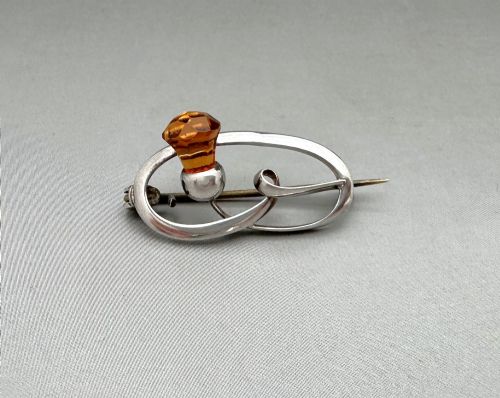


Sterling Silver Amber Jewellery
These sterling silver amber jewellery pieces bring together warm fossilised resin and precious metal across decades from Victorian days to later modern times.
Sterling Silver Amber Jewellery
When you search for sterling silver amber jewellery, you find wearable adornments spanning necklaces, brooches, bracelets, earrings, and trinket boxes. The selection ranges from Victorian Scottish pieces to 1930s modernist designs and later twentieth-century Scandinavian work.
You meet both genuine fossilised amber set in silver and related items featuring amber glass or citrine alongside traditional silver settings. Many pieces incorporate regional motifs such as Scottish thistles or Celtic knots alongside clean modernist lines.
Materials and construction
Maker's workshops shape sterling silver into secure bezels and detailed wirework to frame natural amber stones, glass, and citrine. Techniques include enamel work and traditional smithing seen in pieces from makers like Charles Horner and David-Andersen.
Makers combine silver mounts with organic amber resin, forming necklaces, pendants, hat pins, and bracelets. Hallmarks and silver marks often accompany these items, recording the origin and silver standard.
Listings feature sterling silver combined with amber, amber glass, and citrine across Victorian, Edwardian, and mid-century periods.
Distinctions in quality
Quality rests in the crispness of the silver work, from intricate thistle brooches to smooth modernist torque pendants. The clarity and depth of the amber or glass set within the silver mount also mark the standard of the piece.
The distinction between standard commercial production and distinguished maker output appears in the precision of the silver marks, enamelling, and overall balance of the design.
Charles Horner·David-Andersen
The Sterling Silver Amber Jewellery Glossary
- Sterling silver
- A silver alloy containing 92.5 percent silver by mass, forming the primary metal base for these items.
- Amber
- Fossilised tree resin valued for its warm golden or brownish tones, frequently mounted in silver jewellery.
- Jabot pin
- An ornamental pin historically used to secure lace jabots on clothing, often styled with silver and stones.
- Torque
- A rigid neck ring that opens or forms a continuous loop, seen in Scandinavian silver designs.
- Citrine
- A yellow variety of quartz occasionally used alongside amber in Scottish revival trinket boxes and pieces.
Sterling Silver Amber Jewellery: Frequently Asked Questions
What periods do these pieces date from?
The pieces span from the Victorian era and Edwardian period through the 1930s, 1950s, and later than 1960. Styles range from Art Nouveau and Scottish Revival to Art Deco and Scandinavian Modern.
Each period brings distinct stylistic choices, whether traditional thistles or clean modernist torque forms.
Are all the stones genuine amber?
While many items feature natural fossilised amber set in sterling silver, the evidence also records amber glass and citrine used in comparable settings.
Examining the listings helps clarify whether a piece contains organic amber or complementary materials like glass.
How do I care for silver and amber?
Sterling silver benefits from gentle cleaning with a soft cloth to maintain its finish without harming the softer amber resin. Avoid harsh chemical dips that can damage organic stones and delicate enamel.
Store pieces separately to prevent scratching both the silver metal and the amber.
What object types are available?
The selection includes necklaces, pendants, charm bracelets, drop earrings, hat pins, brooches, and trinket boxes. Items range from everyday wearable bracelets to decorative hat pins and structured boxes.
Regional influences such as Celtic revival and Scottish motifs appear across these varied forms.