


Mother of Pearl Inlaid Desk
A mother of pearl inlaid desk or writing slope brings a brilliant iridescence and structured utility to a room.
Mother of Pearl Inlaid Desk
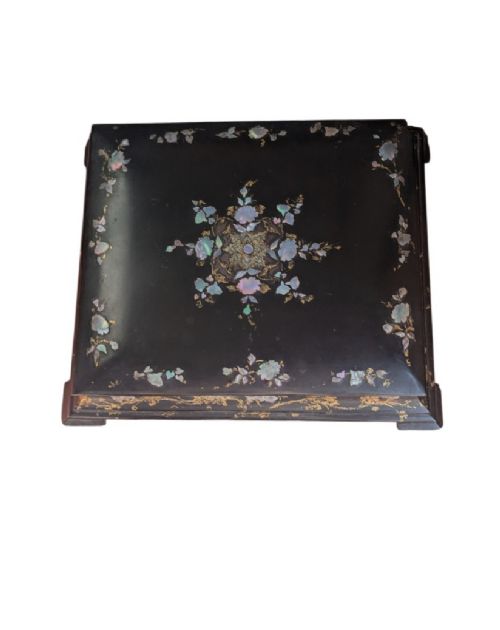
A mother of pearl inlaid desk encompasses portable writing slopes, stationary boxes, and occasional tables originating primarily from the nineteenth century. These objects served the literate elite for correspondence and kept personal documents securely stored in compartmentalised interiors.
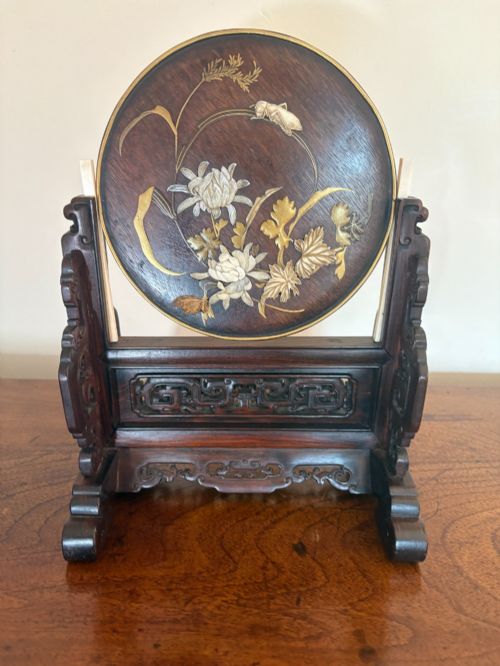
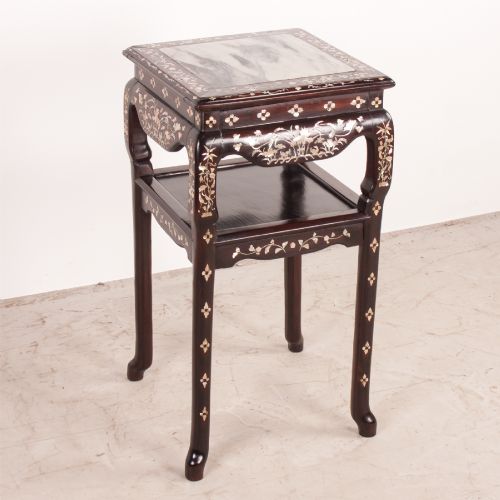
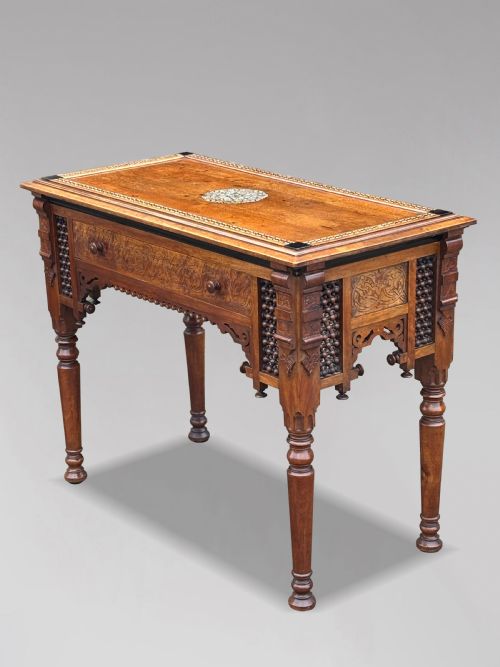
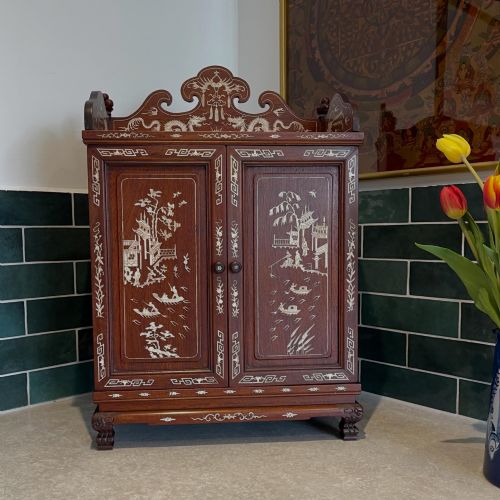
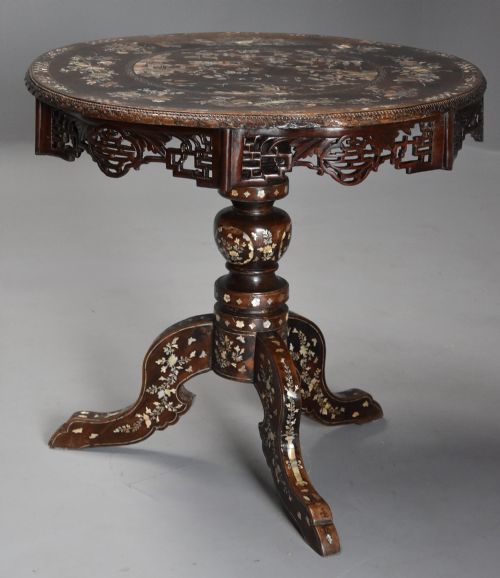
The version most commonly met on this page is the Victorian rosewood writing slope or box, often dated around 1850 or 1860, featuring geometric mother of pearl escutcheons and cartouches. Alongside these, buyers find occasional tables, centre tables, and table screens stemming from Chinese, Japanese, and Syrian traditions.
Forms range from small tabletop inkwell stands and expanding book slides to substantial pedestal desks and metamorphic writing tables. The uniting element remains the iridescent shell inlay contrasting sharply against dark hardwoods and lacquered surfaces.
How they were made
Cabinet makers utilised dense, durable timbers such as rosewood and coromandel wood as a stable base for intricate decorative programmes. These woods were often polished to a dark lustre, allowing the natural grain to offset the luminous quality of the shell.
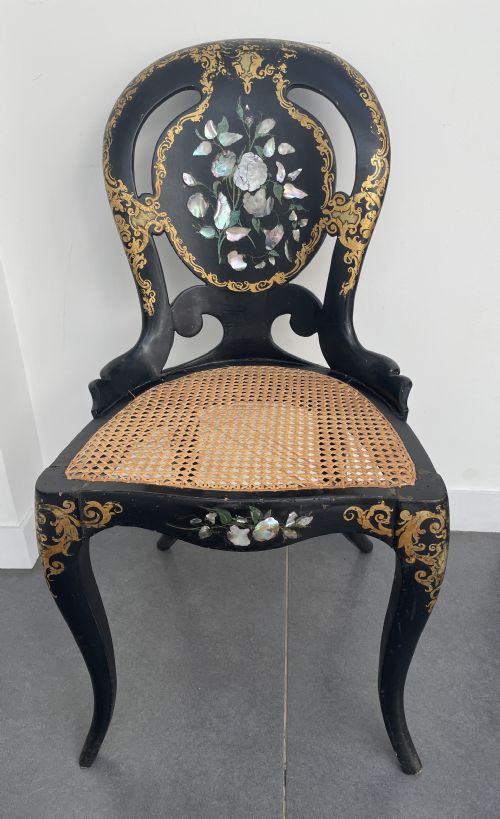
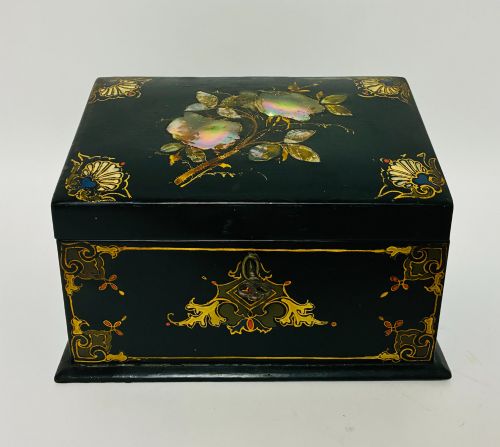
Artisans cut thin sections of mother of pearl, abalone, and occasionally bone or brass, embedding them meticulously into hand-cut recesses within the timber or papier-mâché. The resulting flush surfaces were then smoothed and varnished to protect both the shell and the underlying material.
What varies in quality
The precision of the inlay work marks the divide between standard production and exceptional craftsmanship. Superior pieces display tightly fitted shell fragments with minimal filler, whereas lesser examples show wider gaps and simpler, stamped geometric repeats.
Internal fittings also dictate quality, particularly the completeness of original glass inkwells, secret drawers, and tooled leather writing surfaces. Boxes retaining maker stamps or comprehensive internal accessories command greater interest than those stripped of their fitted compartments.
George Austin Dublin·Lund of London·Walker and Hall·Viardot
The Mother of Pearl Inlaid Desk Glossary
- Writing slope
- A portable slant-topped box designed for letter writing, featuring a hinged lid that opens to reveal a sloping surface and storage compartments. These pieces were essential travel companions for the nineteenth-century writer.
- Coromandel wood
- A dense, heavily figured southeast Asian timber prized for its dark brown colour and contrasting black stripes. Cabinet makers utilised this luxurious material for high-end Victorian boxes and desk accessories.
- Mother of pearl
- The iridescent internal layer of mollusc shells, harvested for its shimmering play of light. Craftsmen shaped this durable substance into decorative plaques and escutcheons for furniture and boxes.
- Papier-mâché
- A composite material made from paper pulp or layers of paper bound with glue, then lacquered and dried. It provided a smooth, rigid black surface well-suited to intricate mother of pearl inlay.
- Escutcheon
- A protective plate surrounding a keyhole, frequently fashioned from brass or mother of pearl. On these pieces, it serves both a functional and a decorative purpose.
Mother of Pearl Inlaid Desk: Frequently Asked Questions
How do I care for rosewood?
Keep wooden surfaces away from direct sunlight and excessive heat sources to prevent the timber from drying and splitting.
Dust regularly with a soft, dry cloth and avoid commercial polishes that contain silicone or heavy waxes.
What is a writing slope?
A writing slope is a portable desk box with an angled lid that folds down to create a firm surface for writing letters.
Inside, compartments hold inkwells, pens, and paper, while secret drawers often conceal valuables.
How do I identify Victorian pieces?
Look for dense rosewood or coromandel construction paired with geometric mother of pearl escutcheons and brass hardware.
Construction methods such as hand-cut dovetails in the internal compartments also point to nineteenth-century manufacture.
Can I use these for daily work?
Portable slopes and tabletop boxes function well for modern correspondence, storing stationery, or holding a laptop.
Treat the antique surfaces with care, using protective pads beneath modern items to guard against scratches.