
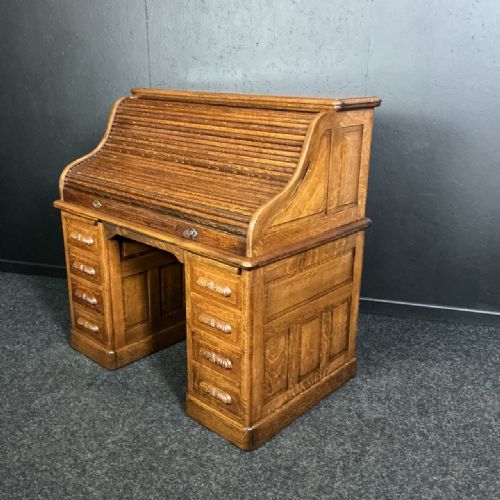

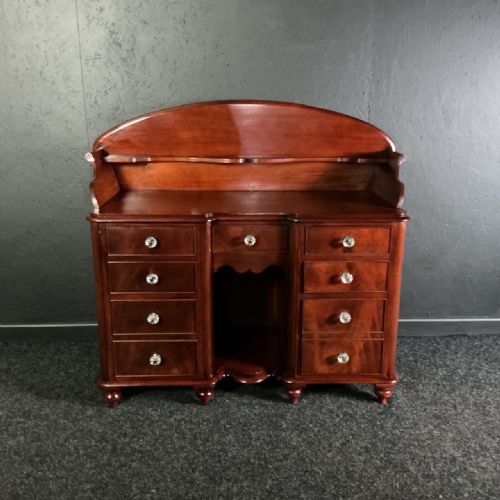

Carved Wooden Pedestal Desk
A carved wooden pedestal desk brings heavy timber and organised drawers into a study, offering a commanding surface for daily writing.
Carved Wooden Pedestal Desk
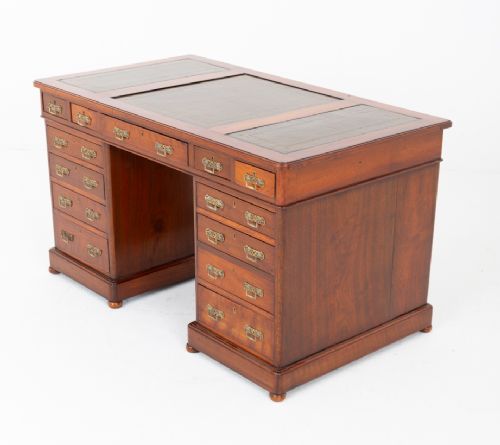
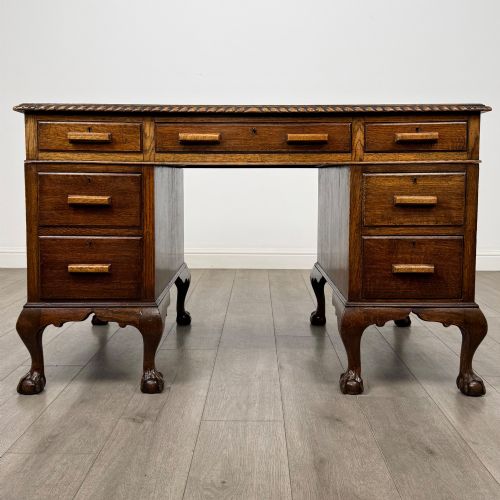
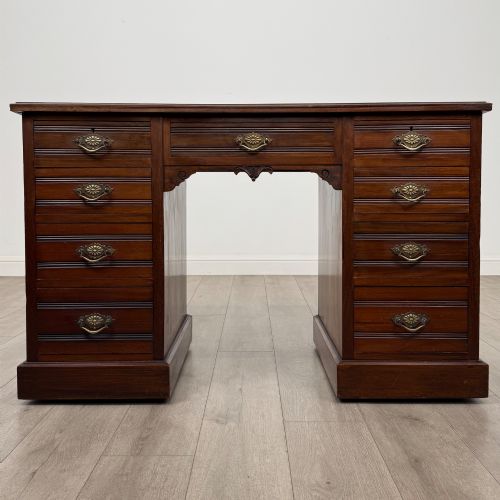
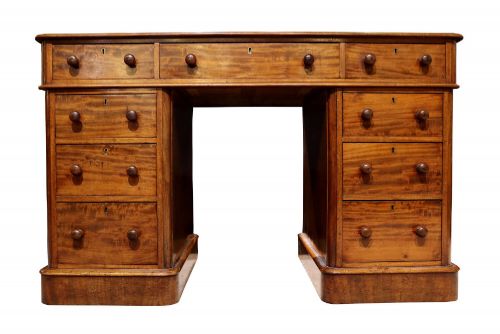
When searching for a carved wooden pedestal desk, buyers encounter robust pieces built with two vertical banks of drawers supporting a central writing surface. These heavy library and office tables appear frequently in Victorian and Edwardian iterations, often featuring elaborate mouldings or panelled sides.
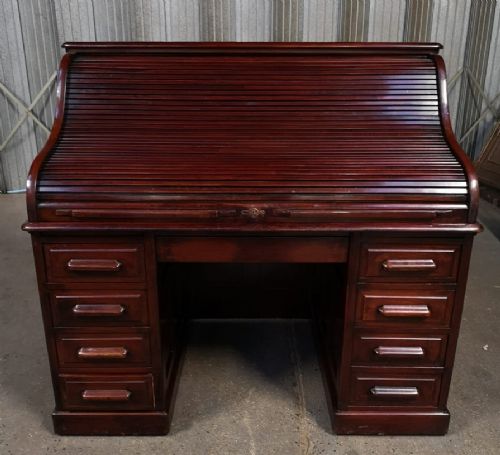
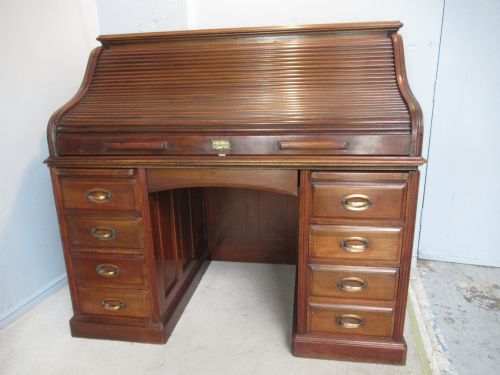
The format ranges from standard kneehole writing tables to partners desks and roll-top variants designed for secure document storage. Oak, mahogany, and walnut dominate the selection, reflecting the preference for durable hardwoods in nineteenth-century studies.
How they were made
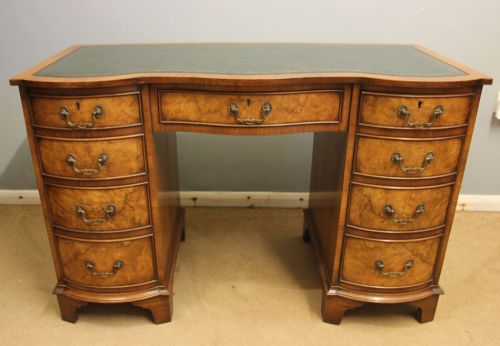
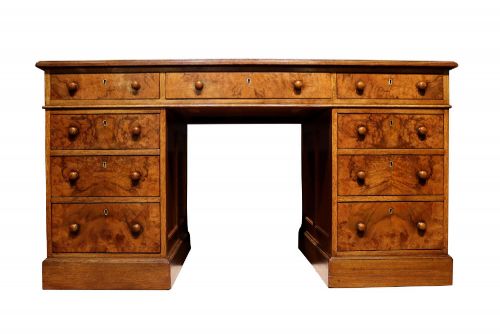
Cabinet makers constructed these desks using dense hardwoods such as mahogany, oak, and walnut, frequently incorporating burr veneers on drawer fronts for figured visual depth. Brass hardware, including drop handles and escutcheons, complemented the primary timber, while inset leather writing surfaces provided a durable writing plane.
Joinery relied on traditional dovetailed drawer construction and panelled carcases that could withstand heavy daily use. Carved details were executed directly into the solid wood or applied as separate moulded elements.
What varies in quality
Quality rests in the selection of timber figures, such as matching burr walnut or figured mahogany grains across the drawer fronts and pedestals. The depth and crispness of the carved ornamentation also separate standard utility furniture from exhibition pieces commissioned for specific interiors.
Internal construction, including secondary timbers used for drawer linings and the smooth action of the pedestal runners, dictates the structural integrity. Superior examples retain original brasses and well-fitted leather inserts that show consistent age.
Maple and Co·George Faulkner Armitage·John Gregory London·Étienne Kohlmann
The Carved Wooden Pedestal Desk Glossary
- Pedestal desk
- A heavy writing table comprising two separate drawer units that support a wide top. One pedestal sits on either side of the central kneehole space.
- Partners desk
- A large double-sided writing table designed for two people to sit opposite one another. The drawers and cupboards repeat on both faces.
- Kneehole desk
- A compact writing table featuring a central recess for the legs, flanked by narrow banks of drawers. It typically sits flush against a wall.
- Rolltop desk
- A writing cabinet featuring a slatted wooden tambour cylinder that pulls down to conceal the pigeonholes and writing surface. It locks to secure private papers.
- Escutcheon
- A protective plate surrounding a keyhole, usually cast in brass to prevent the wood from splintering around the lock.
Carved Wooden Pedestal Desk: Frequently Asked Questions
How do I care for the leather top?
Clean the inset leather gently with a damp cloth and feed it periodically with a neutral leather balm to prevent cracking.
Avoid placing hot cups or exposed inkwells directly on the hide to preserve the aged surface.
Are these desks easy to dismantle for moving?
Most pedestal desks separate into three main components: the two heavy drawer pedestals and the top writing surface.
Lift the top carefully off the pedestals after removing any connecting screws inside the kneehole.
What is the difference between a partners desk and a standard desk?
A partners desk provides drawer and cupboard access on both the front and the back faces. This allows two people to work opposite each other in the centre of a room.
Standard pedestal desks finish with a panelled back and stand directly against a wall.
How do I identify a Victorian desk?
Victorian desks generally feature dense mahogany, oak, or walnut timbers combined with heavy brass drawer pulls and hand-dovetailed joints.
Stylistic cues include carved mouldings, raised panels, and inset tooled leather writing surfaces characteristic of nineteenth-century study furniture.