


Mother of Pearl Glass
Mother of pearl glass and related inlaid items bring iridescent depth to functional objects, spanning Victorian optics, writing desks and decorative furnishings.
Mother of Pearl Glass
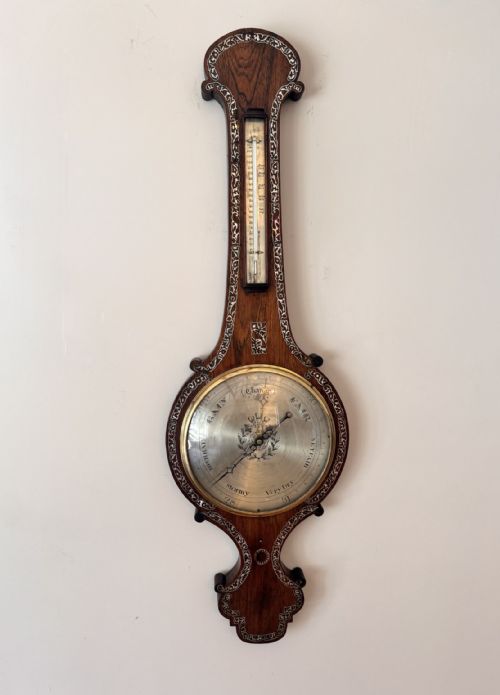
When searching for mother of pearl glass, a buyer encounters a diverse range of antiques dominated by Victorian and Edwardian optics, writing equipment, and decorative furnishings. The selection includes delicate opera glasses, magnifying glasses, barometers, and desk accessories embellished with shimmering nacre.
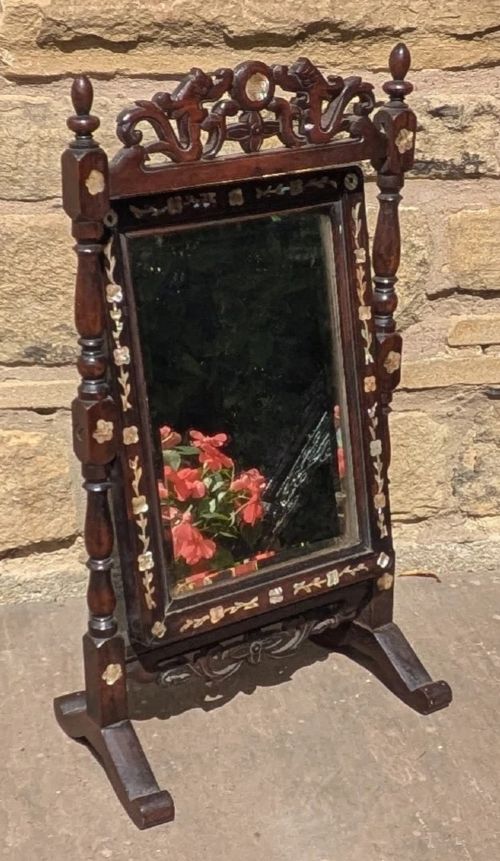
French manufacturers produced many of the optical instruments, whilst British workshops incorporated mother of pearl into rosewood, coromandel, and papier-mâché desk sets and barometers. Asian craftsmanship also appears through inlaid hardwood furniture and decorative mirrors from the nineteenth century.
The physical form varies from pocket-sized lorgnette opera glasses to substantial wheel barometers and inkstands. Each piece integrates natural marine shell into wood, brass, or lacquer to catch the light from different angles.
What varies in quality
The standard of execution depends heavily on the precision of the inlay work and the grade of the shell selected. Superior items display tightly fitted nacre panels with minimal filler, showing vibrant shifts of pink, green, and gold across an even surface.
Makers known for optical production integrated mechanical smoothness into opera glasses, ensuring that focusing wheels turned fluidly alongside secure barrel plating. Cabinet pieces benefited from choice selections of dense timber like coromandel and well-preserved brass hardware.
The overall harmony of design separates standard utilitarian objects from exemplary pieces, where engraved metal mounts, tortoiseshell accents, or intricate enamel work elevate the visual impact of the natural materials.
The listings combine 19th-century and early 20th-century items, featuring glass, mother-of-pearl, brass, rosewood, and coromandel across diverse utilitarian forms.
Iris Paris·LeMaire Paris·Henry Greaves·James A. Scholes·Webb
The Mother of Pearl Glass Glossary
- Nacre
- The iridescent internal layer of mollusc shells commonly known as mother of pearl. This organic material provides the shimmering surface texture seen across nineteenth-century opera glasses and inlaid wooden boxes.
- Guilloché
- A decorative engineering technique where a precise repeating pattern is mechanically engraved into a metal surface. It frequently appears beneath translucent enamel on Edwardian optical barrels.
- Coromandel
- A dense, heavily grained tropical timber imported from Asia and utilised for luxury nineteenth-century writing boxes and inkstands. Its dark coloration creates a striking contrast against inlaid mother of pearl.
- Papier-mâché
- A composite material formed from paper pulp mixed with glue and resin, pressed into moulds and baked. Victorian makers used it as a sturdy base for lacquered desk sets inlaid with shell.
- Lorgnette
- Opera glasses or spectacles attached to a long handle for ease of holding. Many Edwardian examples combine this format with mother of pearl side panels.
Mother of Pearl Glass: Frequently Asked Questions
How do I clean mother of pearl surfaces?
Wipe the nacre gently with a soft, slightly damp cloth to remove dust without damaging the delicate surface. Avoid harsh chemical cleaners or prolonged immersion in water, which can weaken the underlying adhesives.
Dry the piece immediately with a lint-free cloth to maintain its natural lustre and protect any surrounding wood or metal mounts.
Are these antique opera glasses still functional?
Many nineteenth and early twentieth-century opera glasses retain working central focusing wheels and clear glass lenses. They remain suitable for theatre use or casual viewing when handled with care.
Internal optics should be cleaned gently by a specialist if dust accumulates over time inside the brass barrels.
What timber was used for Victorian desk boxes?
Cabinetmakers frequently selected dense exotic woods such as rosewood and coromandel for high-end writing boxes and inkstands. These dark timbers provided a stable, handsome background for geometric mother of pearl inlay.
Oak and mahogany also appear in larger furnishings and wall barometers from the same era.
How can I date an inlaid barometer?
Stylistic indicators such as the shape of the wooden case, the typography on the dial face, and the presence of mercury tubes help determine the era. Victorian wheel barometers often feature carved rosewood frames with restrained scrollwork.
Later Edwardian examples tend to display simpler surrounds while retaining traditional brass indicator hands and thermometers.