



Mosaic Inlay Box
A mosaic inlay box brings together minute tesserae of wood, stone or bone to form intricate geometric and pictorial patterns.
Mosaic Inlay Box
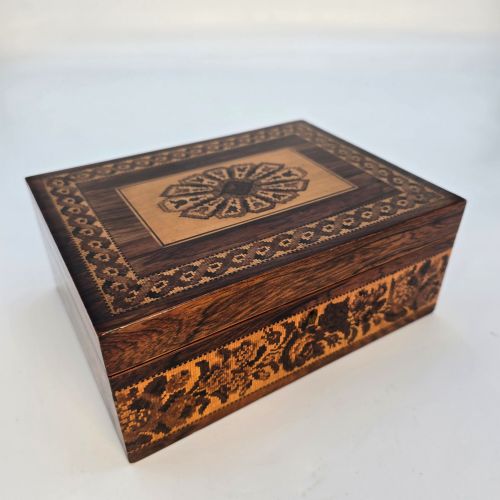
A mosaic inlay box is a small storage vessel decorated with tightly fitted pieces of contrasting materials. You are most likely to encounter nineteenth-century English examples, particularly Tunbridge Ware pieces featuring micro-mosaic wood panels.
The selection ranges from tea caddies and stationery boxes to jewellery caskets and sewing baskets. Woods such as rosewood and walnut commonly form the primary carcases for these decorative objects.
Origins span across Victorian England, Italy, India and Persia. British makers dominate the offerings, alongside Italian pietra dura works and Anglo-Indian Sadeli boxes.
How they were made
Craftsmen built miniature mosaic designs by bundling together thousands of dyed and natural woods, stones or bones, then slicing the composite block crosswise into thin veneers. These delicate veneers were subsequently glued onto wooden carcases made from rosewood, walnut or ebonised timber.
English Tunbridge Ware utilised boxwood, holly and various stained woods to construct detailed pictorial views of castles and geometric tessellations. Anglo-Indian Sadeli work combined intricate micro-mosaics of bone and stained woods within carved wooden frames.
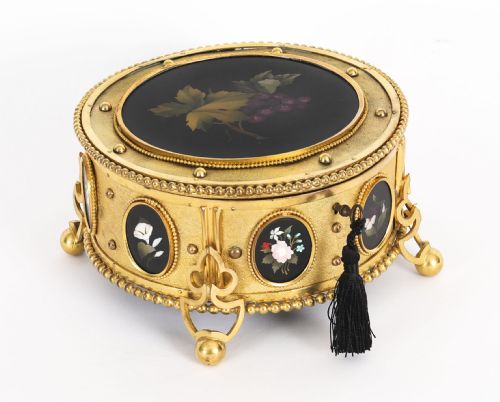
Italian examples integrated pietra dura techniques, setting hardstones like lapis lazuli and marble directly into stone or metal mounts. Persian Khatamkari pieces applied geometric tessellations of bone, brass and wood to surface structures.
Some Victorian travelling inkwells managed to squeeze intricate wooden castles inside boxes smaller than an apple.
What varies in quality
The degree of miniaturisation and precision in the mosaic tesserae sets exceptional pieces apart from standard work. Finer examples display thousands of microscopic wood or bone elements forming seamless geometric grids or recognisable pictorial scenes without visible gaps.
Choice of foundation materials and interior fittings dictates the standing of a piece within its type. Rosewood and burr walnut carcases lined with original silk or fitted with compartments demonstrate higher ambition than plain secondary timbers.
The integrity and complexity of the mosaic surface determine overall success. Pieces featuring multi-panel geometric borders, perspective cubes and figurative micro-mosaic panels represent the upper tier of execution.
Edmund Nye·Henry Hollamby
The Mosaic Inlay Box Glossary
- Tunbridge Ware
- A form of British woodworking from Kent featuring minute wooden mosaic patterns and pictorial tessellations applied to boxes and small items. The technique creates realistic images using natural wood colours.
- Pietra Dura
- An Italian technique of inlaying cut and fitted polished coloured stones to create pictorial designs. Hardstones such as marble and quartz form smooth, flush decorative surfaces.
- Sadeli Work
- An intricate form of micro-mosaic from nineteenth-century India utilising geometric arrangements of bone, horn and metal. Artisans sliced composite rods to create repeating starry patterns on wooden boxes.
- Khatamkari
- A Persian art form involving detailed marquetry and mosaic work using wood, bone and wire. Geometric star patterns cover the entire surface of the object.
- Tessera
- An individual small block of wood, stone or bone used in the construction of a mosaic. Thousands of these tiny units form the overall decorative pattern.
Mosaic Inlay Box: Frequently Asked Questions
What is a mosaic inlay box?
A mosaic inlay box is a decorative container decorated with small pieces of wood, stone, bone or metal arranged to create geometric patterns or pictures. These pieces span various nineteenth-century traditions, including English Tunbridge Ware and Anglo-Indian Sadeli work.
Craftsmen assembled these miniature components by hand to adorn everyday items such as tea caddies, sewing boxes and letter cases. Each style reflects the specific regional materials and techniques of its origin.
How were Tunbridge Ware boxes made?
Tunbridge Ware makers glued together thousands of tinted and natural wood rods into geometric bundles. They then sliced cross-sections from these blocks to produce identical strips of mosaic veneer.
These delicate veneers were applied to carcases made from rosewood, walnut or mahogany. Craftsmen finished the surfaces by smoothing and polishing the wood to highlight the natural colours.
How do I care for a mosaic box?
Keep wooden and stone mosaic boxes away from direct sunlight and steady heat sources to prevent the wood from drying and shrinking. Stable indoor humidity protects the tiny tesserae from loosening within their adhesive beds.
Dust the intricate surfaces gently with a soft, dry brush. Avoid liquid cleaners and polishes, which can seep between the mosaic joints and damage the old glue.
How do I distinguish Italian pietra dura from Tunbridge Ware?
Italian pietra dura relies on polished hardstones and marbles set into stone or metal mounts to form floral or pictorial motifs. Tunbridge Ware uses exclusively wood veneers cut into microscopic geometric or pictorial arrangements.
Pietra dura pieces feel cool and heavy due to the stone content, while Tunbridge Ware retains the warmer tactile quality of wood.