





Moorland Landscape Oil Painting
A moorland landscape oil painting captures expansive remote terrain, offering a quiet window into historic British uplands.
Moorland Landscape Oil Painting
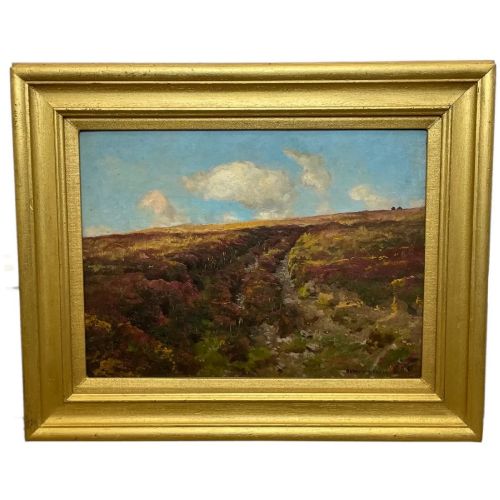
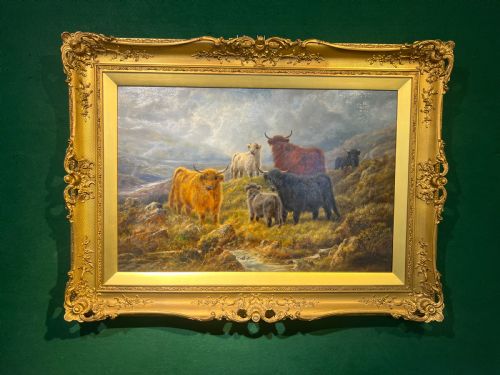
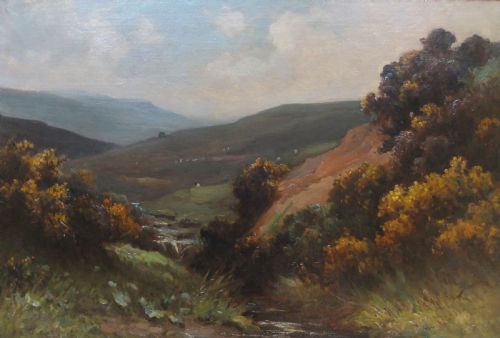
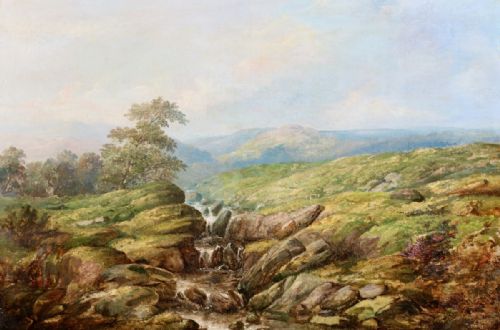
A moorland landscape oil painting typically portrays remote upland scenery across Britain, including Yorkshire, Scottish highlands, Exmoor, and Dartmoor. These works frequently incorporate specific regional elements such as grazing sheep, ponies, or sporting dogs set against heather and open hills.
The selection ranges from Victorian compositions and the Scottish School to later twentieth-century interpretations. Canvases and wood panels showcase diverse artistic treatments, from detailed realism to British Impressionism.
How they were made
Artists applied oil paint using traditional brushwork techniques onto prepared woven canvas, wooden panels, or rigid boards. These supports frequently sit within period frames constructed from wood and finished with gilt decoration or gold leaf.
The physical build relies on stable priming grounds that allowed painters to layer oil colours, capturing shifting light and atmospheric weather conditions across open heather and hills.
Sheep appear in a surprising number of these windswept scenes, quietly enduring the British weather alongside faithful upland dogs.
What varies in quality
Quality rests in the handling of light and atmospheric depth, where accomplished artists render expansive skies and textured heather with confident, purposeful brushwork rather than flat uniformity. The strongest examples display a confident command of colour balance that conveys the true isolation and scale of the terrain.
The integration of secondary elements, such as working dogs or grazing sheep, demonstrates the painter's anatomical skill and placement within the wider scene. Finer panels and canvases show careful preservation of the paint surface and original framing context.
Tom Campbell·Arthur Wardle·Charles Walter Simpson·Owen Bowen·John A. Houston·Florence Hess·Colin Graeme Roe·Joseph Farquharson·John Charles Tunnard·Ernest Higgins Rigg·Peter Jackson·Frederick Richard Lee·Robert Cleminson·Lewis Creighton·Fred Lawson·John William Buxton Knight
The Moorland Landscape Oil Painting Glossary
- Oil paint
- A slow-drying medium made by combining pigments with drying oils such as linseed. This mixture allows artists to build rich textures and subtle tonal gradations.
- Wood panel
- A rigid wooden support used by painters instead of fabric canvas. Panels offer a firm surface that suits detailed brushwork.
- Gilt wood
- Wood carved and coated with gold leaf or metallic paint. This traditional frame finish adds decorative warmth to finished artworks.
- British Impressionism
- An artistic movement focusing on loose brushwork and natural light. Painters working in this style captured fleeting atmospheric effects outdoors.
Moorland Landscape Oil Painting: Frequently Asked Questions
What periods do these paintings span?
The available works span from the Victorian era and the nineteenth century through the early twentieth century up to the nineteen-sixties. Regional schools and individual painters developed distinct approaches across these decades.
Earlier nineteenth-century examples often lean towards romantic or realistic portrayals, while mid-twentieth-century pieces adopt varied modernist and impressionistic touches.
Where were these scenes painted?
These landscapes depict specific British wilderness regions, most notably Scottish highlands, Yorkshire dales, Exmoor, Dartmoor, and Cornwall. Artists travelled to these remote spots to record local topography.
Animals like sheep, ponies, and sporting dogs frequently appear, reflecting the rural livestock and sporting traditions of those specific moorlands.
What supports were used?
Artists painted on woven canvas, solid wood panels, and prepared boards. Each support surface alters how the oil paint sits and ages over time.
Canvases provide flexibility and texture, whereas wooden panels and boards offer a completely rigid ground for finer detail work.
How should I frame and display them?
Many works retain their original wood and gilt frames, which complement the period aesthetic of the painting. Displaying them away from direct sunlight protects the oil pigments and sensitive wooden supports.
Stable room humidity prevents warping on panel paintings and keeps canvas tension secure over the years.