
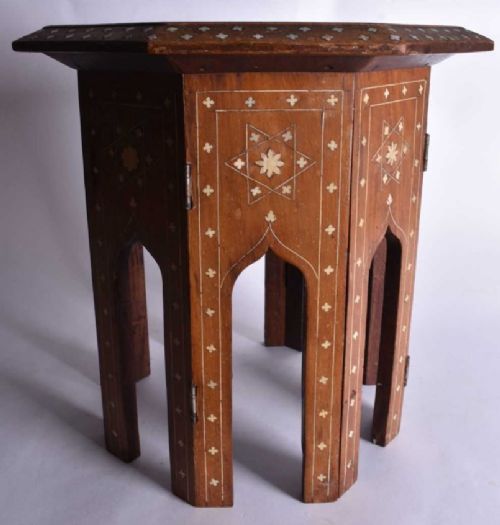
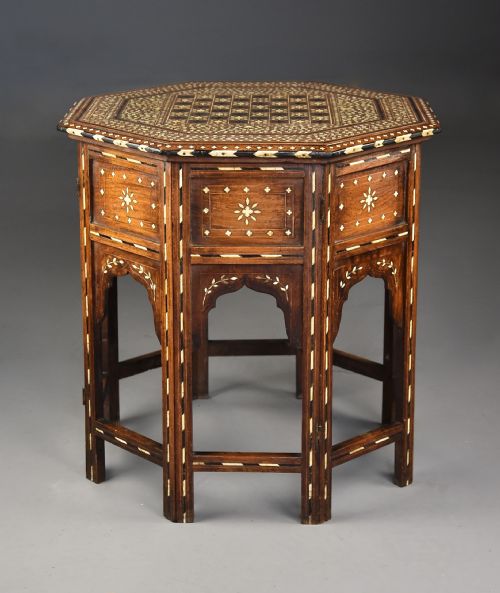
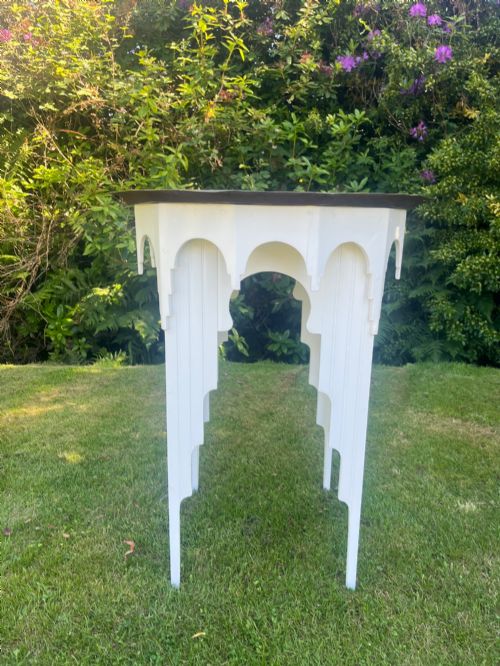
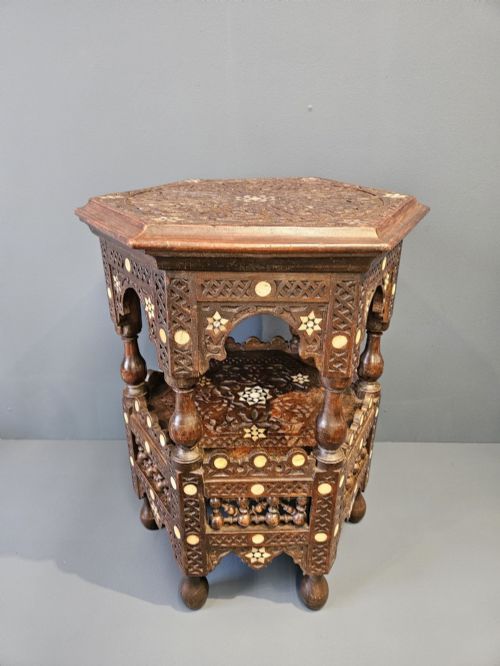


Moorish Tea Table
A moorish tea table brings intricate geometric marquetry and low-slung seating into a room, offering an exotic focal point that suits modern and traditional interiors alike.
Moorish Tea Table
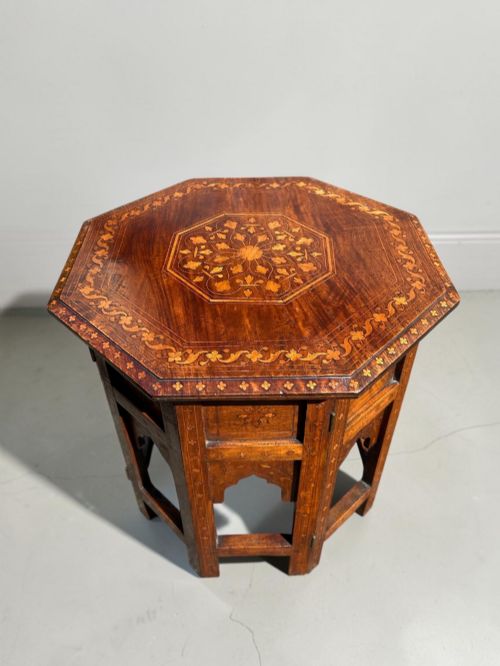
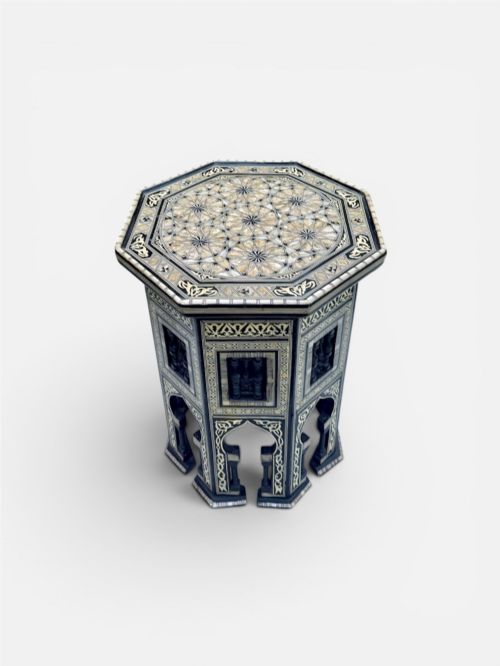
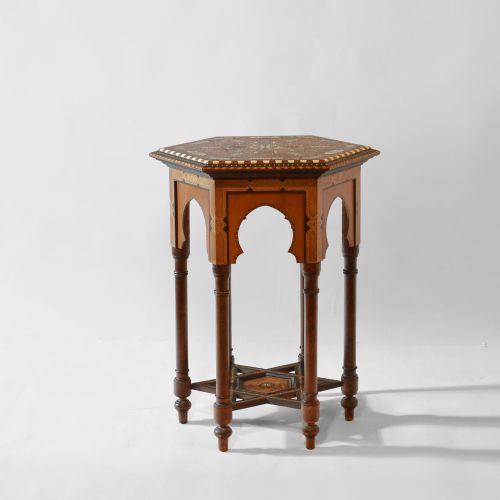
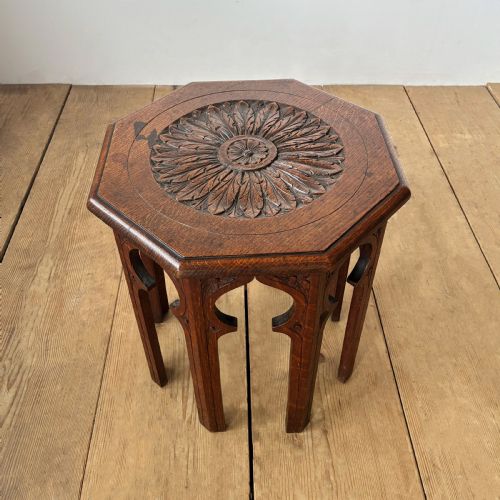
A moorish tea table encompasses low occasional, side, and tray tables associated with North African, Middle Eastern, and South Asian craft traditions. These pieces frequently appear in octagonal, hexagonal, and folding formats designed for portability and versatile placement.
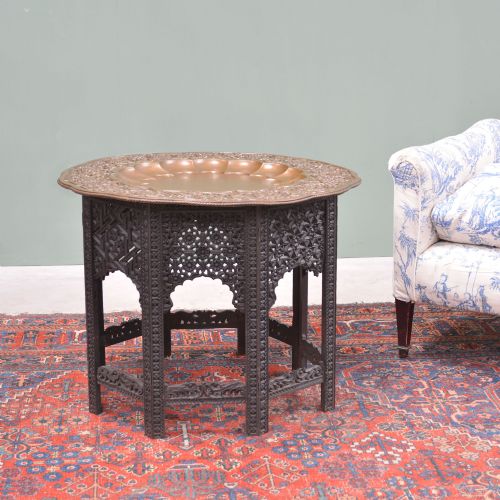
The prevailing style on this page is the moorish tea table interpreted through nineteenth and twentieth century revival movements, including Anglo-Indian, Syrian, and Ottoman designs. Makers often utilised folding bases beneath removable trays or tops to create practical furniture for Western drawing rooms.
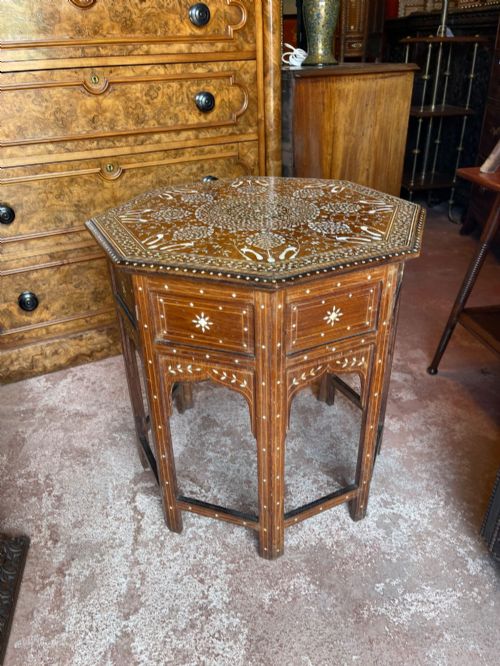
Surviving examples span the Victorian era into the early twentieth century, incorporating diverse regional influences such as Moroccan brass work and Hoshiarpur bone inlay. Buyers encounter side tables, coffee tables, and games tables that bridge Eastern ornamentation with British domestic architecture.
Materials and construction methods
Artisans constructed the wooden frames from hardwoods such as teak, walnut, rosewood, and mahogany, often applying ebonised or black lacquered finishes. Folding bases relied on intricate interlocking hinges cut directly from the timber without metal fasteners.
Decoration depended heavily on meticulous inlay work utilising bone, mother-of-pearl, and white metal wire to form dense geometric patterns across the surfaces. Metal components also appear as chased brass tops or copper trays resting upon carved wooden stands.
Listings feature woods including teak, walnut, rosewood, and mahogany, paired with brass, copper, bone, and mother-of-pearl inlay.
Assessing craftsmanship and execution
Quality rests upon the precision of the geometric inlay and the depth of the wood carving. Superior examples display tightly fitted bone or mother-of-pearl tesserae with minimal filler, whereas lesser pieces show wider gaps and shallower chisel work.
The integrity of the folding mechanism distinguishes finer tables from standard production. A well-made frame aligns precisely when opened, maintaining stability without excessive wobble in the joints.
Liberty & Co·Carlo Bugatti
The Moorish Tea Table Glossary
- Octagonal
- Having eight sides. This geometric shape dominates the tops of many tables originating from Indian and Middle Eastern workshops.
- Inlay
- A technique where pieces of contrasting material are embedded into a recessed wooden surface. Bone and mother-of-pearl serve this purpose in these pieces.
- Marquetry
- The art of applying pieces of veneer to a structure to form decorative patterns. It creates the intricate geometric motifs seen on tabletop surfaces.
- Ebonised
- Wood finished to resemble ebony through staining or painting. Several late nineteenth-century examples utilise this dark finish for dramatic contrast.
- Tray top
- A removable surface with raised edges designed for serving. Many folding tables pair these trays with collapsible support stands.
Moorish Tea Table: Frequently Asked Questions
How do I clean an inlaid wooden table?
Dust gently with a dry, soft cloth to prevent moisture from loosening delicate bone or mother-of-pearl tesserae.
Avoid liquid polishes and commercial cleaners that might seep beneath the inlay and weaken the historical adhesives.
Are these folding tables sturdy enough for daily use?
The clever scissor-action folding frames provide surprising stability for holding cups, books, or lamps.
Treat the vintage hinges with care when moving the furniture to preserve the interlocking wooden joints.
What is the difference between Anglo-Indian and Moorish styles?
Anglo-Indian pieces typically feature dense overall floral or geometric carving associated with workshops in regions like Hoshiarpur. Moorish revival designs lean towards Islamic architectural motifs and intricate mother-of-pearl star patterns.
Makers in Britain often blended these traditions to satisfy Victorian demand for exotic home furnishings.
How do I identify a Liberty and Co table?
Look for distinctive ebonised woodwork and refined craftsmanship that bridges British aesthetic taste with Eastern influences.
Documentation or attribution often links these specific side and occasional tables to the firm's late nineteenth-century retail catalogues.