


Indian Brass Coffee Table
An Indian brass coffee table brings the warmth of hammered metal and carved hardwood into a modern room.
Indian Brass Coffee Table
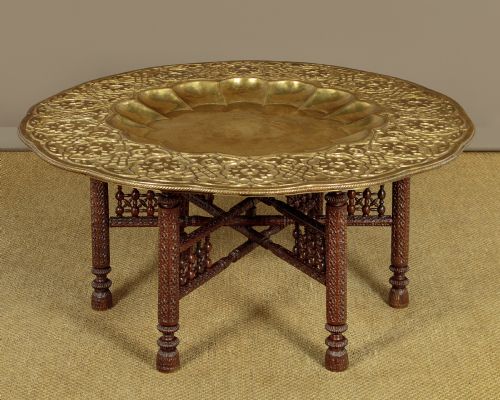
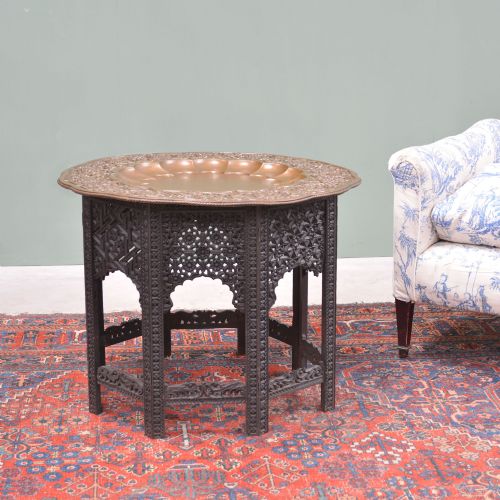
An Indian brass coffee table spans several distinct forms, including folding tray tables, inlaid octagonal shapes, and low occasional pieces adapted from traditional chests. The pieces appearing here generally date from the nineteenth century up through the nineteen-thirties, reflecting Anglo-Indian, Colonial, and Persian aesthetic influences.
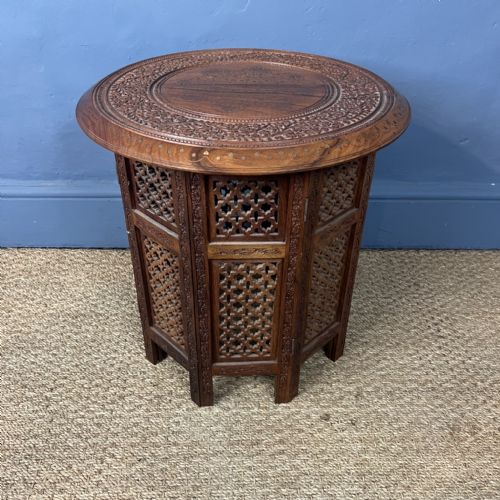
Buyers will encounter circular and octagonal tops resting on collapsible wooden stands, alongside heavier pieces derived from repurposed storage trunks and carts. Teak, rosewood, and hardwood form the structural bases, while brass provides the decorative surface either through complete top plates or intricate wire inlay.
Materials and construction
Many examples utilise folding or collapsible bases designed for portability, employing clever wooden hinges and interlocking joints rather than fixed iron hardware. Secondary metals such as copper and iron appear occasionally, while bone inlay adds contrasting detail to specific regional pieces.
Several tables depict the signs of the zodiac, letting you serve tea upon your exact celestial alignment.
Judging quality and craftsmanship
Quality rests upon the depth and precision of the hand-engraving on the metal surface and the density of the underlying timber. Finer examples display crisp, deeply chased motifs depicting foliage, figures, or zodiac signs, whereas simpler items rely on shallow stamping.
The integrity of the wooden stand distinguishes superior items, particularly where folding mechanisms fit together seamlessly without modern replacement screws. The harmony between the brass top and the carved hardwood base determines the overall visual balance.
The Indian Brass Coffee Table Glossary
- Anglo-Indian
- A descriptive term for furniture made in India during the British colonial period, combining traditional local craftsmanship with European forms.
- Hoshiarpur
- A region in Punjab known for intricate wood carving and inlay work, frequently utilising brass and bone on teak or shisham wood.
- Zanzibar chest
- A heavy storage trunk featuring brass studding and strapwork, often adapted to serve as a low table.
- Tray table
- A piece comprising a removable metal tray resting upon a folding or fixed wooden stand.
- Chased
- A metalworking technique where patterns are hammered into the surface from the front rather than cut away.
Indian Brass Coffee Table: Frequently Asked Questions
Are the folding stands original?
Many tables incorporate collapsible wooden bases designed for easy transport during the colonial era. Check the joints and wooden pins to see if they match the wear patterns of the top.
Replacement hinges or modern screws usually indicate later repairs rather than original construction. Traditional stands rely on interlocking wooden segments that fold flat without metal hinges.
Can I use it daily?
These tables handle normal daily use quite well, provided hot cups and damp glasses use coasters. The softer nature of brass means the surface records minor use marks over time, which adds to the character.
Protect the hardwood bases from direct sunlight and central heating sources to prevent the wood from splitting. Ensure the supporting stand remains secure before placing heavy objects on the top.
What is the difference between Benares and Hoshiarpur tables?
Benares tables typically feature densely etched brass tops decorated with figures, deities, or traditional processions. The metal completely covers the surface with little exposed wood.
Hoshiarpur pieces emphasise the carved wooden structure itself, featuring intricate floral patterns in wood with subtle brass wire inlay rather than solid sheet metal tops.