


Moonphase Tall Case Clock
A moonphase tall case clock is a grand horological centrepiece that tracks lunar cycles alongside time, prized for its mechanical sophistication.
Moonphase Tall Case Clock
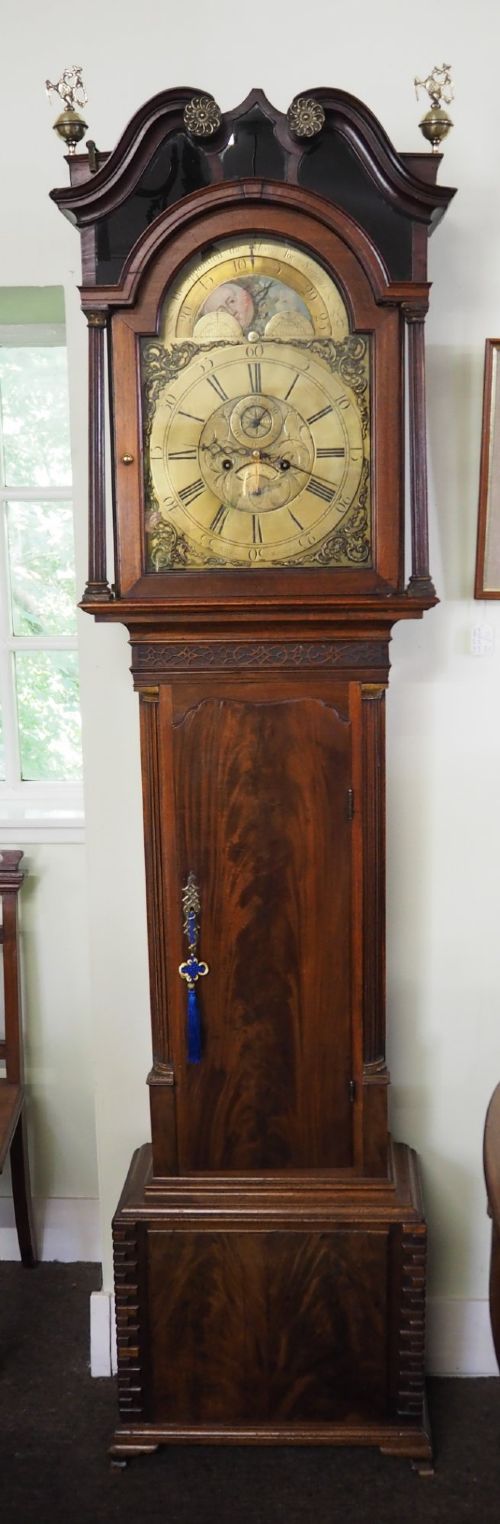
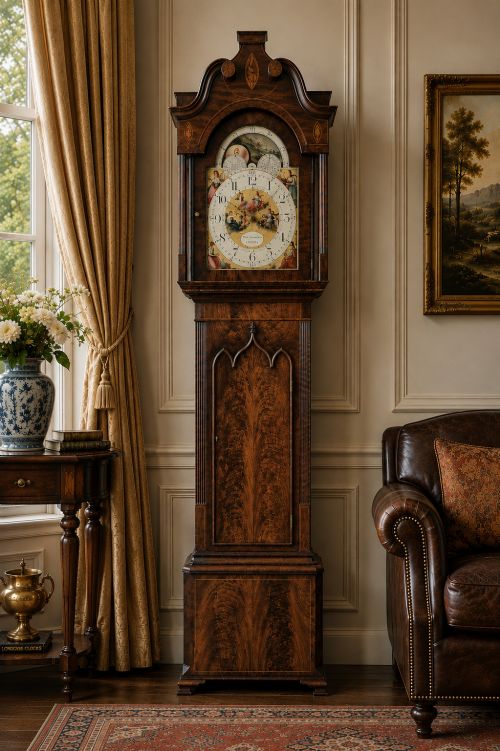
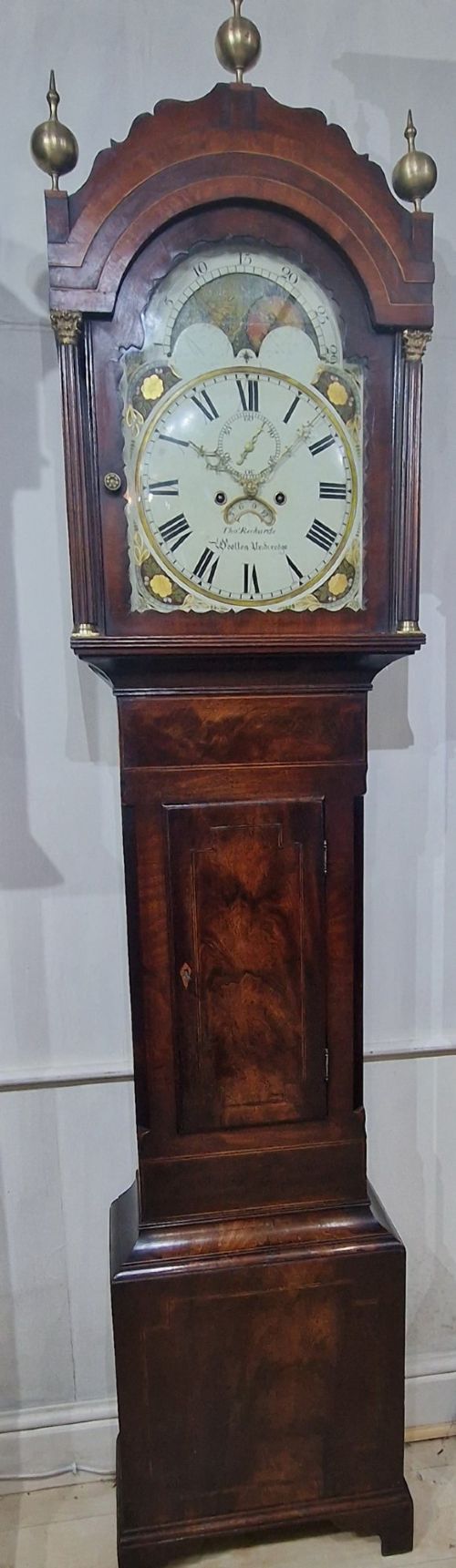
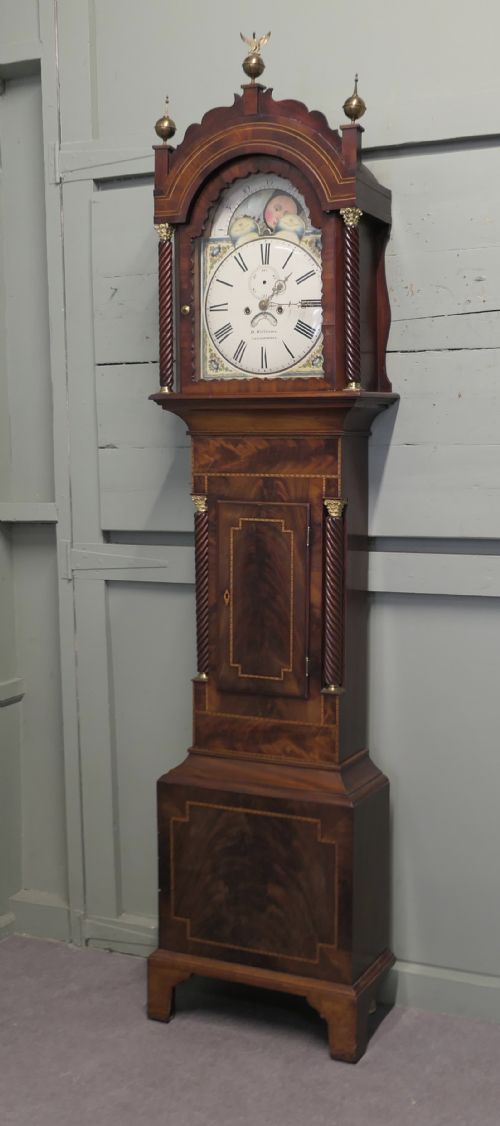
A moonphase tall case clock is a floor-standing timepiece housing an eight-day or similar movement within a wooden enclosure, often referred to in listings as a longcase or grandfather clock. When searching for this phrase, collectors encounter specimens predominantly originating from the eighteenth and nineteenth centuries, spanning the Georgian, Regency, and Victorian periods.
The versions most commonly met on this page feature rich mahogany, flame mahogany, walnut, oak, and burr walnut cabinetry. Dials are typically constructed from painted iron or brass, often inscribed with regional English makers from locations such as London, Bristol, Liverpool, and Hull.
Beyond standard timekeeping, these examples incorporate rolling moon mechanisms, tidal dials, and alarm functions within their tall architectural cases. They combine practical domestic utility with intricate mechanical displays that track the phases of the moon through rotating painted discs.
What varies in quality
Quality in these timepieces rests upon the crispness of the cabinetwork and the regional provenance of the maker. Finer examples display carefully selected flame mahogany or burr walnut veneers matched across the trunk door and base, alongside substantial brass or finely painted iron dials signed by reputable provincial or metropolitan watchmakers.
The sophistication of the movement further distinguishes the range, particularly when extra complications such as tidal dials, musical capability, or alarm mechanisms are integrated alongside the rotating moon phase. The clarity of the dial painting and the architectural proportion of the long case itself determine the standing of each piece.
Some makers added rolling moon discs depicting painted human profiles peeking out from behind the clouds to track the lunar month.
Samuel Kellett of Bredbury·Charles Dowsett Of Canterbury·Thomas Vernon London·John BANKS OLDHAM·THOMAS DEAN of LEIGH·Wilshire Link of Bristol·Nicholas of Birmingham·James Rayner of Hull·THOS BURCHALL of NANTWICH·THOMAS HALL ROMSEY·Thomas Hutchison of Leeds·Iames Richards Liverpool
The Moonphase Tall Case Clock Glossary
- Longcase clock
- A tall, floor-standing pendulum clock enclosed in a wooden case, commonly known as a grandfather clock. These housings protect the suspended weights and pendulum from air currents that might affect timekeeping accuracy.
- Moonphase
- A mechanical dial display showing the current phase of the moon through a rotating painted disc visible beneath an arched window. This complication tracks the lunar month alongside standard hours and minutes.
- Flame mahogany
- A veneer cut from the fork of a mahogany tree to produce a distinct flame-like pattern. Cabinetmakers used this figure to decorate the primary viewing panels of eighteenth and nineteenth-century clock doors.
- Burr walnut
- A wood grain featuring swirling knot formations that create intricate, mottled patterns across furniture surfaces. It appears on select high-end cabinetwork to provide rich visual texture.
- Eight day
- A movement design requiring winding only once a week via holes in the dial face. This mechanism utilises heavier weights suspended by cords or chains to drive the gear train over an extended period.
Moonphase Tall Case Clock: Frequently Asked Questions
What is a moonphase tall case clock?
A moonphase tall case clock is a floor-standing timepiece that houses a mechanical movement and an arched dial featuring a rotating moon disc. These pieces combine longcase construction with lunar tracking.
They serve as both accurate timekeepers and decorative furniture items, originating largely from the eighteenth and nineteenth centuries in Britain.
How do you wind an eight day clock?
An eight day clock is wound using a specialised key inserted into winding holes on the dial face. Turning the key draws the internal weights back up toward the top of the case.
This process is typically performed once a week to maintain the tension on the lines driving the pendulum and gear train.
Where were these clocks made?
These clocks were produced by regional horologists and cabinetmakers working across England and Wales. Makers inscribed their names directly onto the brass or painted iron dials.
Examples originate from metropolitan centres like London as well as provincial towns such as Liverpool, Bristol, Hull, and Nantwich.
What woods were used for the cases?
Cabinetmakers utilised durable hardwoods including mahogany, oak, and walnut to build the protective floor-standing enclosures. Figured veneers such as flame mahogany and burr walnut were applied to enhance the visual appearance.
These materials were polished to highlight the natural grain patterns across the trunk door and base.