


Monochrome Architectural Engraving
Monochrome architectural engraving captures classical antiquity and ancient structures through detailed ink prints on paper.
Monochrome Architectural Engraving
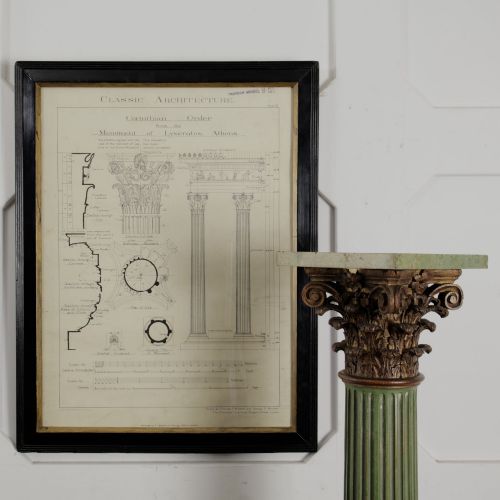
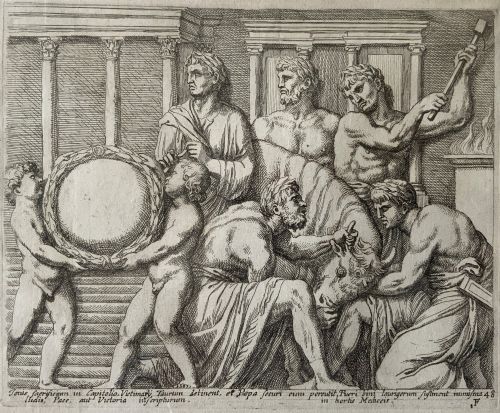
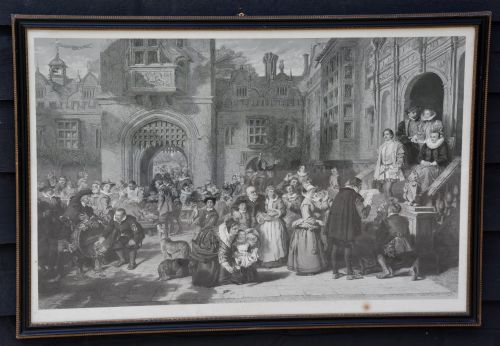
Monochrome architectural engraving encompasses printed plates depicting ancient temples, classical orders, and historic buildings spanning several centuries. Collectors encounter numerous eighteenth-century plates detailing Athenian antiquities alongside nineteenth-century works and early twentieth-century etchings.
The objects appear primarily as framed prints, wall art, and individual book plates. Subjects range from the Vatican Loggie and the Temple of Jupiter to domestic interiors and British bridges.
Engravings and etchings dominate the selection, executed on paper and frequently retained within period frames of wood or gilded wood.
Materials and Techniques
Makers utilised copper plates and ink to transfer fine lines onto laid or woven paper. Artisans employed manual engraving and etching techniques to achieve the precise geometric detail required for architectural representation.
Completed prints were frequently housed behind glass within timber frames, occasionally incorporating gold leaf or gilt mouldings to complement the subject matter.
The inventory records prints styled in Neoclassical, Baroque, and Victorian Technical traditions.
Standards of Quality
Quality rests upon the crispness of the ink impression and the preservation of fine architectural lines across the paper. Early strikes from copper plates exhibit greater depth and clarity than later impressions where the plate has worn.
The presence of original framing materials, such as Hogarth or period wood frames, contributes to the integrity of the piece. Attribution to documented printmakers or draughtsmen elevates the historical significance of the work.
François Perrier·Francesco Piranesi·Claes Jansz Visscher·Alessandro Mocchetti·James Basire·Giovanni Ottaviani·Edward Rooker·Edgar J. Maybery
The Monochrome Architectural Engraving Glossary
- Engraving
- A printmaking technique where an artisan cuts lines directly into a metal plate using a burin. The resulting incisions hold the ink for transfer onto paper under pressure.
- Etching
- A process utilising acid to bite lines into a metal plate covered with an acid-resistant ground. This allows for fluid, expressive mark-making compared to direct engraving.
- Drypoint
- A printmaking method where a sharp needle is scratched directly into the metal plate, raising a burr that produces soft, velvety lines when inked.
- Lithograph
- A planographic printing technique based on the repulsion of oil and water on a limestone or metal surface. It enables smooth tonal gradations without incising lines.
- Neoclassical
- A style drawing inspiration from the classical art and culture of ancient Greece and Rome. It prioritises symmetry, proportion, and architectural austerity.
Monochrome Architectural Engraving: Frequently Asked Questions
What is a monochrome architectural engraving?
A monochrome architectural engraving is a single-colour print on paper depicting historic buildings, ruins, or classical details. These works were often published in plate books during the eighteenth and nineteenth centuries.
Artists and draughtsmen recorded ancient sites during the Grand Tour, disseminating architectural knowledge across Europe through these printed plates.
How should I frame these prints?
These works suit traditional wooden frames, sometimes incorporating gold leaf or Hogarth mouldings to match their period of origin. Acid-free mounts protect the paper from direct contact with glass.
Keeping the print away from direct sunlight preserves the ink and prevents the paper from yellowing over time.
How do I identify the age of an engraving?
Age is indicated by the paper type, plate marks, typography, and stylistic elements characteristic of periods like the eighteenth century or the Edwardian era. Watermarks in the paper often provide definitive clues to the date of manufacture.
Comparing the plate to known published volumes, such as surveys of Athenian antiquities, confirms the historical context.
Were these prints meant for books?
Many architectural engravings were originally bound as plates within extensive topographical or archaeological volumes. Individual plates were frequently removed later for framing and display as wall art.
Collectors often find binding marks or plate numbers along the margins indicating their origin within a larger survey.