



Molded Opalescent Bowl
A moulded opalescent bowl catches the light with milky blue fires, bringing tactile Art Deco texture to a room.
Molded Opalescent Bowl
When you search for a moulded opalescent bowl, you encounter glass vessels shaped in metal or iron moulds, exhibiting a distinctive milky or blue-toned luminescence when struck by light. These pieces primarily span the Edwardian era through the nineteen-thirties, aligning with the height of Art Nouveau and Art Deco design.
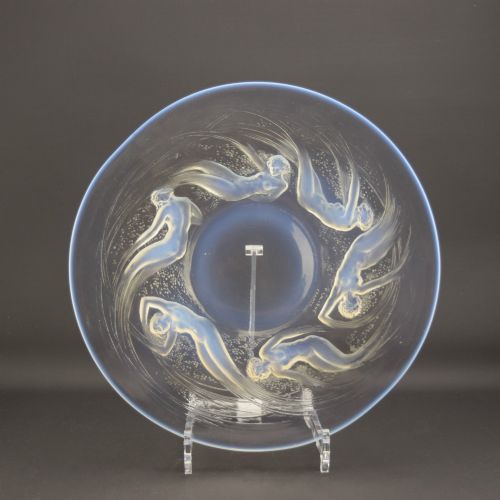
The objects on this page predominantly take the form of decorative bowls, open coupes, plates, and chargers, alongside occasional vases and powder boxes. French makers dominate the selection, bringing floral and aquatic motifs directly into the glass surface.
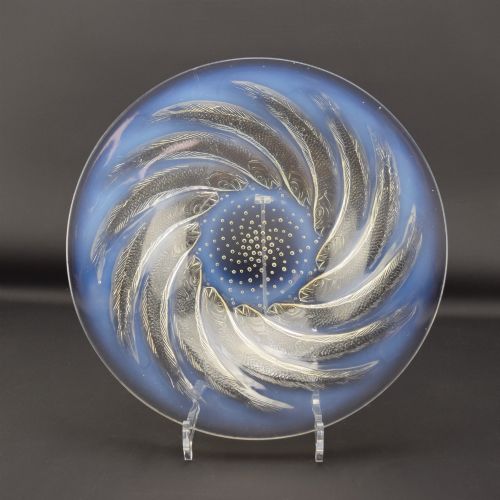
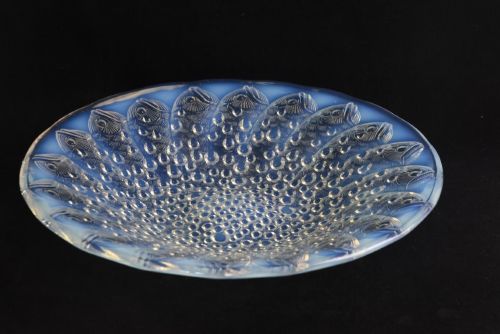
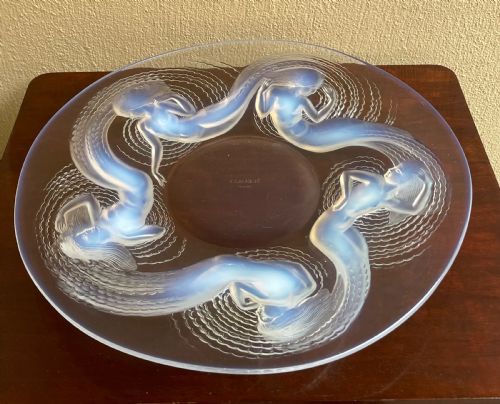
Moulded opalescent bowls range from shallow dishes designed to rest flat on a table to footed vessels with prominent relief decoration. Fish, flowers, and foliage form the core vocabulary of these designs, catching the milky opalescence on their highest points.
Materials and Techniques
Molten glass was forced into metal or iron moulds by press-moulding techniques, capturing intricate relief details of flowers, fish, and feathers. This process allowed workshops to produce consistent shapes with deep exterior decoration.
Opalescence was achieved by adding bone ash, arsenic, or other agents to the glass batch, which created a milky blue or white shimmer when the finished piece cooled and met reflected light.
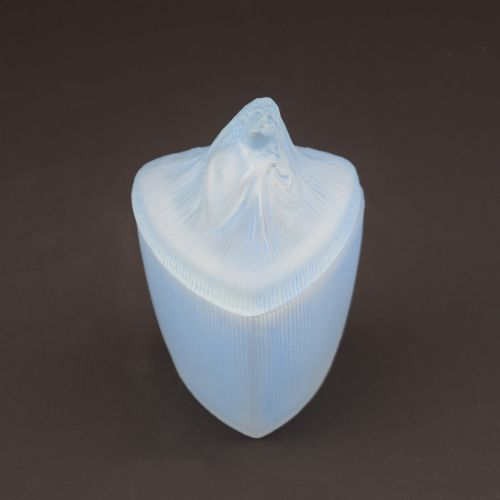
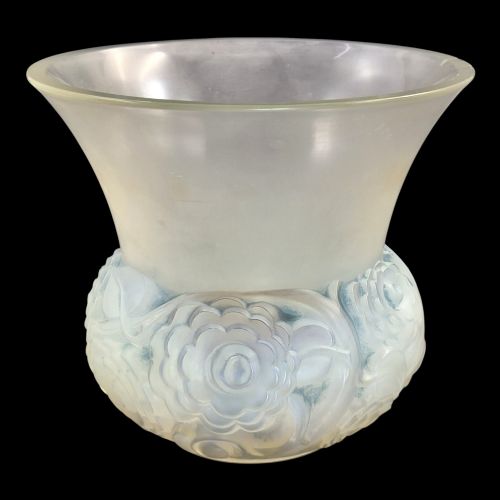
Object forms on this page include shallow bowls, chargers, footed coupes, vases, and covered powder boxes decorated with floral and aquatic motifs.
Judging Quality
Quality rests in the crispness of the moulded relief and the strength of the opalescent fire within the glass. Superior examples display sharp separation between the clear ground and the milky, glowing highlights.
The depth of the design and the subtlety of the colour shift across the surface distinguish finer studio production from standard commercial output. Pieces with strong contrast in the glass show the maker's mastery of chemical composition and thermal control.
Rene Lalique·G Vallon·Jobling·Etling·Sabino
The Molded Opalescent Bowl Glossary
- Opalescent glass
- Glass that diffuses light to display a milky blue or white appearance, particularly on raised surfaces. This effect results from specific chemical additives in the molten batch.
- Coupe ouverte
- An open bowl or shallow dish used for display or service. These forms often showcase dense relief decoration across the interior base.
- Press-moulded glass
- Glass formed by mechanical pressure forcing hot material into an iron or steel mould. This technique defines the production of patterned vessels from the period.
- Charger
- A large decorative plate or shallow dish meant for display rather than dining. They provide a wide canvas for repeating animal or botanical motifs.
Molded Opalescent Bowl: Frequently Asked Questions
What is an opalescent bowl?
An opalescent bowl is a glass vessel made using a mould to create raised patterns that catch the light with a milky blue glow. These decorative items became popular during the early twentieth century.
Craftsmen added specific agents to the glass mixture to achieve this shifting colour effect. The resulting pieces served as ornamental centrepieces or decorative dishes in homes.
Where were these bowls made?
The majority of these glass bowls originated in France during the interwar period. Prominent Parisian workshops and glasshouses drove the aesthetic development of opalescent tablewares.
British factories also produced comparable press-moulded designs during the nineteen-thirties. These regional variations adapted the French aesthetic for domestic markets.
How should I display my bowl?
Display your bowl in a position where natural light can strike the surface from the side or behind. This illumination activates the opalescent quality, making the milky highlights stand out against the room.
Placement on a dark wooden surface or near a window enhances the contrast of the glass. Avoid direct, harsh spotlights that wash out the subtle blue tones.