

Molded Drawer Chest
A moulded drawer chest offers deep timber character and rhythmic facade geometry, bringing seventeenth-century storage directly into daily domestic use.
Molded Drawer Chest
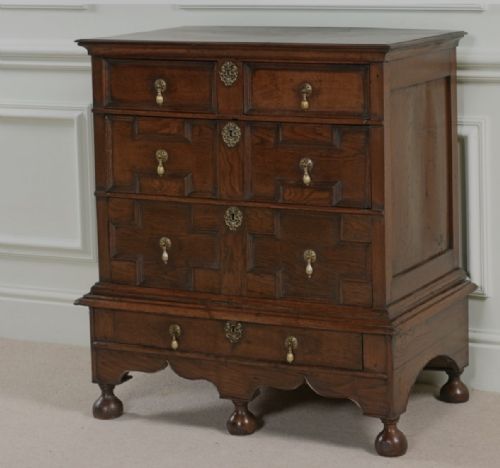
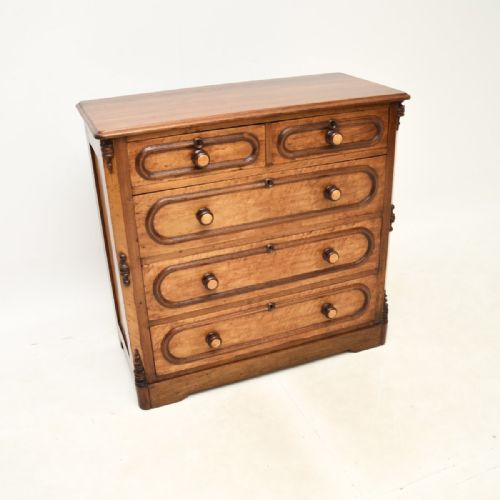
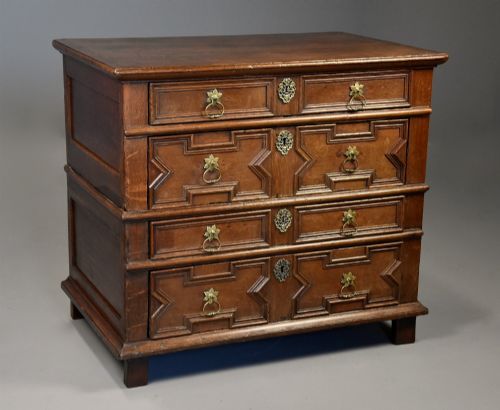
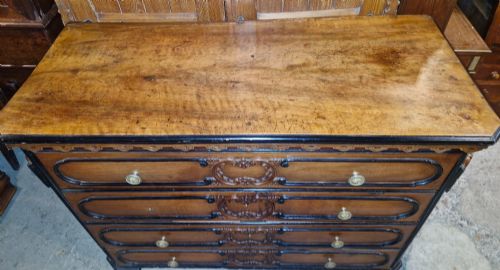
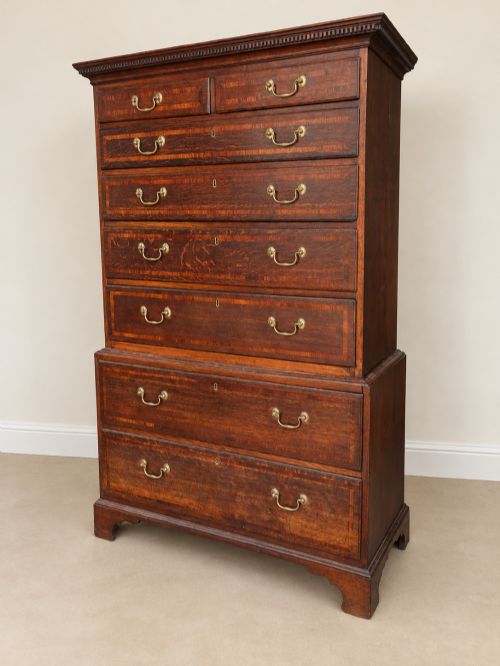
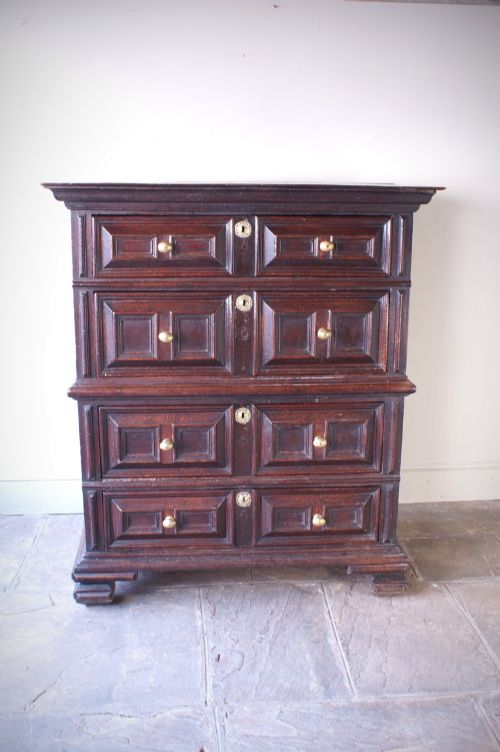
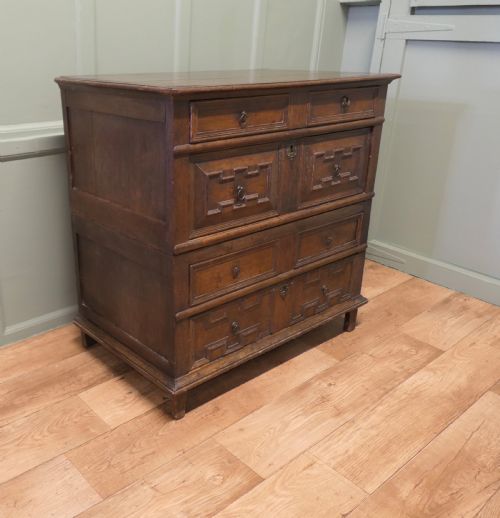
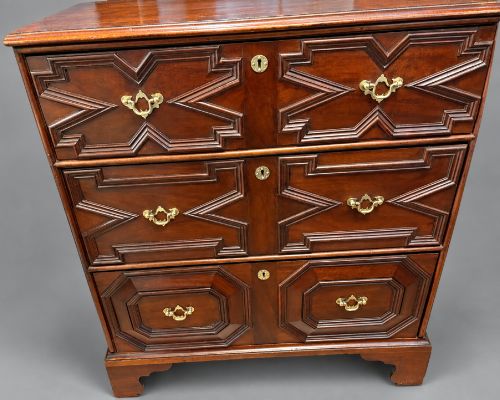
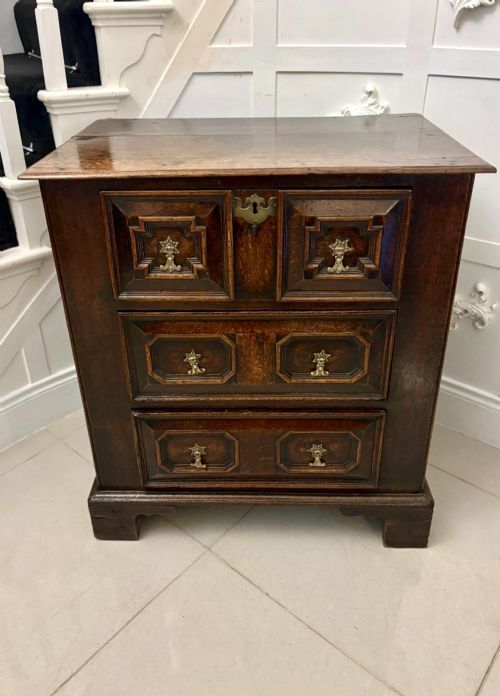
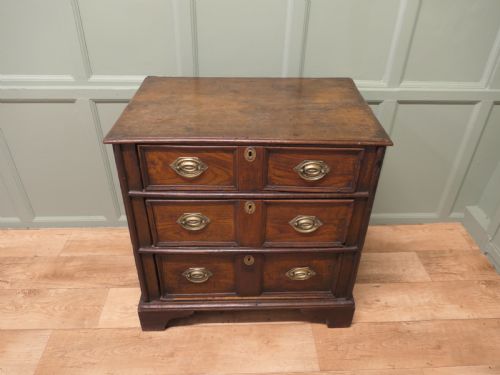
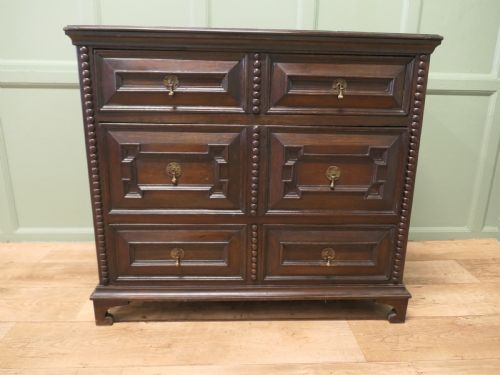
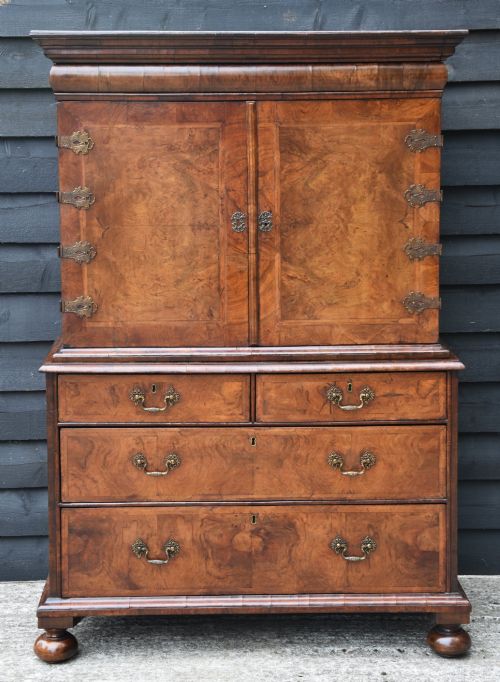
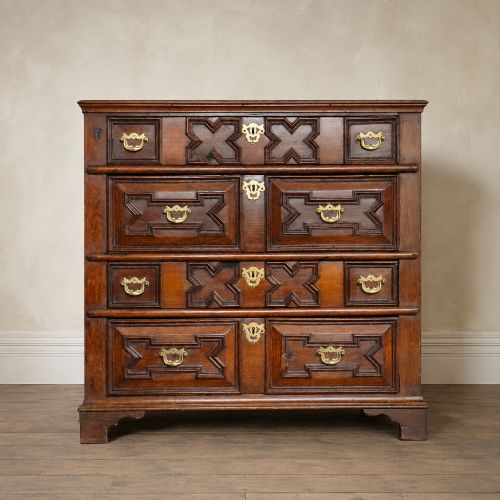
A moulded drawer chest combines sturdy timber storage with decorative applied mouldings that frame the drawer fronts in geometric patterns. Buyers searching for a moulded drawer chest frequently encounter seventeenth-century oak examples featuring panelled construction and multi-part bodies.
Many pieces belong to the Charles II or William and Mary periods, presenting distinct drawer configurations such as two-part chests or smaller proportions intended for domestic chambers. Alongside these early English pieces, occasional continental fruitwood or walnut commodes appear with serpentine fronts and veneered surfaces.
Materials and Construction
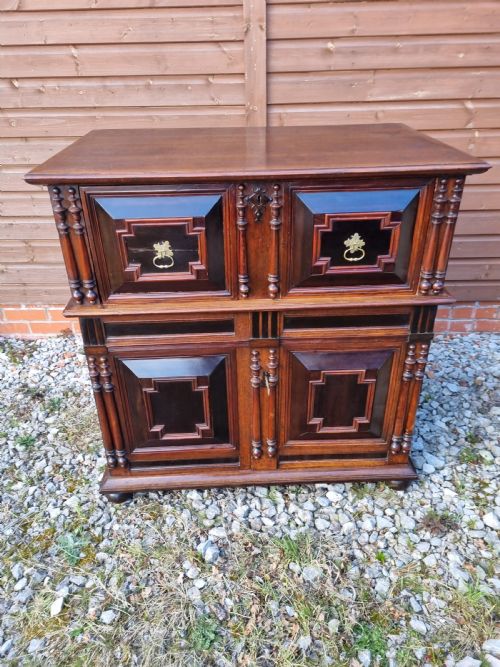
The primary structural timber across these listings is solid oak, frequently paired with walnut, fruitwood, and burr veneers to create contrasting geometric drawer facades. Joinery relies on traditional hand-cut methods, including pegged mortise and tenon frames and dovetailed drawer construction.
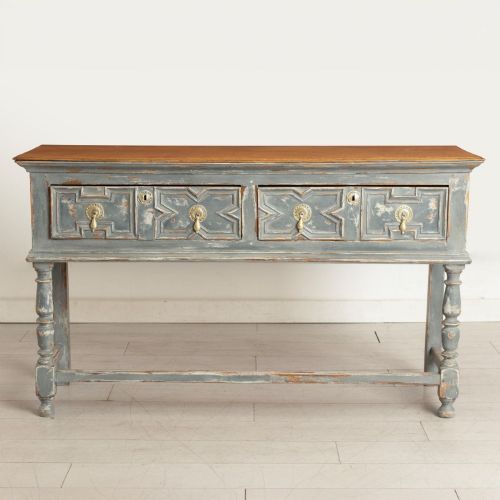
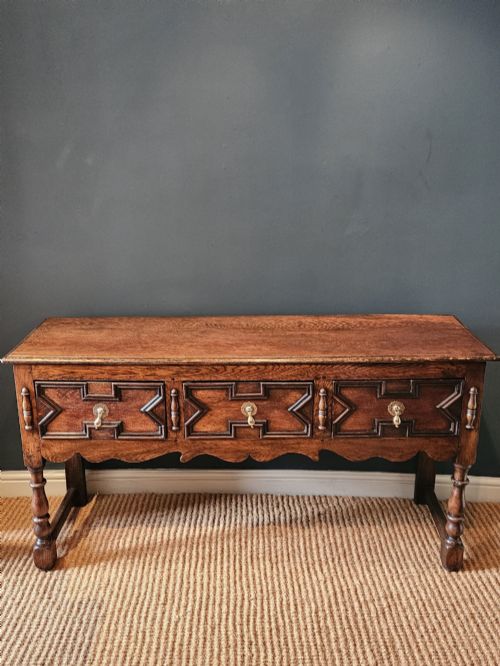
Mouldings are shaped from timber and applied directly to the drawer fronts to form mitred panels, octagons, and intersecting strapwork designs. Hardware consists of brass drop handles and escutcheons fixed to original or later backplates, whilst surfaces are finished with traditional wax or polished patinas.
Molded Drawer Chest Retail Price Guide 2026
Typical asking prices for molded drawer chest among the pieces listed under this phrase on Sellingantiques today, from the lower quarter to the upper quarter. They describe what is for sale here now, not the wider market.
The listings span from the seventeenth century through the Georgian and Victorian eras, up to twentieth-century Jacobean revival interpretations.
Factors of Distinction
The degree of preservation in the applied geometric mouldings largely separates standard examples from exceptional survivals. Crisp mitres, intact timber framing, and minimal replacement of the decorative panels indicate superior craftsmanship and careful historical upkeep.
Surface condition and timber figure contribute heavily to quality, with desirable pieces showing deep, faded patination across the grain. The survival of original brass hardware and untouched drawer linings also elevates the standing of an early chest.
The Molded Drawer Chest Glossary
- Moulded front
- A drawer chest facade decorated with raised wooden strips applied in geometric patterns. These mouldings add architectural depth to the piece.
- Geometric design
- An arrangement of rectilinear or symmetrical patterns formed by applied mouldings on drawer fronts. This style is characteristic of seventeenth-century case furniture.
- Two-part chest
- A storage piece constructed in two separate stacking sections to facilitate transport. This form is common in seventeenth-century English joinery.
- Oyster veneer
- Thin circular slices cut from branch wood and arranged in repeating patterns across a surface. This technique creates a distinctive marbled grain effect.
- Dresser base
- A lower sideboard structure fitted with drawers, often sharing construction traits with contemporaneous chests. These pieces form part of the broader vernacular furniture tradition.
Molded Drawer Chest: Frequently Asked Questions
What period do most moulded drawer chests come from?
The majority of these chests date from the seventeenth century, specifically the Charles II and William and Mary eras. They utilise solid oak framing and intricate geometric facade work.
Later revival pieces from the twentieth century also appear, adopting the earlier seventeenth-century aesthetic using period construction methods.
How were geometric mouldings attached to the drawers?
Mouldings were individually shaped from timber, mitred at the corners, and glued or pinned directly onto the flat drawer fronts. This creates the characteristic panelled and intersecting designs seen on seventeenth-century examples.
The precision of these applied shapes is a key indicator of the joiner's skill during construction.
Are two-part chests difficult to place in modern rooms?
Two-part chests separate into upper and lower halves, making them surprisingly adaptable for transport and room placement. Their sturdy proportions suit living spaces or hallways as functional statement storage.
Internal drawer depths accommodate modern garments while preserving centuries of timber history.
What is oyster veneering on early chests?
Oyster veneering involves slicing small branches transversely to reveal circular growth rings, which are then laid side by side across the surface. This creates an ornate pattern resembling oyster shells.
Walnut was frequently utilised for this decorative technique on high-status seventeenth-century pieces.